Restaurant prep counter with coffee beans, cocoa, palm oil, soy and beef — the EUDR commodities behind a restaurant supply chain

EUDR for restaurants: what the deforestation rules mean

Coffee, cocoa, palm oil, soy and beef are all covered by the EU Deforestation Regulation — which is most of your supply chain. Here is the honest version of what a restaurant actually has to do, what it does not, and the questions to send your suppliers before December 2026.

restaurant allergen liability

Restaurant Allergen Liability: Protect Your Business Today

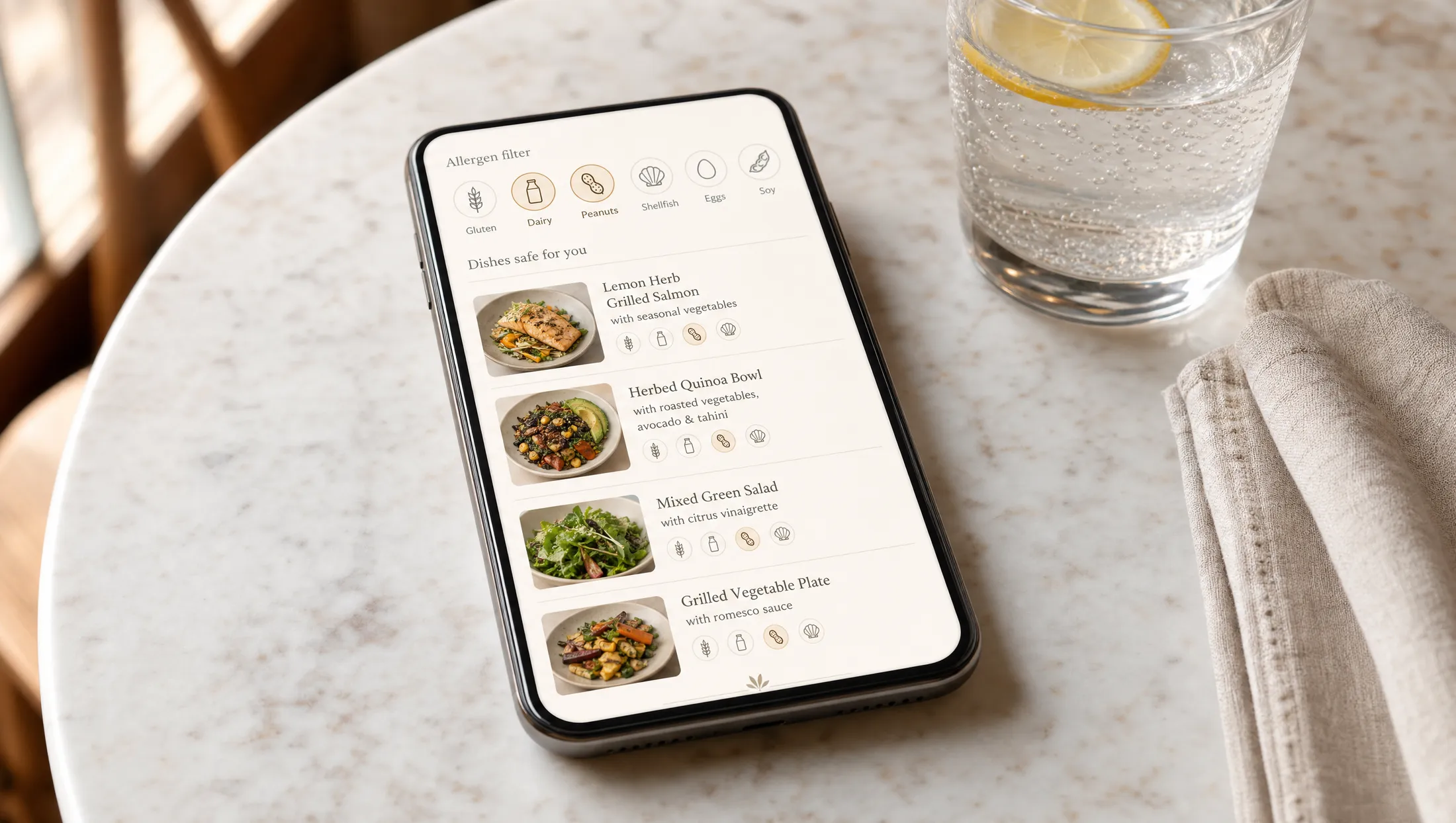
The basic legal framework: a restaurant has a duty of care to its guests, which includes accurately disclosing the allergens present in the food it serves. A guest who suffers an allergic reaction caused by undisclosed or misdisclosed allergens has grounds for a civil suit against the restaurant.

hidden allergens restaurant food

14 Common Hidden Allergens in Restaurant Meals Explained

A guest with a peanut allergy almost always remembers to ask about peanuts. The allergic reactions that send people to hospital usually come from the allergens they didn't think to ask about — because the kitchen didn't disclose them, and the dish didn't seem to contain them.

food allergies traveling abroad

Dining With Allergies Abroad: A Traveler's Survival Guide

Traveling with severe food allergies has gotten meaningfully easier in 2026, but the experience varies enormously by country. Some destinations have strict allergen disclosure laws and well-trained restaurant staff; others operate on assumptions about cuisine that can be dangerous for an allergic guest.

EU 1169/2011 restaurant

EU 1169/2011 Restaurant: Essential Allergen Compliance Guide

EU Regulation 1169/2011 — Regulation (EU) No 1169/2011 of the European Parliament and of the Council on the provision of food information to consumers (often shortened to "FIC") — is the foundational EU law on food labeling and information disclosure.