
Restaurant Allergen Liability: Protect Your Business Today
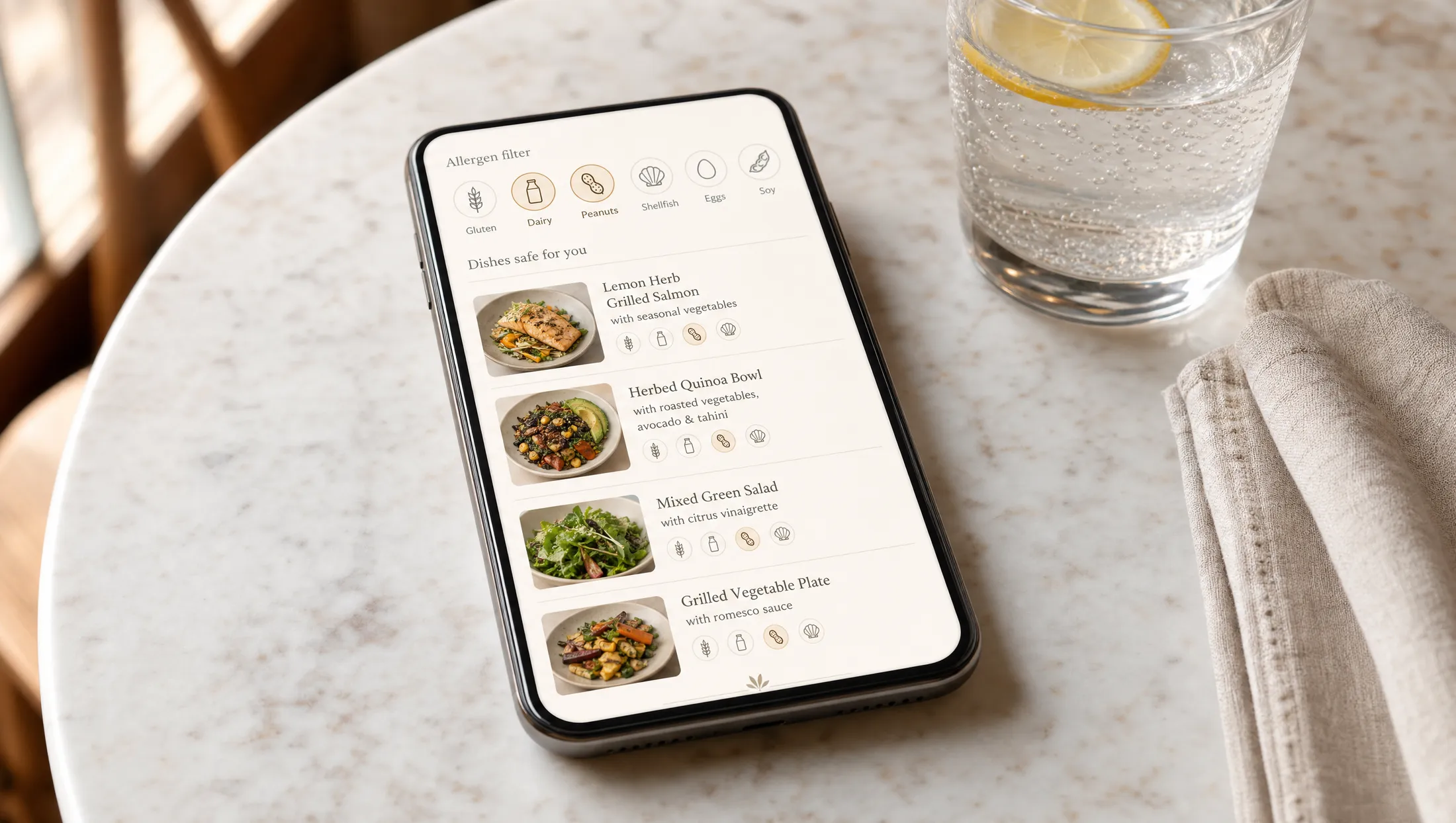
The basic legal framework: a restaurant has a duty of care to its guests, which includes accurately disclosing the allergens present in the food it serves. A guest who suffers an allergic reaction caused by undisclosed or misdisclosed allergens has grounds for a civil suit against the restaurant.
Legal disclaimer: This article is informational, not legal advice. Allergen liability is jurisdiction-specific and case-specific. Consult a qualified food-safety lawyer for advice on your specific situation. Reviewed by a UK food-safety legal practitioner.
TL;DR — Key Takeaways
A restaurant can be sued — and increasingly is — for an allergen-disclosure failure that leads to a guest's allergic reaction. Settlements typically run from $50,000 to $500,000+, with severe cases reaching multimillion figures.
The UK's Natasha's Law (2021) raised disclosure expectations dramatically. The Pret a Manger / Ednan-Laperouse case sets the cultural and legal benchmark for what compliance failure looks like at scale.
Documentation is your strongest legal protection. A restaurant with documented allergen training, structured menu data, and audit trails has a defensible position. A restaurant without those is exposed.
Staff training counts as legal protection in many jurisdictions, but only when it's documented— when, by whom, against what materials, with what assessment.
Modern menu platforms with structured allergen tagging build the documentation trail automatically — every dish, every change, every disclosure is logged.
Can a restaurant be sued for an allergen mistake?
Yes — and the legal landscape has gotten less forgiving every year since 2018.
The basic legal framework: a restaurant has a duty of care to its guests, which includes accurately disclosing the allergens present in the food it serves. A guest who suffers an allergic reaction caused by undisclosed or misdisclosed allergens has grounds for a civil suit against the restaurant.
In severe cases — particularly when the reaction is fatal — criminal liability can attach. The UK and US both have prosecutorial pathways for gross negligence in food-safety contexts.
The financial exposure varies by jurisdiction, but the practical numbers in 2026:
Mild reaction (rash, GI distress, requiring no hospitalization): typical settlements $5,000–$25,000 in the US, comparable in EU
Moderate reaction (hospitalization, no lasting injury): typical settlements $50,000–$200,000
Severe reaction (anaphylaxis, ICU admission, recovery): typical settlements $200,000–$1,000,000+
Fatal reaction: settlements typically multimillion, plus possible criminal prosecution, plus reputational damage that often closes the restaurant
The trend: settlements have grown each year as juries become more aware of the seriousness of food allergies, and as documented compliance failures have become more visible through cases like Pret a Manger.
What is Natasha's Law and where does it apply?
Natasha's Law is the colloquial name for the UK Food Information Amendment 2019, which came into effect on 1 October 2021. It's named after Natasha Ednan-Laperouse, a British teenager who died in 2016 of an allergic reaction to a baguette purchased from Pret a Manger that contained sesame in the dough — an allergen not declared on the label.
What Natasha's Law requires:
Full ingredient labeling — including the 14 mandatory allergens — on prepackaged-for-direct-sale (PPDS) foods sold in the UK.
This applies to foods packaged on the same premises where they're sold (sandwiches in a cafe, salads in a deli, baked goods in a bakery).
Previously, these PPDS items were exempt from the labeling requirements that applied to prepackaged foods sold elsewhere.
Who it directly applies to:
Restaurants and cafes selling prepackaged grab-and-go items
Bakeries and patisseries with prepackaged baked goods
Delis and grocery stores with prepackaged-on-premises food
Who it doesn't directly apply to (but who feel its influence):
Restaurants serving food directly to guests at the table — the legal framework here remains EU 1169/2011 carryover (UK FIR), not Natasha's Law specifically.
Why it matters for all UK restaurants:
Natasha's Law has reset cultural expectations around allergen disclosure. Even restaurants not directly covered by it face higher juror expectations in civil suits, more aggressive prosecutorial posture in criminal cases, and significantly higher reputational exposure when disclosure fails.
Influence outside the UK:
Natasha's Law has been cited in EU member-state allergen-rule strengthening, in Australian regulatory updates, and in US state-level legislation. The cultural and legal baseline for allergen disclosure is being raised globally.
What documentation should I keep to protect my restaurant?
The documentation that gives you a defensible position in 2026:
1. Menu allergen audit records. When was the menu last reviewed for allergen accuracy? By whom? Against which sources (recipe cards, supplier specifications, ingredient labels)?
2. Supplier specifications. For commercial ingredients (sauces, stocks, mixes), keep the supplier's allergen specification on file. If the supplier changes their formulation and adds an allergen, this is your trail.
3. Staff training records. Who has been trained on allergen handling? When? By whom? With what materials? Did they pass an assessment?
4. Kitchen workflow protocols. Documented procedures for preparing allergen-free dishes. Cross-contamination prevention protocols. Cleaning protocols for shared equipment.
5. Guest-allergy incident log. Any time a guest declares an allergy at the table, log it. The dish ordered, the modifications made, the kitchen confirmation. Most restaurants don't do this; the ones that do have the strongest legal posture.
6. Menu version history. Every change to the menu, when, by whom, and what changed. Modern menu platforms log this automatically; manual paper menus don't.
7. QR menu / digital menu access logs. Documentation that the allergen information was actually visible to guests (e.g., the digital menu was live and the allergen filter was operational).
The principle: structured documentation is your strongest legal asset. A restaurant that can produce a clean trail of "we tagged this allergen, we trained staff on it, we documented every change" has a much stronger position than a restaurant relying on the chef's memory.
Intermenu handles items 1, 6, and 7 automatically — every allergen tag, every menu change, and every guest-side menu access is logged with timestamps. The platform-level documentation builds the trail without operator overhead.
What's the typical fine for non-compliance in EU/UK/US?
EU member states (administrative fines):
First offense: typically €500–€5,000
Repeated or severe: €5,000–€20,000
Aggravated cases (consumer harm): up to €50,000+ or higher in some member states
UK (administrative + criminal):
Trading Standards prosecutions: typical fines £1,000–£20,000
Severe cases under the Food Safety Act: up to unlimited fines and imprisonment
Natasha's Law violations: structured penalty regime, varies by severity
US (federal + state, varies):
FDA enforcement: typically $1,000–$50,000 administrative penalties for federal violations
State-level penalties: vary, but typically $100–$5,000 per violation
Class-action exposure for systemic disclosure failures: substantially higher
Civil exposure (across all jurisdictions):
Far larger than administrative fines in almost every case
Settlements scaled to harm severity
Legal costs alone often $50,000–$200,000 in defense
The administrative fine is rarely the financially threatening part of a non-compliance event. The civil settlement, the reputational damage, and the legal defense costs are.
Does staff training count as legal protection?
Yes — significantly — but only when documented.
What documented staff training provides legally:
A demonstration of "duty of care" — the restaurant did the reasonable thing
Proof that any disclosure failure was an individual lapse, not a systemic absence
A defense against gross-negligence findings in criminal cases
A substantial reduction in potential liability (negligence vs reckless disregard)
What undocumented training provides:
Almost nothing legally
Hard to prove staff was trained without a paper trail
Easy for plaintiff's counsel to characterize as "no training at all"
What good documented training looks like:
Initial allergen training for every new employee, recorded with date and trainer
Annual refresher training, recorded
Material reference (the actual training content, kept on file)
Assessment (a brief quiz showing the staff member learned the content)
Records retained for at least 5–7 years (jurisdiction-dependent)
The financial cost of training is small. The financial value of documented training in a legal defense is substantial. This is one of the highest-ROI compliance investments a restaurant can make.
Anonymized cases worth knowing about
Three patterns from public records and industry-reported cases. Specific identifying details have been removed.
Case 1: Sesame in a sandwich (UK, fatal, 2016)
The Pret a Manger / Ednan-Laperouse case. A baguette containing sesame seeds in the dough was purchased without a full ingredient label (legal at the time under PPDS exemption). The customer, severely allergic to sesame, suffered fatal anaphylaxis on a flight following purchase. The case led directly to Natasha's Law in 2021. Pret faced significant settlements, regulatory action, and reputational damage. The legal change reset UK food-safety expectations.
Lesson: the absence of a clear allergen label on a directly-sold prepackaged item is a structural failure, not an incidental one. The 2021 law closes that loophole.
Case 2: Cross-contamination in a restaurant deep-fryer (US, severe, 2019)
A celiac diner ordered a "gluten-free" french fry from a casual-dining chain. The fryer was shared with breaded chicken. The diner suffered a severe celiac reaction requiring hospitalization. The chain settled for low-six-figures and updated its allergen-protocol training across all properties.
Lesson:"gluten-free" cannot be a menu marker without separate fryer / prep equipment. The honest disclosure is "fried in shared oil — may contain gluten traces" if the kitchen workflow doesn't separate.
Case 3: Mistranslation of "may contain" in a multilingual menu (EU, severe, 2022)
A tourist with a severe peanut allergy dined at a restaurant whose multilingual menu translated "may contain traces of peanuts" as "contains peanuts" in one language and "no peanuts" in another. The tourist, reading in their language, ordered a dish translated as "no peanuts" but which actually had peanut cross-contamination disclosed in the original language. Severe reaction. The restaurant's translation drift cost a six-figure settlement.
Lesson: allergen disclosure must be structured data, not translated prose. Translation drift on allergen text is a structural compliance failure even if the underlying intent was correct.
How to reduce your liability exposure
A practical six-step risk-reduction playbook:
1. Tag every dish with structured allergen data. Eliminate translation drift. Use a hospitality platform that handles this by default.
2. Document an annual allergen audit. Half a day, once a year, with documentation. This single practice demonstrates duty of care.
3. Train staff annually with documentation. Initial training plus annual refresher. Cost: $50–$200 per staff member per year. Value in legal defense: enormous.
4. Keep supplier specifications on file. When commercial ingredients change formulation, you have the trail.
5. Maintain a guest-allergy incident log. Even minor allergy declarations should be logged with the dish, modifications and outcomes.
6. Use a digital menu platform that maintains version history. Every menu change is timestamped and traceable. This is a structural defense in a way printed-menu records cannot be.
The total annual cost of doing all six is usually $1,000–$3,000 for an independent restaurant. The expected value in liability reduction is many multiples of that — both in litigation outcomes and in insurance premiums.
Frequently Asked Questions
Can a restaurant be sued for an allergen mistake? Yes. Civil suits for allergen-disclosure failures leading to allergic reactions are common in 2026. Settlements range from $5,000 to $1,000,000+ depending on severity.
What is Natasha's Law and where does it apply? UK law (effective October 2021) requiring full ingredient and allergen labeling on prepackaged-for-direct-sale foods. Influences allergen-disclosure expectations globally even where it doesn't directly apply.
What documentation should I keep to protect my restaurant? Menu allergen audit records, supplier specifications, staff training records, kitchen workflow protocols, guest-allergy incident logs, menu version history, QR menu access logs.
What's the typical fine for non-compliance in EU/UK/US? Administrative fines €500–€20,000+ in EU/UK; $1,000–$50,000 in US. Civil settlements far larger — typically $50K–$1M+ depending on harm severity.
Does staff training count as legal protection? Yes, significantly, but only when documented. Initial training, annual refreshers, materials retained, assessment records. Documented training is a structural legal defense.
Reduce Liability with Auto-Tagged Allergen Menus
The single highest-ROI step in restaurant allergen compliance is moving from translated prose to structured allergen tagging. Intermenu handles this by default — tag once, render correctly in every supported language, with version history that builds your compliance trail automatically.
If your current allergen disclosure leaves any gap between kitchen knowledge and guest reading, see what the structured approach looks like →