Dining With Allergies Abroad: A Traveler's Survival Guide
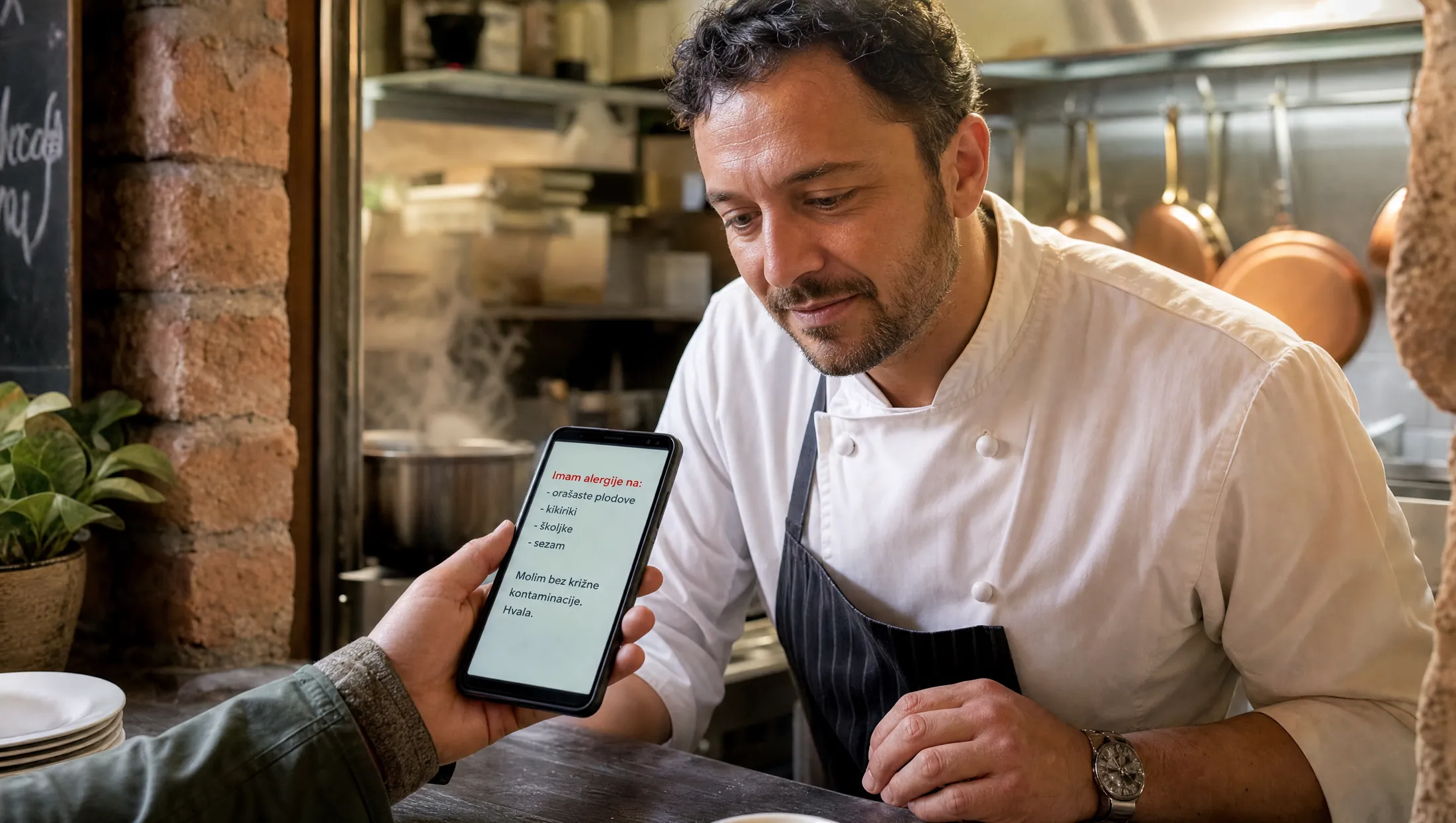
Traveling with severe food allergies has gotten meaningfully easier in 2026, but the experience varies enormously by country. Some destinations have strict allergen disclosure laws and well-trained restaurant staff; others operate on assumptions about cuisine that can be dangerous for an allergic guest.
TL;DR — Key Takeaways
The safest countries in 2026 for travelers with food allergies are those with strict mandatory disclosure laws and high allergen-awareness culture: UK, Germany, Australia, Sweden, the Netherlands, Canada.
Higher-risk countries are not necessarily unsafe — but they require more proactive communication. Languages with no direct word for "allergy" (some regional dialects) demand careful preparation.
Bilingual allergy translation cards remain useful, but in 2026 a multilingual digital menu with allergen filtering is more reliable. Look for restaurants advertising digital menus when traveling.
Apps that help travelers with allergies in 2026 include Spokin, Allergy Eats, FindMeGlutenFree, and increasingly, restaurant-specific platforms with allergen-filterable menus.
The single most important rule: never assume the absence of an ingredient. Always confirm explicitly, in writing or via filter, before ordering.
The honest landscape for allergic travelers in 2026
Traveling with severe food allergies has gotten meaningfully easier in 2026, but the experience varies enormously by country. Some destinations have strict allergen disclosure laws and well-trained restaurant staff; others operate on assumptions about cuisine that can be dangerous for an allergic guest.
This guide covers the practical reality: which countries are safer, which require more careful preparation, what tools to bring, and how to navigate the language barrier when your safety depends on it.
Which countries are safest for travelers with food allergies?
The 2026 safety ranking, based on mandatory disclosure laws, allergen awareness in restaurant culture, and typical kitchen practices.
Tier 1 — High allergen awareness
United Kingdom— strict disclosure laws (Natasha's Law), high public awareness following high-profile cases.
Germany— comprehensive allergen labeling on menus, well-trained restaurant staff.
Sweden, Norway, Denmark, Finland— strong food-safety culture, allergen-aware kitchens, English-fluent staff.
Netherlands— explicit menu disclosure, strong gluten-free infrastructure.
Australia and New Zealand— comprehensive allergen labeling under FSANZ, strong cultural awareness.
Canada— clear federal regulations, high English-fluency among staff.
Tier 2 — Good allergen practices
France, Italy, Spain, Portugal— EU 1169/2011 compliance, but allergen awareness varies by region. Tourist-area restaurants are typically well-prepared; rural and family-run restaurants may be less so.
Belgium, Austria, Ireland— similar to Tier 1 but with regional variation.
United States— variable. Top allergens are well-recognized, but disclosure rules vary by state. Major cities and chain restaurants are generally safer than rural independent restaurants.
Japan— sophisticated food-safety culture, but the language gap can be severe. Allergens are taken seriously when communicated successfully.
Tier 3 — Higher caution required
Thailand, Vietnam, Cambodia, Laos— broad allergen awareness in tourist areas; significant variation outside them. Peanut and shellfish are everywhere; cross-contamination is common.
Mexico, Brazil, Argentina— varies by region. Tourist-area restaurants usually have good allergen practices; smaller establishments may not.
Eastern Europe— Czech Republic, Poland, Hungary have improved significantly under EU 1169/2011 compliance, but regional variation persists.
Tier 4 — Special preparation strongly recommended
Some parts of Southeast Asia and South Asia— peanut and tree-nut allergens are pervasive; cross-contamination is common; English fluency varies; written allergy cards in the local language are essential.
Some parts of the Middle East— Sesame is everywhere (tahini, hummus, halva, breads); shellfish in unexpected places.
Some parts of West Africa— peanut is a foundational ingredient; cross-contamination is structural.
This ranking is not a measure of overall food culture or safety — it's a measure of how easy it is for a foreign traveler with allergies to navigate the dining environment. Tier 4 countries are not unsafe to visit; they require more proactive preparation.
How do I communicate my allergy in another language?
Three layers, in increasing reliability:
Layer 1 — Translation card. A printed or phone-saved card with your allergy clearly stated in the local language. Has been the standard tool for decades.
Layer 2 — Restaurant-side digital menu with allergen filter. When the restaurant has a digital menu with allergen filtering, you can simply tap "hide [allergen]" and browse the dishes whose tags don't list it — then confirm with staff, because the filter can't vouch for untagged dishes or cross-contact. This is the most reliable method when available.
Layer 3 — Direct conversation with a kitchen-knowledgeable staff member. Ideal but often constrained by language. Useful for unusual cases.
In 2026, an increasing number of tourist-area restaurants offer Layer 2 — a multilingual menu with allergen filtering — which has become the preferred tool for allergic travelers. Look for restaurants advertising digital menus, or ask whether they have one before being seated.
Intermenu is one of the platforms restaurants use for this — when you scan a participating restaurant's QR code, the menu loads in your language and you can filter dishes by allergen instantly.
What apps help travelers with allergies?
The 2026 app landscape:
General allergy apps:
Spokin— community-driven directory of allergy-safe restaurants worldwide. Strongest in the US and major European tourist destinations.
Allergy Eats— restaurant ratings specifically for allergen-friendliness, US-focused.
FindMeGlutenFree— gluten-focused, but the database is large and useful for celiac travelers.
Translation apps for allergens:
Google Translate— useful but unreliable for medical specificity. Don't use it for life-threatening allergies without verification.
AllergyEats— has built-in translation cards in 50+ languages.
Equal Eats— allergy-specific translation cards.
Restaurant-platform apps:
Restaurants increasingly use platforms with allergen filtering built in. When you arrive at a restaurant with a QR-scannable menu, the menu itself is your allergy app — hide your allergen, browse what's left, and confirm with staff.
Embassy/consulate apps:
Some travel ministries publish country-specific allergy guides. Check yours before travel.
The 2026 reality is that the allergy-app market has fragmented and the most reliable solution is now restaurant-side: a digital menu with structured allergen data and filtering. The translation card remains a useful backup when this isn't available.
What should I do if I have an allergic reaction abroad?
Five immediate actions:
1. Use your epinephrine if you have it and the reaction is severe (anaphylaxis). Then call emergency services.
2. Get to medical care. The international emergency number in the EU is 112; in much of Asia it's 119 or local equivalents; in the US it's 911. Save the country's emergency number before the trip.
3. Tell the restaurant. Even if the reaction is mild, the restaurant needs to know. They have an obligation to investigate and prevent recurrence. This is also your documentation if you later need it.
4. Document immediately. Photos of the dish, the menu, the receipt. Note the time and what you ate. This documentation matters for medical care and any later legal claim.
5. Notify your travel insurance. If you have travel insurance with medical coverage, contact them as soon as the immediate medical situation allows.
For severe allergies, traveling with epinephrine (in the form your home country prescribes) is essential. International rules on importing prescription medication vary; check before travel.
Are allergen menus reliable in Italy / Japan / Thailand / Mexico?
Country-specific notes:
Italy
EU 1169/2011 compliance is mandatory. Tourist-area restaurants are typically well-prepared with written disclosure. Rural and family-run restaurants vary — explicit confirmation is recommended. Pine nuts (in pesto) are a common hidden tree-nut allergen.
Japan
Allergen awareness is high but the cultural conventions are different. Restaurants in major cities increasingly have multilingual menus with allergen tagging. In smaller towns, an allergy card written in Japanese, ideally with kanji, is essential. Soy and wheat (in soy sauce, noodle broths, dipping sauces) are pervasive.
Thailand
Peanut and tree-nut cross-contamination is structural in many kitchens. Even dishes that aren't supposed to contain peanut may have been prepared with peanut-contaminated equipment. For severe peanut/tree-nut allergies, Bangkok and Phuket have allergy-aware restaurants but require careful selection. Outside tourist areas, extreme caution is recommended.
Mexico
Tree-nut and dairy disclosure varies. Major-city restaurants and tourist destinations are generally well-prepared. Avocado allergies are surprisingly common for travelers and avocado is everywhere. Ask explicitly. Mexican Spanish has clear words for common allergies (alergia a [allergen]).
Spain
EU compliance, generally strong allergen practices in tourist areas. Tapas culture creates cross-contamination risk because tapas plates are often shared and prepared in close kitchen proximity. Pine nuts and almonds are common in Spanish desserts and sauces.
France
EU compliance, generally strong. French cuisine has more dairy than tourists expect (butter in everything; cream in unlikely sauces). For dairy-allergic travelers, explicit confirmation per dish is essential. Wine (containing sulphites) is in many sauces.
Greece
EU compliance applies, but enforcement varies more in islands than mainland tourist areas. Sesame, tahini, sulphites, fish are common. Lamb is in many "mystery dishes" that don't always advertise it.
Turkey
Sesame in everything. Tahini in many sauces. Tree nuts in many dishes (pistachio is a national obsession). Allergen awareness in tourist areas is generally good; in rural areas, less so. Allergy cards in Turkish are essential for severe allergies.
The pattern: tier-1 EU/Anglo destinations are generally reliable; major-city tourist areas in tier-2/3 destinations are often reliable; rural and small-town restaurants in any country require more proactive communication.
A practical pre-trip preparation checklist
Six steps before any international trip with an allergy:
1. Translate your allergy clearly into the local language. If possible, into both the formal written language and the colloquial form. Save it on your phone and print a paper backup.
2. Research the country's typical allergen patterns. Where does your allergen tend to hide in this cuisine? What are the common cross-contamination sources?
3. Identify allergy-friendly restaurants in advance. Use Spokin, AllergyEats, or similar databases. Many travelers with allergies plan dining around 8–12 pre-vetted restaurants and adapt as they go.
4. Pack medication. Epinephrine auto-injectors, antihistamines, any prescribed inhalers. Check international rules on bringing prescription meds.
5. Get travel insurance with medical coverage. Specifically ask whether it covers anaphylaxis treatment in the destination country.
6. Save the local emergency number and the address of a hospital near where you're staying.
Frequently Asked Questions
Which countries are safest for travelers with food allergies? Tier 1: UK, Germany, Sweden, Netherlands, Australia, Canada. Tier 2: France, Italy, Spain, Japan, US (with state variation). Tier 3+: requires more proactive preparation and communication.
How do I communicate my allergy in another language? Three layers: translation card (paper or phone), restaurant-side digital menu with allergen filter, direct conversation with kitchen-knowledgeable staff. The digital menu approach is most reliable when available.
What apps help travelers with allergies? Spokin, AllergyEats, FindMeGlutenFree for general searches. Equal Eats for translation cards. Restaurant-platform apps with allergen filtering when available.
What should I do if I have an allergic reaction abroad? Use epinephrine if severe, get to medical care, tell the restaurant, document the dish/menu/receipt, notify travel insurance.
Are allergen menus reliable in Italy / Japan / Thailand / Mexico? Italy: yes in tourist areas, with care for pine nuts. Japan: yes in major cities with allergen cards in Japanese. Thailand: variable, peanut cross-contamination is structural. Mexico: tourist areas reliable, some less common allergens require attention.
Look for Restaurants With Filterable Menus
When a restaurant offers a multilingual digital menu with allergen filtering, dining abroad with an allergy gets dramatically easier. Intermenu-powered restaurants display the language-switcher and allergen filter on every QR menu — so a traveler with a tree-nut allergy can hide every dish containing tree nuts in seconds, in their own language. Dishes with no allergen information are set apart and never shown as safe, so those still get checked with staff.
Look for the QR menu sign next time you're seated. The allergen filter is usually one tap away →