
Food Tourism Trends 2026: Cities Chosen for Cuisine
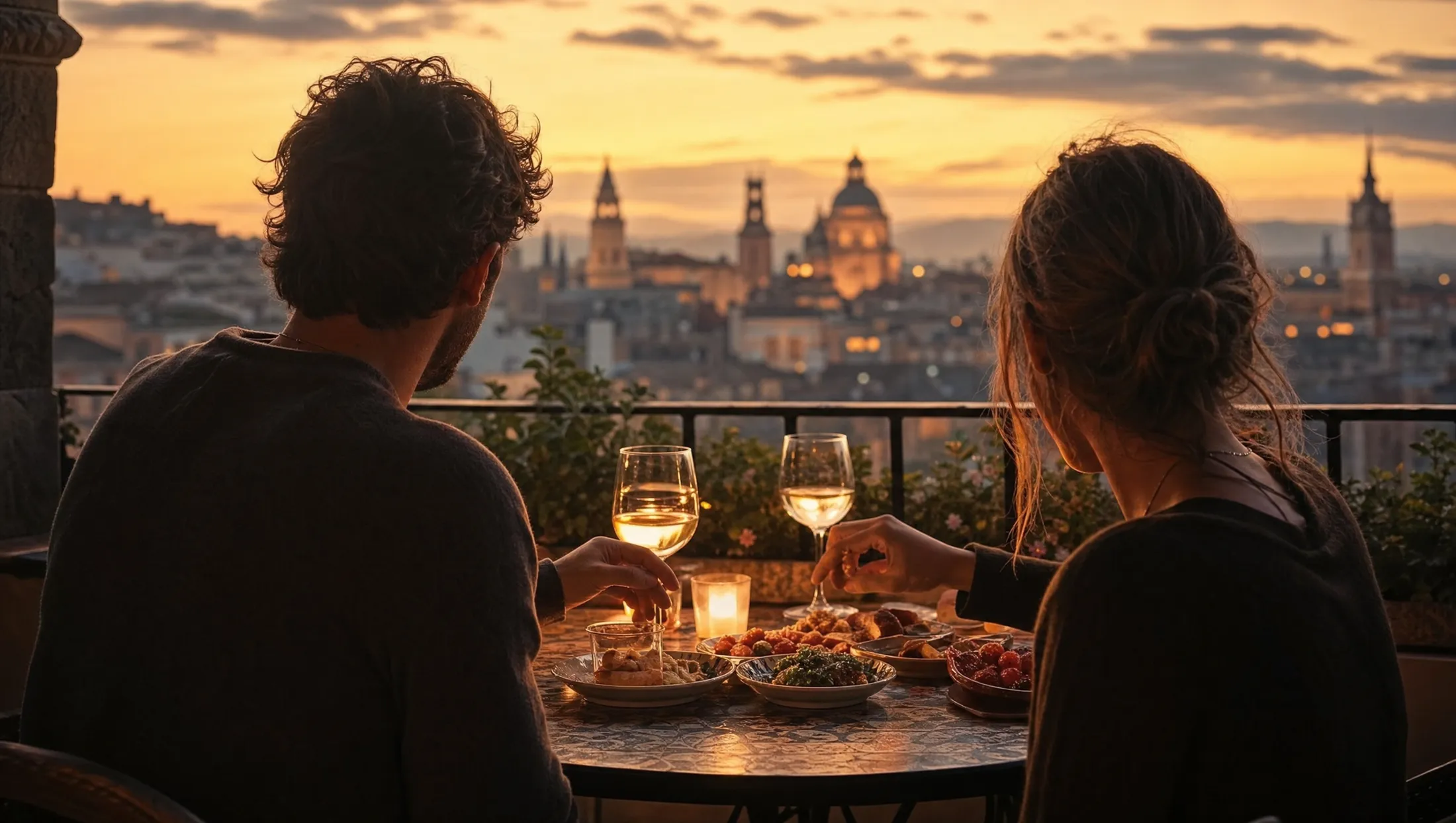
Food tourism — defined as travel where culinary experiences are a primary motivation — is one of the fastest-growing segments of global travel.
TL;DR — Key Takeaways
The global food tourism market is on track to reach $2 trillion by 2027, growing 14-16% annually since 2022.
84% of international travelers in 2026 say local cuisine influences destination choice; 92% say it influences city-level destination choice.
Younger travelers (25-44) drive the food tourism boom — they spend ~30% of their travel budget on food experiences, vs ~18% for older demographic groups.
Emerging food destinations beyond the traditional Italy/France/Japan triumvirate include Lima, Lisbon, Mexico City, Tbilisi, Singapore, Lyon, Istanbul, and (increasingly) Saigon.
Independent restaurants in tourist-trafficked cities benefit disproportionately from this trend — well-positioned operators see 30-50% of their covers from international guests in peak seasons, with ~25% higher AOV than locals.
How big is the food tourism market in 2026?
Food tourism — defined as travel where culinary experiences are a primary motivation — is one of the fastest-growing segments of global travel.
The 2026 numbers worth knowing:
Global food tourism market size: ~$1.6 trillion in 2025, on track to reach $2 trillion by 2027
Annual growth rate: 14-16% since 2022 (significantly faster than overall tourism growth of 6-8%)
Share of total travel spending: food and beverage now account for ~28-32% of total international travel spending, up from ~18-22% in 2015
Number of "food-motivated" trips per year globally: estimated 250-300 million in 2026
The pattern: food has moved from "thing tourists do while visiting a place" to "primary reason tourists pick a place." This is a structural shift, not a temporary trend.
What % of travelers pick destinations based on food?
The 2026 data:
84% of international travelers say local cuisine influences destination choice
92% say food scene influences city-level destination choice (within a region)
38% say food is the primary factor in destination choice (up from ~22% in 2018)
27% plan trips specifically around restaurants or food experiences
52% of millennial and Gen Z travelers say they'd revisit a destination specifically for the food
The "primary factor" share is the most striking shift. A decade ago, food was a secondary consideration for most travelers — they picked Paris for the museums and incidentally enjoyed French food. Today, an increasing share of travelers pick Paris primarily for the food, and the museums are the secondary consideration.
This has direct implications for restaurants. The tourists arriving in food-motivated cities are more deliberate, more food-knowledgeable, more willing to seek out specific restaurants, and more willing to spend on memorable meals.
Which cities are emerging as food destinations?
The classic food cities (Paris, Rome, Tokyo, New York, Barcelona) remain the most-visited. But the past decade has produced a meaningful expansion of "food destinations" worth knowing.
Established food capitals (the historical big six)
Paris— fine dining, bistros, brasseries, French-trained pastry
Rome— Roman cuisine, regional Italian breadth
Tokyo— sushi, ramen, izakaya, kaiseki, the world's most-Michelin-starred city
New York— global cuisine breadth, independent restaurant scene
Barcelona— Catalan and modern Spanish cuisine
Hong Kong— Cantonese cuisine, dim sum, fusion
Newer food capitals (rising in 2026)
Lima, Peru— global recognition for modern Peruvian (Maido, Central, Mil); Nikkei fusion as a serious tradition
Lisbon, Portugal— modern Portuguese cuisine, fresh seafood, pastéis culture, accessible pricing
Mexico City— global recognition for both traditional and modern Mexican; Pujol, Quintonil, Sud777
Tbilisi, Georgia— Georgian cuisine has gone mainstream globally; Tbilisi is becoming a destination
Singapore— hawker culture as world heritage; one of the densest fine-dining cities in Asia
Lyon, France— bistronomie capital, traditional bouchons, Paul Bocuse's legacy
Istanbul, Turkey— Turkish cuisine globally underrated; Istanbul is rapidly recognized
Saigon (Ho Chi Minh City), Vietnam— Vietnamese cuisine on the rise globally; Saigon's casual food culture is exceptional
Emerging (worth watching for 2027-2028)
Bangkok— beyond the obvious; modern Thai fine dining
Tel Aviv— modern Israeli cuisine
Manila— Filipino cuisine entering global recognition
Tirana, Albania— Mediterranean-Adriatic cuisine, heavily underrated
Marrakech— Moroccan cuisine experiencing global recognition
The pattern: cuisines that were "second tier" globally a decade ago (Peruvian, Filipino, Georgian, Turkish) are now first-tier destinations. The map of "where food travelers go" has expanded meaningfully.
What demographics drive food tourism?
The 2026 demographics of food travelers:
Age:
25-44 years old: the dominant cohort. Spend ~30% of travel budget on food. Travel ~3x per year.
45-64 years old: significant. Spend ~22% on food.
65+: smaller but growing share. Often higher per-meal spend.
18-24: small share but fastest-growing.
Income:
Food tourism is not exclusively a high-income phenomenon
Mid-income food travelers ($60K-$120K household) are the largest single segment
High-income food travelers concentrate at the high-end (omakase, Michelin, special occasion travel)
Geographic origin:
North American travelers — largest single source market for food tourism in Europe
East Asian travelers — fastest-growing source market for food tourism in Europe
European travelers — major source market for Mediterranean and within-Europe food tourism
Middle Eastern travelers — high-spend segment for European fine dining
Latin American travelers — growing, especially within-Latin-America
Gender:
Roughly even, with slight female-leaning skew (~52% of food-tourism trips include women decision-makers)
Travel style:
Often combine food tourism with other interests (history, art, nature)
Increasingly food-only trips (5-7 days dedicated to a city's food scene)
High solo-traveler share among food-motivated trips (~22% — significantly higher than general travel)
How can a small restaurant tap into food tourism trends?
Five strategies that work for independent restaurants in 2026:
1. Make your cuisine identity unmistakable
Tourists choosing food-driven destinations have specific cuisines in mind. A restaurant that says "Italian food" is invisible against a restaurant that says "Sicilian seafood, Catania-style."
The fix: anchor your restaurant in a specific regional or stylistic identity. Use that identity in your Google Business Profile, your menu description, your Instagram bio, your AI search optimization.
2. Build a distinctive signature dish
Tourists often choose restaurants based on a single iconic dish. Your restaurant needs one — a dish that gets named in food blogs, TikTok videos, and travel writing.
The dish doesn't have to be invented. It can be a regional classic done exceptionally well, or a personal interpretation of a tradition. What matters is that it's the dish people associate with your restaurant.
3. Make booking easy for non-locals
Tourists planning trips often book restaurants 2-4 weeks in advance. Restaurants that don't accept advance bookings (or accept them only via Japanese/local-language phone calls) lose this audience.
The fix: a clear booking integration (OpenTable, Resy, TableCheck for Japan, local equivalents). A booking link from your Google Business Profile, your Instagram, your AI-search results.
4. Build cross-cultural credibility
Tourists trust restaurants that other tourists recommend. The compounding signals:
TripAdvisor and Google reviews from international visitors (in their original languages)
Local food blog and travel writer mentions
Influencer endorsements from creators with international followings
AI assistant recommendations (covered in the GEO spoke)
5. Make the experience translate
A restaurant that looks great on Instagram and reviews well in English but can't actually serve a non-local guest well loses the trust of food travelers fast. The basics matter:
Multilingual menu with allergen filtering
Staff training on hosting international guests
Photographs of every dish
Clear booking, payment, and dietary-accommodation paths
Intermenu handles three of the five strategies (multilingual menu, allergen filtering, AI dish photography) in one platform — making the on-arrival experience match the discovery promise.
A 30-year view: what food tourism looks like in the future
Looking past 2026 to project where food tourism trends are heading:
2027-2030:
AI-curated food itineraries become mainstream (tourists tell an AI assistant their preferences and get a 5-day customized food trip)
Real-time menu translation in tourist apps (camera-based, alongside the existing QR menu approach)
Hyper-specific food tourism niches (gluten-free travel, vegan travel, halal travel, sober travel)
Food sustainability becomes a major travel decision factor
2030-2035:
Augmented reality menus that show dish history, ingredient sourcing, and cultural context overlaid on the physical menu
AI sommelier and culinary guide assistants in restaurants
Climate change reshaping which regions are top food destinations (some current destinations becoming impractical due to heat; others rising)
Deeper integration of food tourism with cultural and educational tourism
2035-2050:
Food tourism likely matures into ~40-50% of total tourism spending globally
Cuisine-specific destinations become as important as historical-site destinations
Significant shift toward regenerative-agriculture-aligned food tourism
The point: this is a generational shift, not a passing trend. Restaurants and destinations that invest in food tourism infrastructure now have a multi-decade tailwind.
What this means for restaurants in 2026
Three concrete implications:
1. The international tourist mix in your restaurant will grow
If 30% of your covers are international tourists today, that share is likely to grow to 40-50% over the next 5 years for tourist-area restaurants. The infrastructure decisions you make now (multilingual menu, allergen filter, AI search optimization) compound over years.
2. Per-cover AOV from tourists will continue to rise
Tourists' willingness to spend on memorable meals is increasing each year. Restaurants that position themselves for memorable-meal pricing — not commodity dining — capture this lift.
3. The win goes to restaurants with distinctive identity
Generic "Italian restaurant" loses share. "Sicilian seafood, Catania-style" wins share. The food tourism trend rewards specificity and authentic regional identity.
The 2026 strategic question for tourist-area operators: what makes your restaurant irreplaceable for a food traveler? Build the answer into every layer of your operation.
Frequently Asked Questions
How big is the food tourism market in 2026? ~$1.6 trillion globally; projected $2 trillion by 2027. Growing 14-16% annually since 2022.
What % of travelers pick destinations based on food?84% say food influences destination choice; 92% city-level; 38% as the primary factor; 27% plan trips specifically around food.
Which cities are emerging as food destinations? Established: Paris, Rome, Tokyo, New York, Barcelona, Hong Kong. Rising: Lima, Lisbon, Mexico City, Tbilisi, Singapore, Lyon, Istanbul, Saigon.
What demographics drive food tourism?25-44 year olds dominate (~30% of travel budget on food). Mid-income households are the largest segment. North American and East Asian travelers are major source markets.
How can a small restaurant tap into food tourism trends? Specific cuisine identity, distinctive signature dish, easy non-local booking, cross-cultural credibility, on-arrival experience that matches the discovery promise.
Be Ready for Food Travelers
Food tourism is the most reliable structural trend in restaurant marketing for the next decade. The restaurants positioning now for food-traveler hospitality compound advantage over years.
Intermenu handles the on-arrival experience that food travelers value most — multilingual menu, allergen filter, AI dish photography, structured cuisine and regional tagging — in one platform.
If your tourist-area restaurant has been operating with a single-language menu and incidental tourist business, the food-tourism trend is the structural reason to upgrade →