
Attract International Tourists to Restaurant: Proven Tactics
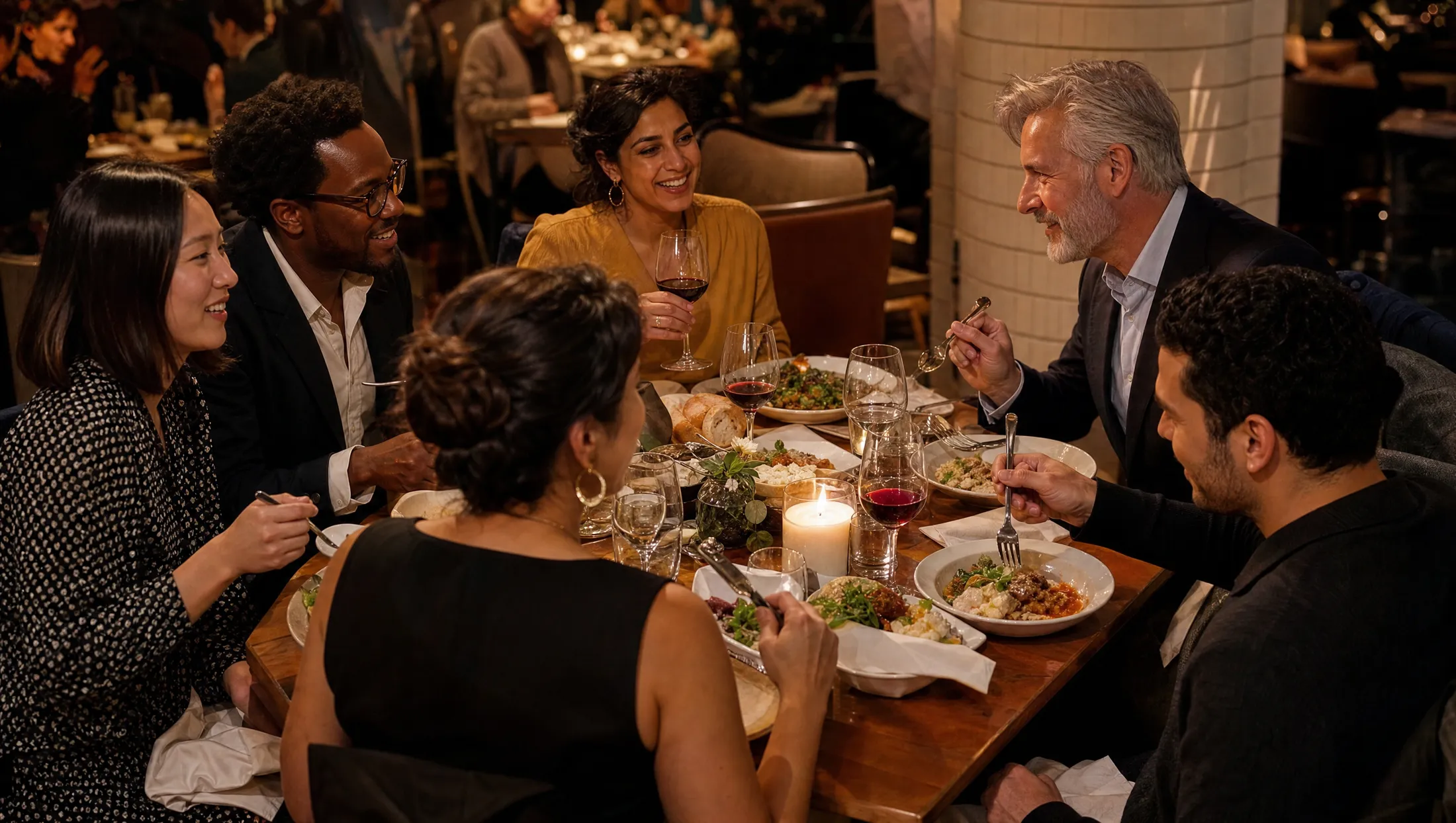
The food-tourism economy reached an inflection point in 2024 and has only grown since. The 2026 statistics that frame the opportunity:
TL;DR — Key Takeaways
84% of travelers in 2026 say local cuisine influences their destination choice. Food is no longer a side activity for tourists — it's a primary reason for the trip.
Before any of these tactics can work, tourists have to find you on Google in the first place — start by optimizing your restaurant’s Google Business Profile so your listing shows up when they search.
The five non-negotiable building blocks of a tourist-friendly restaurant in 2026 are: a multilingual digital menu, allergen filtering, photographs of every dish, a strong Google Business Profile, and staff trained in basic hospitality across cultures.
Tourists in 2026 increasingly use AI assistants (ChatGPT, Gemini, Perplexity) to choose restaurants — Generative Engine Optimization (GEO) is now as important as traditional Google SEO.
TripAdvisor still matters for older tourists, but Google Maps and Instagram dominate for under-40 travelers. Optimize all three; budget effort proportional to your guest mix.
Tools like Intermenu collapse three of the five building blocks (multilingual menu, allergen filter, dish photos) into a single workflow — making the tourist-readiness investment a one-afternoon project rather than a multi-quarter rollout.
Why winning international guests matters more than ever in 2026
The food-tourism economy reached an inflection point in 2024 and has only grown since. The 2026 statistics that frame the opportunity:
84% of international travelers say that local cuisine influences their destination choice.
92% of travelers say the food scene is a meaningful factor in their city-level destination choice.
The global food tourism market is on track to reach $2 trillion by 2027.
Tourist-area restaurants in major destinations report international guests at 30–60% of total covers in peak seasons.
Average check size for international tourists is typically 15–25% higher than for local guests in the same restaurant — they're often celebrating, on holiday, less price-sensitive.
The shift over the past decade: food has moved from "thing tourists do while visiting a place" to "reason tourists pick a place." Tourist-area restaurants that treat international guests as a core audience — not a peripheral one — are the ones capturing the bulk of this growth.
This pillar covers the practical strategy: what tourist-friendliness actually looks like in 2026, what infrastructure changes pay off fastest, and how to measure whether the investment is working.
How do tourists find restaurants in a foreign city?
The 2026 tourist restaurant-discovery funnel, ranked by influence:
1. Google Maps / Google Search (~40% of decisions) The dominant entry point. Tourists search "[cuisine] restaurants near me" or "best [dish] in [city]" and pick from the Maps results. Your Google Business Profile is the most important single asset.
2. AI assistants — ChatGPT, Gemini, Perplexity (~15% and rising) The fastest-growing discovery channel. Tourists ask "where should I eat in [city]?" and receive a curated list. The criteria these assistants use are different from traditional SEO — they care about citations across high-authority sources, structured menu data, and AI-readable content.
3. Instagram (~15% — heavily skewed under-35) Second-most-important discovery channel for younger tourists. A great Instagram presence can drive 20–40% of bookings in tourist-zone restaurants.
4. TripAdvisor (~10% — heavily skewed over-50) Still meaningful for older tourists and first-time city visitors, but losing share to Google Maps each year.
5. Hotel concierges and tour guides (~10%) Especially for higher-end and culturally specific recommendations. Worth cultivating these relationships.
6. Word-of-mouth from other travelers (~5%) Travel forum posts, group chats, friends-of-friends recommendations.
7. Walk-in / passersby (~5%) Window-menu scanning, sandwich-board catching, evening atmosphere visibility.
The percentages vary by destination and demographic, but the ranking is broadly consistent across major tourist cities in 2026. The three highest-leverage investments are: Google Business Profile, AI-search readiness, and Instagram presence.
What 5 things make a restaurant "tourist-friendly"?
Five operational signals that consistently distinguish tourist-friendly from tourist-indifferent restaurants:
1. A multilingual digital menu
The single most important infrastructure. A tourist who can read the menu in their own language orders confidently, spends more, and leaves a better review. A tourist who can't reads menu errors as restaurant carelessness and orders defensively.
In 2026, the bar is every language your guests read, with allergen filtering— not "we have an English version." Hospitality platforms like Intermenu handle this automatically; the operator describes the menu once in their own language and the system translates it into every language they switch on, allergen names included.
2. Allergen filtering on the menu
Tourists with dietary restrictions are dramatically more loyal than tourists without. A restaurant that lets guests filter the menu by allergens and dietary preferences (vegetarian, vegan, halal, gluten-free) becomes the obvious choice for traveling parties with mixed needs.
The compounding effect: allergic-traveler reviews are the most enthusiastic class of restaurant reviews, and they spread through specialized travel networks at a much higher rate than general restaurant reviews.
3. Photos of every dish
Tourists are choosing dishes they've often never seen before. Photos transform "what is this?" into "I want this." The conversion lift on photographed dishes is consistently 25–30% across cuisines.
In 2026, this is no longer a budget question. AI dish photography produces studio-quality images at $0.40–$0.60 per dish — the entire menu can be photographed for under $50.
4. A strong Google Business Profile
The Google Business Profile is the entry point for 40% of tourist restaurant decisions. The components that matter:
50+ recent photos (food, interior, exterior, atmosphere)
Accurate hours, including holiday hours
Detailed cuisine description with key dish names
Menu link pointing to the multilingual digital menu
Recent positive reviews with operator responses
Clear allergen and dietary attributes
Booking link (OpenTable, Resy, or direct)
A neglected Google Business Profile is the most common single failure mode in tourist-area restaurants. Spending two hours getting it right is the highest-ROI marketing time investment available.
5. Hospitable, culturally-aware staff
Staff who can greet guests in basic phrases of the top tourist languages, who know how to handle dietary restrictions across cultures (halal, kosher, Hindu-vegetarian, Jain, gluten-free), and who treat tourists with the same warmth as locals.
Training investment for this is small. Cultural-awareness materials and basic phrase cards in every language your guests read can be produced in a day. The revenue impact compounds across years.
Should I market on TripAdvisor, Google, or Instagram?
The honest 2026 answer: all three, but allocated by your guest demographic mix.
For under-35 tourist mix: weight Instagram and Google heavily, TripAdvisor lightly.
For 35-55 tourist mix: weight Google heavily, Instagram and TripAdvisor moderately.
For over-55 tourist mix: weight Google and TripAdvisor moderately, Instagram lightly.
For mixed: Google is the universal essential. Add Instagram if your visual content is strong; add TripAdvisor if you serve older tourist demographics meaningfully.
Time investment to do these well:
Google Business Profile: 2–3 hours initial setup, 30 minutes per week ongoing (responding to reviews, adding photos)
Instagram: 5 hours per week minimum to build a sustained presence; ad spend optional
TripAdvisor: 1 hour per week responding to reviews; less ongoing creative work needed
The compounding leverage in 2026 is increasingly on AI-search visibility— getting cited by ChatGPT, Gemini, Perplexity when tourists ask for recommendations. This requires a different optimization strategy (covered in the marketing cluster) but it's where the discovery growth is happening fastest.
How important is multilingual signage and menus?
Critical. This is the single largest leverage point in winning international guests in 2026.
The data:
75% of diners prefer menus in their native language
Order errors drop 17% in restaurants that switch from single-language to multilingual menus
Average check size lifts 12–18% on international covers after multilingual menu launch
Walkout rates drop measurably in tourist-area restaurants that add a multilingual menu
The mechanism is straightforward: tourists who can read the menu order more confidently. They explore upsells (wine pairings, sides, desserts) instead of sticking to the safe-default item. They feel respected. They tip better. They review better.
The historical objection — "translation is too expensive" — has been obsolete since 2024. AI translation in hospitality contexts now costs near-zero per language. A 50-item menu can be translated into every language your guests read in one background run, and on Intermenu, translation runs are unlimited from Básico (€14/month) upwards.
The current resistance to multilingual menus in tourist-area restaurants is operational inertia, not financial constraint. The restaurants making the switch in 2026 are seeing meaningful AOV lift within 30 days.
What service training do staff need for international guests?
Five training modules that move the needle most:
1. Basic greeting phrases in top tourist languages."Hello," "table for X," "do you speak [language]?" "I'll get someone who does," "thank you," "goodbye" in the 8 top inbound nationalities. 2 hours of staff training, a phrase card kept at the host stand.
2. Cultural eating-pattern awareness. When does dinner happen in different cultures? What are the typical allergen concerns by nationality? What are common cultural sensitivities (e.g., not assuming a Chinese guest wants ice in their water)? Half-day training.
3. Religious-dietary basics. What halal, kosher, Hindu-vegetarian, Jain mean in practical kitchen terms. How to confirm or deny safety on each dish. 2 hours of training.
4. Allergen handling protocols. When a guest declares an allergy, what's the verification chain? Who confirms with the kitchen? When is the right answer "we cannot guarantee zero cross-contamination"? Documented protocol, 2 hours of training.
5. The patience-and-clarity protocol. When language is hard, what's the plan? Pointing at the menu. Using the QR menu's language switcher. Calling a bilingual colleague. Body language and patience as substitute when needed. 1 hour of training plus written reference.
The total training investment: 1 working day per staff member, every year. The revenue impact compounds for as long as the staff member is employed.
How do I rank in "best restaurants in [city]" Google searches?
Five priorities for restaurant local SEO in 2026:
1. Google Business Profile completeness. Hours, photos, menu link, attributes (cuisine type, price range, dietary options). Every empty field is a ranking penalty.
2. Recent reviews with operator responses. Google rewards active engagement on the GBP. Respond to every review within 48 hours, both positive and negative. Use the responses to demonstrate care.
3. Photos updated weekly. Google Business Profile rewards fresh photos. AI dish photography makes this trivial — generate 5–10 fresh photos a week, post them.
4. Schema markup on your website. Structured data — Restaurant schema, Menu schema, BlogPosting schema for any blog content — helps Google understand your site for both regular search and AI Overviews.
5. Local citation consistency. Your restaurant's NAP (name, address, phone) should be identical across Google, TripAdvisor, Yelp, OpenTable, your own website, and any directory. Inconsistent NAP suppresses ranking.
For deeper local SEO strategy, see the dedicated spoke on Google Maps optimization in the Tourist Hospitality cluster.
What's the role of food influencers in tourist decisions?
Significant for under-35 tourists, marginal for older travelers.
The 2026 reality of food influence:
A single positive video on a tourist-targeting food creator can drive 50–200 bookings to a small restaurant in the following month.
Negative reviews from popular creators do meaningful damage that takes weeks to recover from.
Tourist-targeting creators are highly concentrated — the top 100 food TikTokers / Instagram creators in a major destination drive most influencer-attributable bookings.
Local micro-influencers (5K-50K followers) often have higher engagement rates than mega-influencers and lower per-post costs.
How to engage:
Identify the 10–20 most-relevant food creators in your tourist demographic.
Offer a complimentary tasting in exchange for honest coverage. Don't dictate the angle.
Be ready for both glowing and lukewarm coverage. The honest creators have higher trust and higher conversion.
Track which creators drive bookings (use a unique offer code or booking URL).
The TikTok and Instagram playbooks for restaurants are covered in dedicated spokes in the Marketing cluster.
A practical 90-day tourist-readiness rollout
For an independent restaurant going from "we serve tourists incidentally" to "tourists are a core audience," here's the 90-day reference plan.
Days 1-14: Foundation
Audit current Google Business Profile, fill every gap, add 30+ photos
Set up multilingual digital menu with QR delivery (1-day project with a hospitality platform)
Tag allergens on every dish; activate allergen filtering on the QR menu
Generate AI photos for the top 30 dishes
Brief staff on the new menu; basic greeting phrases in 5 languages
Days 15-45: Visibility
Launch Instagram presence with 3–4 posts per week
Audit and respond to existing TripAdvisor reviews
Set up a partnership protocol with 2–3 nearby hotel concierges
Generate AI-photo ad creatives for Meta and Google
Run a small initial paid campaign ($100–$300 to test)
Days 46-75: Optimization
Review menu analytics; identify top "high-view, low-order" dishes; rewrite descriptions
Adjust language allocation based on actual scan data
Cultivate 5–10 local food creators; offer tastings
Respond to all new reviews within 48 hours
Update Instagram cadence based on early results
Days 76-90: Compounding
Add 2–3 more languages based on scan data
Run an A/B test on the highest-margin dish
Add seasonal photos for the upcoming peak season
Document the protocol so it can be sustained without operator overhead
By day 90, most tourist-area restaurants see measurable lift on:
International cover percentage
Average check size
Online review volume and rating
Inbound booking traffic
The total investment in this 90-day rollout is typically $500–$2,000 in tools and ad spend, plus 30–50 hours of operator time. The revenue impact compounds for years.
Frequently Asked Questions
How do tourists find restaurants in a foreign city? Google Maps/Search (~40%), AI assistants like ChatGPT (~15% and rising), Instagram (~15%), TripAdvisor (~10%), hotel concierges (~10%), word-of-mouth (~5%), walk-in (~5%).
What 5 things make a restaurant "tourist-friendly"? Multilingual digital menu, allergen filtering, photos of every dish, strong Google Business Profile, hospitable culturally-aware staff.
Should I market on TripAdvisor, Google, or Instagram? All three, weighted by your guest demographic. Under-35: Instagram + Google. 35-55: Google + Instagram + TripAdvisor. Over-55: Google + TripAdvisor.
How important is multilingual signage and menus? Critical. 75% of diners prefer native-language menus; AOV lifts 12–18% post-launch on international covers; order errors drop 17%.
What service training do staff need for international guests? Basic greeting phrases, cultural eating-pattern awareness, religious-dietary basics, allergen handling protocols, patience-and-clarity protocol. ~1 working day per staff member annually.
How do I rank in "best restaurants in [city]" Google searches? GBP completeness, recent reviews with responses, weekly fresh photos, schema markup, local citation consistency.
What's the role of food influencers in tourist decisions? Significant for under-35 tourists, marginal for older. Engage 10–20 relevant creators with complimentary tastings; track booking attribution.
Become Tourist-Ready in One Afternoon
Most of the tourist-readiness checklist above takes weeks to roll out — except the menu and visual layer, which collapses to an afternoon when the platform handles translation, allergens and photography in one workflow.
Intermenu brings the multilingual menu, the QR delivery, the allergen filter, and the AI dish photography into a single tool. Three of the five tourist-friendly fundamentals, set up in a sitting.
If you've been planning this rollout in your head for months, give the modern stack one afternoon →
Related guides
The complete guide to multilingual restaurant menus— translate your menu into the languages your international guests actually speak.
Food tourism trends 2026: cities chosen for cuisine— where tourists are travelling to eat, and what they expect on the menu.
How to create a halal menu that attracts Muslim diners— a frequently overlooked international-guest segment.
Getting cited by ChatGPT and Google AI Overviews— how tourists ask AI where to eat, and how to appear in the answer.