
TikTok for Restaurants: Boost Sales Without Going Viral
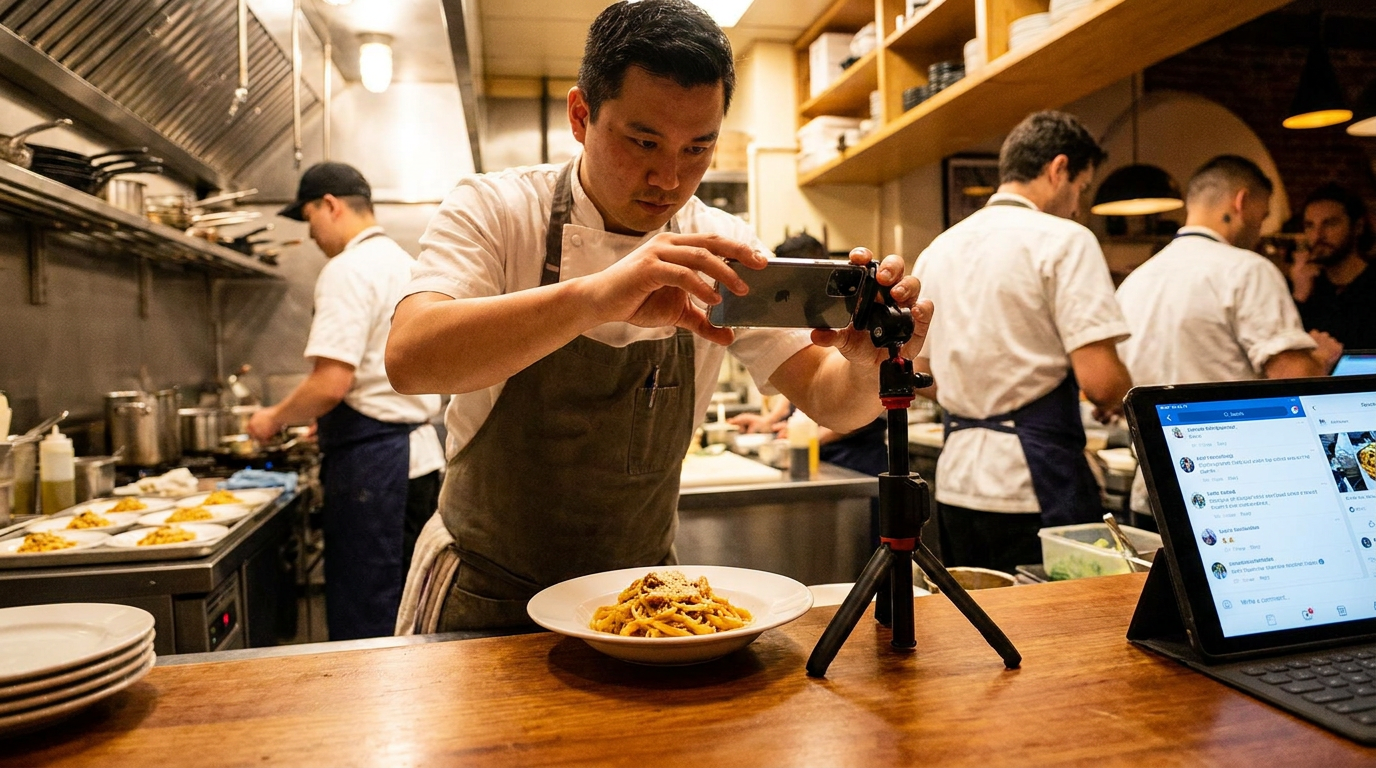
TikTok-driven restaurant bookings are real and measurable, particularly in tourist-area independent restaurants
TL;DR — Key Takeaways
TikTok drives meaningful restaurant bookings in 2026, not just views — particularly for under-35 tourist demographics. The platform has matured into a real conversion channel, not just a brand awareness one.
The format that consistently works for restaurants: 15–30 second videos with a clear hook in the first 2 seconds, kitchen close-ups, and a specific named dish. Generic "come visit us" content underperforms.
Working with food influencers (10K-100K followers, local to your city) drives more measurable bookings per dollar than mega-influencers. Three to five micro-creators per quarter is a sustainable cadence.
TikTok ads have improved significantly. A $200–$500/month budget produces measurable booking lift for tourist-area restaurants in 2026.
You don't need to go viral. Steady consistent posting (2–3 videos per week) builds compounding visibility, with occasional viral moments as upside.
Does TikTok actually drive bookings or just views?
In 2026, both — but only if you set up the conversion path correctly.
The bookings reality:
TikTok-driven restaurant bookings are real and measurable, particularly in tourist-area independent restaurants
A single positive video on a relevant food creator can drive 50–200 bookings over the following 4–6 weeks
TikTok's own analytics now show "click-throughs to website" with reasonable accuracy
Conversion rates from TikTok views to bookings hover around 0.5–1.5% — lower than email but at much higher volume
What kills the conversion path:
A bio link going to a generic website homepage instead of a menu/booking page
No clear booking action visible in the video itself
Slow website that doesn't load when someone clicks through from the app
What lifts conversion:
Bio link directly to multilingual menu + booking
"Tap the link in bio to reserve" CTA in the video and caption
Fast-loading mobile menu and booking flow
Stories or pinned posts highlighting how to book
The 2026 reality: TikTok drives bookings when restaurants treat it as a conversion channel, not just a viral moment chase.
What kind of content goes viral for restaurants?
Five content patterns that consistently get reach in 2026:
1. Dish prep close-ups.15–30 second videos showing a specific dish being prepared — kitchen close-up, hands working, ingredient layering, satisfying final reveal. The most universally-performing restaurant TikTok format.
2. Behind-the-scenes chef content. Chef talking briefly about a signature dish, demonstrating a technique, or sharing the story behind a specialty. Authentic, low-production, high-engagement.
3. Surprising volume / size content. Massive portions, towering plates, generous platings. Reliably high-engagement format for casual dining.
4. Cultural / educational content."What [cuisine] really tastes like," "the difference between [dish] and [dish]," "what locals actually order." Strong for tourist-area restaurants and cultural cuisines.
5. Reaction content. Tourists trying signature dishes for the first time (with permission). Authentic emotional reactions drive shares.
What typically doesn't work:
Generic "come visit our restaurant" content
Slow, polished, advertisement-feeling videos
Long static photos with text overlays
Re-purposed Instagram content that doesn't feel native to TikTok
The platform rewards content that feels native to TikTok — fast, vertical, engaging in the first 2 seconds, real.
How do I work with food influencers on TikTok?
The 2026 influencer playbook for restaurants:
Tier 1 — Mega-influencers (1M+ followers). High reach, high cost, low conversion rate. Generally not the right fit for independent restaurants.
Tier 2 — Macro-influencers (100K-1M). Significant reach, moderate cost ($1K-$10K per post), moderate conversion. Worth considering for tourism campaigns or restaurant launches.
Tier 3 — Micro-influencers (10K-100K). This is the sweet spot for most restaurants. Lower cost (often complimentary tasting + small fee), higher engagement rates, more measurable conversion. Local food creators in your city are particularly valuable.
Tier 4 — Nano-influencers (1K-10K). High authenticity, very local. Often willing to post in exchange for a complimentary meal. Good for building consistent visibility.
The recommended cadence:
3–5 micro-influencers per quarter
1 macro-influencer per year (for major moments — opening, anniversary, new menu launch)
Ongoing nano-influencer relationships (regulars who happen to post about you)
The brief:
Offer a complimentary tasting (don't pay for guaranteed positive coverage — Meta and TikTok both increasingly require disclosure of paid content)
Don't dictate the angle — the creator's authentic voice converts better than scripted content
Provide a brief reference about your signature dishes and any specific positioning
Track which creators drive bookings (unique discount codes or trackable booking URLs)
What's the right length for restaurant TikToks in 2026?
The 2026 length sweet spot for restaurant content:
15–30 seconds — the workhorse format. Most dish prep, behind-the-scenes, and reaction content. High completion rate. Maximum algorithmic distribution.
45–60 seconds — for stories and detailed content. Chef explanations, cuisine education, deep-dive into a specific technique. Lower completion rate but engaged viewers convert at higher rates.
90+ seconds — only for genuinely compelling longer-form content."How we built this restaurant" stories, multi-course tasting menu walkthroughs. Use sparingly.
Under 15 seconds — usually too short for restaurant content. Hard to communicate the dish or restaurant in less than 15 seconds without feeling rushed.
The mistake to avoid: forcing 60-second content into 15 seconds (rushed, unsatisfying), or padding 15 seconds of content into 60 seconds (drags, completion rate drops).
Should I copy trends or create my own?
A mix, with the bias toward authentic original content for restaurant brands.
When trends work:
Trending audio with your own dish content (TikTok rewards trending audio)
Trending video formats (POV, "tell me you're [X] without telling me," recipe reveals) when they fit naturally
Topical food trends (when a specific dish or technique is having a viral moment)
When trends don't work:
Forcing your restaurant into a trend that doesn't fit the brand
Late adoption of a trend that's already peaked
Following trends that don't have a clear path to conversion
The 70/30 split that works:
70% authentic original content (your dishes, your kitchen, your team)
30% trend-leveraging content (using trending audio with your visuals, fitting your content into popular formats)
Restaurants that lean too heavily on trends feel inauthentic. Restaurants that ignore trends entirely miss the algorithmic boost trends provide. The middle path is the working one.
Should I run TikTok ads?
For tourist-area restaurants in 2026, yes — once organic content has built a foundation.
The right sequencing:
Start with organic content for at least 2–3 months (build a content baseline)
Identify your 3–5 best-performing organic videos
Boost those videos with a small ad budget ($100–$300/month) targeting your specific audience
Track conversion (clicks to menu/booking, bookings attributed to TikTok)
Scale spend on what works; pause what doesn't
TikTok ad targeting that works for restaurants:
Geographic targeting (your city + nearby tourist areas)
Interest targeting (food, travel, dining out)
Demographic targeting (age range matching your tourist demographic)
Lookalike audiences from your existing customer email list
Ad creative best practices:
Use organic videos that already proved engagement, not custom ad creatives
Add a clear CTA at the end (last 3 seconds)
Use AI-generated B-roll between key shots if you need to stretch a 15-second clip into a 30-second ad
Refresh creatives every 2–3 weeks to combat ad fatigue
A $200–$500/month TikTok ad budget, combined with strong organic content, produces measurable booking lift for most tourist-area restaurants in 2026.
A 90-day TikTok content calendar template
A sustainable rhythm for a restaurant just starting on TikTok in 2026.
Week 1-2: Setup
Create / optimize TikTok for Business account
Set up bio link to multilingual menu + booking
Generate first batch of dish prep videos (3–5)
Establish posting schedule: 2–3 videos per week, optimal times for your audience
Week 3-4: Content baseline
6 dish prep videos (one per signature dish)
2 behind-the-scenes / chef content videos
Test posting times to find optimal windows
Engage with comments daily
Month 2: Refinement
Identify best-performing video types
Lean into formats that work for your specific restaurant
Begin engaging with food creators in your city (comment, follow, occasional collaboration outreach)
First influencer tasting (1–2 micro-influencers)
Month 3: Distribution
2–3 dishes prep videos per week (steady cadence)
1 trending-audio adoption per week (when natural)
Boost top-performing organic videos with $100–$300 ad spend
2–3 more influencer tastings
Days 90+: Sustainable rhythm
8–12 videos per month
$200–$500/month ad spend
3–5 influencer collaborations per quarter
Ongoing engagement and trend monitoring
This calendar produces a real TikTok presence in 90 days without overwhelming the operator. The compounding effect builds across months.
Frequently Asked Questions
Does TikTok actually drive bookings or just views? Both, when conversion paths are set up. Bio link to menu + booking, clear CTA in video, fast mobile menu. Conversion rates 0.5–1.5% from views to bookings.
What kind of content goes viral for restaurants? Dish prep close-ups, behind-the-scenes chef content, surprising volume / size content, cultural / educational content, reaction content.
How do I work with food influencers on TikTok? Focus on micro-influencers (10K-100K followers) and local nano-influencers. 3–5 collaborations per quarter. Offer complimentary tastings; don't dictate the angle.
What's the right length for restaurant TikToks in 2026?15–30 seconds for most content. 45–60 seconds for detailed content. 90+ seconds rarely worth it. Under 15 seconds usually too short.
Should I copy trends or create my own?70% authentic original content, 30% trend-leveraging. Pure trend-following feels inauthentic; pure trend-ignoring misses algorithmic lift.
Get Our Free 30-Day TikTok Content Calendar
The hardest part of starting on TikTok is consistent content production. The strategy is straightforward; the discipline is what's hard.
Intermenu covers the visual side: AI dish photos from the dish editor and a promo image studio with Trends & templates for posters and food pictures, all on your plan's monthly image allowance. Keep the 90-day TikTok calendar itself in a simple spreadsheet, and the setup work still collapses to an afternoon.
If "we should do TikTok" has been on the to-do list for months, the calendar template is the easiest version of starting →