
Restaurant Instagram Strategy: A 2026 Content Calendar
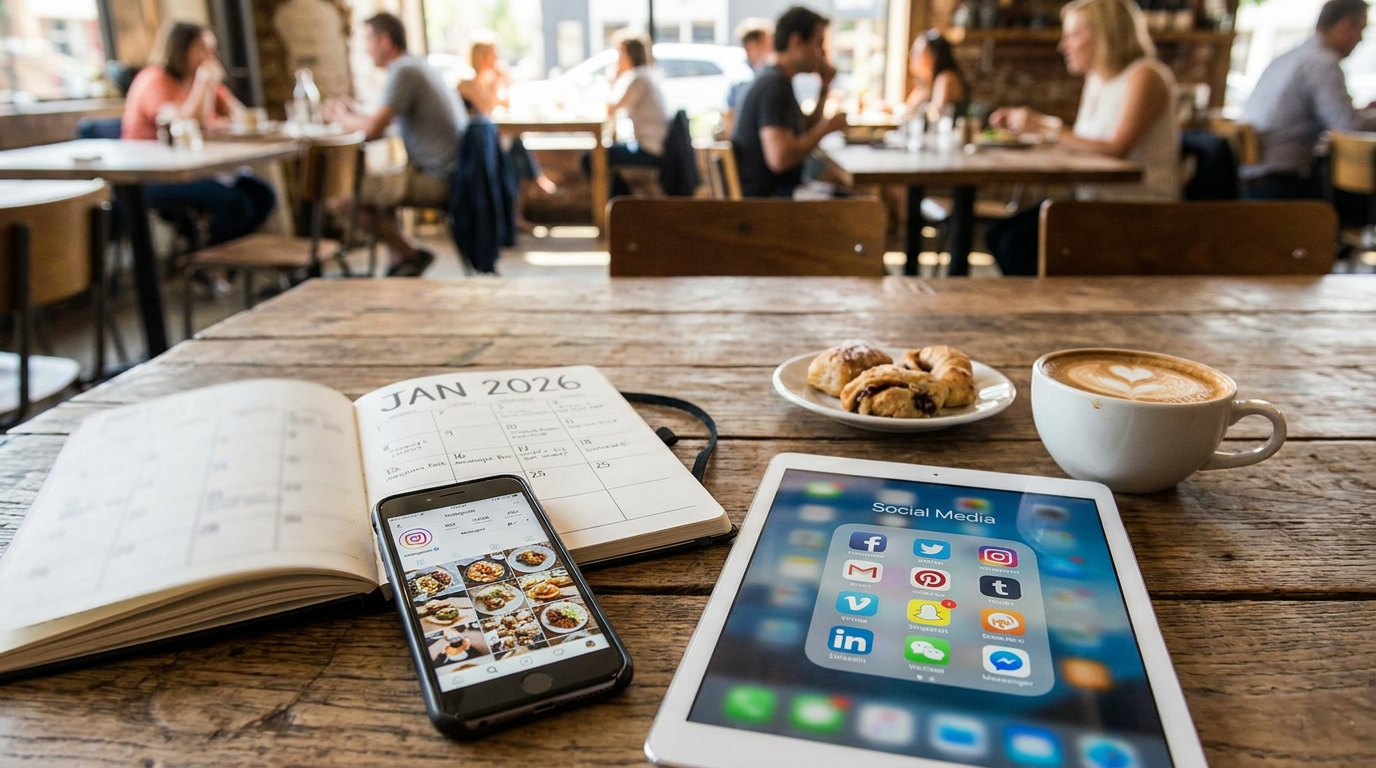
The 2026 algorithmic floor is 3 posts per week for a restaurant account to maintain organic visibility. Below that, the algorithm progressively reduces reach.
TL;DR — Key Takeaways
The 2026 Instagram restaurant playbook is ~60% Reels, 30% feed posts, 10% Stories. Algorithm preference for Reels has solidified and isn't reversing.
Posting frequency: 3–5 times per week minimum to maintain algorithmic visibility. Quality matters more than quantity above this threshold.
The single highest-converting content type for restaurants in 2026 is the 15–30 second dish-prep Reel — kitchen close-up, slight motion, clear final reveal, minimal text.
AI-generated dish photography performs equivalently to studio photography on Instagram, with the meaningful advantage that you can post fresh photos every week instead of every quarter.
The compounding move most restaurants miss: encouraging guests to tag the restaurant in their own posts, then strategically resharing UGC. This drives authentic reach at near-zero cost.
How often should a restaurant post on Instagram?
The 2026 algorithmic floor is3 posts per week for a restaurant account to maintain organic visibility. Below that, the algorithm progressively reduces reach.
The recommended cadence:
Reels:2–3 per week (the highest-leverage content type)
Feed posts:1–2 per week (dish photos, atmosphere, occasional carousels)
Stories:4–6 per week (lower-effort daily content, 15-second clips)
For most restaurants, this works out to 5–8 individual content pieces per week. Sounds like a lot; with AI-assisted production it's manageable in 2–3 hours per week.
What underperforms:
Posting heavily for a week, then nothing for two weeks
Posting only static photos when Reels drive 70%+ of restaurant Instagram reach
Reposting the same photos seasonally without refresh
Posting at random times of day instead of optimal windows for your audience
The compounding effect: consistent moderate-volume posting outperforms sporadic high-volume bursts on Instagram in 2026.
Should I focus on Reels, Stories, or feed posts?
The 2026 priority allocation:
Reels — 60% of effort. This is where the algorithm rewards you in 2026. Reels reach far more non-followers than feed posts and drive most of the new-customer acquisition.
Feed posts — 30% of effort. Still important for the restaurant's visual identity, the grid that visitors see when they discover your account. Quality matters here more than volume.
Stories — 10% of effort. Useful for daily engagement with existing followers. Doesn't drive much new acquisition. Lower production quality is acceptable.
Why Reels dominate:
Algorithmic preference for short video content
Higher reach to non-followers than any other content type
Better at communicating restaurant atmosphere and dish quality
Compounding effect — successful Reels keep generating reach for weeks
Don't ignore feed posts entirely:
Feed is your "permanent" presence — what people see when they discover your account
Feed photos drive saving (saved posts is a meaningful algorithm signal)
Feed grids influence first-impression conversion to follow
The 60/30/10 split has been stable since late 2024 and is the working benchmark in 2026.
What times of day perform best for food content?
The 2026 timing benchmarks for restaurant content (in your local time zone):
Reels:
11:30 AM – 1:30 PM (lunch decision window)
5:30 PM – 7:30 PM (dinner decision window)
9:00 PM – 11:00 PM (evening browsing window — high engagement, lower booking intent)
Feed posts:
8:00 AM – 9:30 AM (morning planning window)
12:00 PM – 1:00 PM (lunch break browsing)
6:00 PM – 8:00 PM (post-work browsing)
Stories:
Spread throughout the day — Stories reach is less time-sensitive
Higher engagement on Stories posted in active hours (10am, 2pm, 7pm)
Adjust for your audience:
Tourist-area restaurants benefit from posting in their tourists' time zones, not just locally
Restaurants targeting business lunches benefit from morning posts
Late-night venues benefit from late-evening posts
The variation by venue type is meaningful. Test 2–3 weeks of posts at different times and watch which windows your specific audience engages with.
What hashtag strategy works for tourist-area restaurants?
The 2026 hashtag strategy is dramatically different from 2020.
What worked in 2020 and doesn't anymore:
30-hashtag strings with maximum diversity
Generic high-volume hashtags (#foodie, #foodporn, #instafood)
Hashtag-only post strategies
What works in 2026:
5–10 carefully chosen hashtags per post
Mix of geographic, cuisine-specific, and niche tags
Branded hashtags for the restaurant
Trending event hashtags (when genuinely relevant)
The 5-tag template that consistently performs:
Restaurant location tag— #BarcelonaFood or #TokyoEats
Cuisine tag— #ItalianFood or #SushiOmakase
Specific dish tag— #CarbonaraRoma or #TonkotsuRamen
Audience tag— #TouristGuide or #FoodTraveler
Branded tag— your restaurant's own hashtag
This combination signals to Instagram's algorithm what content category the post belongs to without spamming.
Do AI-generated food photos work on Instagram?
Yes — and there's no meaningful performance difference between AI and studio photos in tested results.
The 2026 reality:
Instagram's algorithm doesn't penalize AI-generated content for restaurant categories
AI-generated photos can carry subtle "AI Info" labels (auto-applied by Meta detection) without suppressing reach
Engagement rates on AI vs studio photos are statistically indistinguishable for restaurant content
The cost gap (300–1,000x) means AI-driven Instagram operations can refresh content far more frequently
The competitive advantage:
A restaurant posting 3 fresh AI dish photos per week outperforms a restaurant posting 1 studio photo per week, even if the studio photo is technically more polished
AI photography enables Instagram-specific content (square crops, vertical Reels, story-format cuts) without separate shoot logistics
Reference image workflows let AI-generated content match your existing brand identity precisely
Best practice:
Use AI-generated photos for the bulk of dish content
Reserve professional photography for cornerstone brand moments
Reference image input keeps AI photos consistent with your specific dish appearance
Plain-language image tools let non-photographers generate content quickly
Intermenu's AI dish photos are generated directly within the menu workflow, and its promo image studio makes pictures of food and posters from your own description and reference images — every dish photographed, refreshable seasonally, on your plan's monthly image allowance.
A 90-day Instagram content calendar template
Here's a practical 90-day rhythm that fits in 2–3 hours per week of actual production work.
Weekly base cadence (every week):
Monday Reel— Behind-the-scenes prep of a popular dish. 15–30 seconds. Kitchen close-up, slight motion, clear final reveal.
Wednesday Feed Post— High-quality dish photo with a short, evocative caption. Full English plus a brief mention in your top 1–2 tourist languages.
Friday Reel— Atmospheric / "why come here this weekend" content. 20–40 seconds. Could be the dining room filling up, plating the chef's specialty, a busy bar service moment.
Saturday Feed Post— A second dish photo or a carousel showing 2–3 dishes from a category (pastas, desserts, etc.).
Daily Stories (×4-6)— 15-second clips throughout the week. Lower production. Examples: server recommending today's special, ingredient delivery moment, chef joking with a regular, a guest's reaction to a dish (with permission).
Monthly themes (rotate quarterly):
Month 1: Signature dish spotlight (one per week, deep dive on each) Month 2: Behind-the-scenes (kitchen, sourcing, chef's day) Month 3: Community (guests, regulars, partner suppliers, neighborhood)
Seasonal cadence:
Two weeks before each season: Reel announcing the new seasonal menu
One week before each season: Carousel showing 4–5 new seasonal dishes
Each holiday period (Christmas, Valentine's, etc.): Themed content 7–10 days before
This calendar produces ~8 posts per week minimum, refreshes seasonally, and runs sustainably with AI-assisted content production.
How do you turn Instagram engagement into actual table bookings?
Five conversion mechanisms that work in 2026:
1. Bio link to multilingual menu + booking. Make the path from Instagram bio to "table booked" two taps maximum. The bio link should go to your QR menu page with a prominent reservation button.
2. Reel CTAs. Most Reels should end with "tap to view our menu" or "save this and book your table." The CTA in the caption matters less than the CTA in the closing seconds of the Reel itself.
3. Story stickers. Reservation stickers, link stickers, polls. Stories convert directly to bookings far more than feed posts when you make the booking path explicit.
4. DM responses with clear answers. A DM asking "do you have a table tonight?" should get a response within an hour with a booking link. Train this into your Instagram management routine.
5. Story highlights for evergreen info. Pin Story highlights for "Menu," "Bookings," "Hours," "Getting Here" so visitors can find practical info without scrolling.
The goal: every Instagram interaction has a clear, frictionless path to a booking. The restaurants that get this right see 3–5% of their organic Instagram reach convert to inquiries — meaningful at scale.
What about Instagram ads?
Worth doing as a layered investment for tourist-area restaurants in 2026, but not a priority before the organic foundation is solid.
The right sequencing:
Get your organic Instagram presence to a baseline (3+ posts/week, decent grid, growing follower count)
Run small targeted ads ($100–$300/month) to test what works
Scale ads that produce measurable bookings; pause ads that don't
Use AI-generated creatives for the bulk of ad content (cheap, fast, refreshable)
What converts in restaurant Instagram ads:
Single-dish hero images with price + CTA
Reels showing kitchen prep with end-card booking link
Carousel ads showing 3–5 signature dishes with menu link
Story ads with reservation stickers
What underperforms:
Generic "come visit us" ads with restaurant interior photos
Long-text ad creatives with multi-paragraph descriptions
Ads without clear booking paths
For most restaurants, $200–$500/month in well-targeted Instagram ads produces measurable lift over a 90-day window. The lift compounds as the organic foundation strengthens.
Frequently Asked Questions
How often should a restaurant post on Instagram?3–5 times per week minimum. Below 3, algorithmic visibility decays. Above 7–8, quality often suffers.
Should I focus on Reels, Stories, or feed posts?60% Reels, 30% feed, 10% Stories. Reels drive the bulk of new-customer acquisition; feed maintains the visual brand; Stories engage existing followers.
What times of day perform best for food content? Reels: 11:30 AM-1:30 PM, 5:30-7:30 PM, 9-11 PM. Feed: 8-9:30 AM, noon-1 PM, 6-8 PM. Stories: spread throughout active hours.
What hashtag strategy works for tourist-area restaurants?5 carefully chosen tags: location, cuisine, specific dish, audience, branded. Skip the 30-tag dumps that worked in 2020.
Do AI-generated food photos work on Instagram? Yes — performance is statistically equivalent to studio photos. The cost gap (300x cheaper) enables much higher posting frequency, which compounds.
Create Scroll-Stopping Food Posts in Minutes
The bottleneck on most restaurant Instagram accounts isn't strategy — it's content production. Studio photography is too slow and expensive to fuel a 5-posts-per-week cadence; phone photos lack the polish.
Intermenu's promo image studio generates Instagram-ready dish pictures, most in under a minute, and lets you add your own reference images to keep the feed consistent.
If your Instagram cadence has stalled, the fix is usually upstream — at content production, not at strategy. Fix that bottleneck and the rest follows →