
Optimizing Hotel F&B Menu Management for 2026 Success
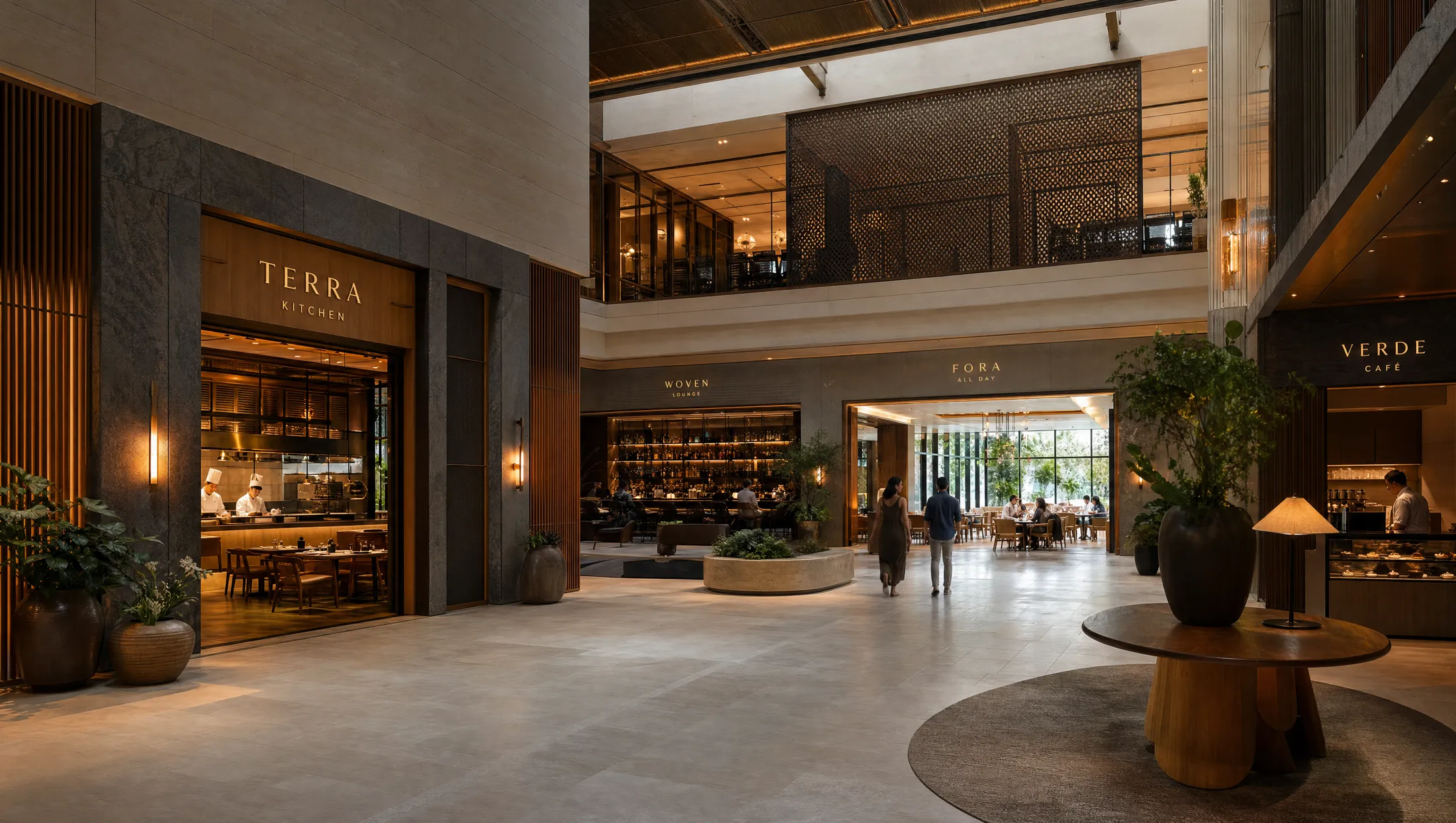
Why hotel F&B menu management is its own discipline
TL;DR — Key Takeaways
A modern 4-star+ hotel with multiple F&B outlets needs a single source-of-truth menu platform that handles main restaurant, bar, room service, banquet, and pool/spa menus from one master.
The 2026 hospitality menu stack consolidates what used to be 4-6 separate tools: menu builder, multilingual translation, allergen tagging, AI dish photography, QR delivery, and analytics — all in one platform.
Multi-property brand consistency is impossible without structured reference image and style anchor systems. Manual prompt-writing across 50 properties produces visual chaos by week three.
GDPR and regional compliance for hotel digital menus require structured allergen data, audit trails, and per-jurisdiction privacy controls — features built into enterprise menu platforms but absent from generic QR menu tools.
The annual ROI math for hotel groups is overwhelming: typical recovered revenue from multilingual menu rollout runs €120K-€480K per property, against subscription costs of €5K-€15K per property.
Why hotel F&B menu management is its own discipline
A typical 4-star international hotel has:
A main restaurant (breakfast, lunch, dinner)
A bar and lounge (cocktails, light food)
Room service (24-hour or specific hours)
A banquet and event service (weddings, corporate events, conferences)
Often a pool or spa restaurant
Sometimes a poolside or rooftop bar
Sometimes an executive lounge
That's 5-7 distinct menus per property. Each has its own dishes, pricing, hours, and audience. They share a brand identity, kitchen infrastructure, and (often) ingredients.
Managing this across a single property is hard. Managing it across a hotel group with 50+ properties globally — each with its own outlets, regional variations, and local compliance requirements — is impossible without a structured platform.
This pillar covers the operational architecture of hotel F&B menu management in 2026: what works, what fails, what the modern stack looks like, and what compliance and brand-consistency challenges to plan for.
How do hotels manage menus across multiple restaurants, room service, and banquets?
The 2026 reference architecture for multi-outlet hotel menu management:
Layer 1 — Master menu database
A single structured database of all menu items across all outlets:
Each item with full metadata (ingredients, allergens, dietary markers, prices, availability)
Organized by outlet (which menu(s) the item appears on)
Linked to inventory and POS systems where applicable
Versioned (every change tracked with timestamp and author)
Layer 2 — Outlet-specific menu views
Each outlet (main restaurant, bar, room service, banquet) has its own view onto the master menu:
Includes the items relevant to that outlet
Customizable pricing per outlet (room service often priced higher than restaurant)
Custom layout per outlet (visual identity may vary)
Custom QR codes per outlet
Layer 3 — Multilingual translation layer
All menu content translated into as many languages as your guests need from the master:
Translation runs automatically when the master changes
Native-speaker review on top items per language
Allergen tags render in the standardized form for each language
Cultural context per dish where relevant
Layer 4 — Visual content layer
AI-generated and reference-anchored dish photography:
Brand-style anchor for the entire property
Sub-anchors per outlet (more casual at the pool bar, more refined at the main restaurant)
Reference images for signature dishes
Refresh capability for seasonal updates
Layer 5 — Compliance and audit layer
Structured tracking of:
Allergen tagging per dish
Dietary marker tagging per dish
Menu version history
Translation review records
Per-jurisdiction compliance settings (GDPR for EU properties, similar elsewhere)
Layer 6 — Analytics and reporting
Per-outlet, per-language, per-dish, per-day:
Menu views and dish opens per outlet
Languages guests read the menu in (views per language)
Where guests came from: QR scan, direct link, another website or a tagged campaign link
Orders and revenue per outlet, taken from the POS and compared with dish opens by hand (the menu itself takes no orders)
A modern hospitality menu platform covers several of these layers in one tool —Intermenu is one example: it covers the menu itself, translation, allergen and diet tags, AI dish photos, the QR code and menu insights, while enterprise platforms in the upper tier add approval and audit layers. Cobbling this together from separate tools (separate menu builder + separate translation service + separate photography process + separate analytics tool) is dramatically more expensive and significantly less reliable.
What software stack does a 4-star hotel actually use for F&B?
The 2026 hospitality F&B technology stack typically includes:
Property Management System (PMS):
Opera, Mews, Cloudbeds, RoomRaccoon
Manages reservations, room status, billing
Point of Sale (POS):
Toast, Square, Lightspeed, Revel, MICROS
Manages orders, transactions, kitchen tickets
Hospitality menu management platform:
Modern integrated platform with multilingual, allergen, photography, analytics
Examples: Intermenu, MenuPlato, Bbot, custom builds for major chains
Some connect to a POS to sync orders; Intermenu takes no orders and does not integrate with a POS, it runs alongside yours
Inventory management:
Sometimes integrated with POS, sometimes separate
Tracks ingredient stock, supplier orders, costs
Reservation system:
Often integrated with PMS for hotel restaurants
OpenTable, Resy, SevenRooms for restaurant-specific bookings
Guest engagement:
Email and loyalty platforms
Often integrated with PMS for guest preferences
The 2026 trend: consolidation. Older hotels often have 6-8 separate tools that don't talk to each other; modern stack consolidates to 3-4 integrated platforms. The hospitality menu platform is the substrate that connects guest-facing experience (menu, ordering, allergen filter) with operational systems (POS, kitchen, inventory).
How do you keep brand consistency across 5 in-house restaurants?
Brand consistency at multi-outlet scale is one of the harder operational problems in hotel F&B. The 2026 solution:
Layer 1 — Master brand identity
A defined brand voice, visual style, and guest experience standard, documented at the corporate level:
Brand colors and typography
Photography style anchor
Tone of voice in menu copy
Guest service philosophy
Layer 2 — Outlet-specific variations
Each outlet has a defined relationship to the master brand:
Main restaurant: full formal expression of the brand
Bar: more casual, evening-focused interpretation
Room service: convenient, comfortable interpretation
Banquet: occasion-driven, scalable interpretation
Pool bar: relaxed, outdoor interpretation
The variations are documented and constrained — not free-form per-outlet creativity, but structured deviations from the master.
Layer 3 — Structured templates
Each menu, each ad creative, each dish description follows templates that bake the brand consistency in:
Menu copy templates per dish type
Visual templates per outlet
Allergen and dietary tag conventions
Pricing structure logic
Layer 4 — Workflow controls
Menu changes and visual updates flow through approval workflows:
Outlet-level changes flagged for property manager approval
Cross-outlet changes flagged for property F&B director approval
Brand-level changes flagged for corporate marketing approval
This sounds bureaucratic. The reality is that without it, multi-outlet hotels drift visually and verbally within months. The structured workflow takes ~20% of the time of free-form changes and prevents 80% of the brand drift.
Intermenu doesn't run approval workflows or a corporate brand library: on the Multi plan each location keeps its own menu, and a new location can start from a copy of another location's sections, dishes and choice groups. Approvals stay in your own process.
What's the best way to handle multilingual menus in international hotels?
The 2026 best practice:
Pick the language tier per property based on guest mix
Not every property needs every language under the sun. A hotel in Bali serves predominantly Australian, Chinese, and Indian guests; a hotel in Berlin serves a different mix. Configure each property's language tier based on actual guest data.
Standardize the structure across all properties
The translation engine, the allergen tagging conventions, the visual presentation — all standardized at the corporate level. Property-level customization happens in dish content, not in menu architecture.
Native-speaker review tied to property
Each property has access to native-speaker reviewers in their key tourist languages. Review can be in-house (multilingual staff) or outsourced (language-school partnerships, freelance reviewers). The corporate platform manages the review workflow.
Rolling translation refresh
When dishes change at a property, the multilingual translations regenerate automatically. The native-speaker review queue gets a notification for top-20 dishes; the rest deploy with AI translation only.
Allergen tagging as structural foundation
Allergens travel as structured data, not translated text. This is the single most important compliance and safety decision in multilingual hotel menus.
Cultural context per dish
For regional or culturally specific dishes, a small cultural-context note translates alongside the description."Branzino al sale: a traditional Italian preparation, salt-baked and cracked at the table."
The result: a guest at any property of a global hotel chain finds the menu in their language, with appropriate cultural context, with allergen and dietary information they can filter by, and with a consistent brand voice.
How does allergen compliance work at hotel scale?
Hotel-scale allergen compliance is harder than independent-restaurant allergen compliance for three reasons:
1. Multiple kitchens
A hotel with 5 outlets has 5 kitchens (or sub-kitchens) with potentially different prep workflows, different cross-contamination patterns, and different staff training cadences. Allergen disclosure has to reflect each kitchen's actual workflow, not a property-wide assumption.
2. Multiple cuisines
A hotel might have an Italian main restaurant, a Japanese sushi outlet, a casual all-day dining venue, and a fine-dining French restaurant in one property. Each has different allergen profiles and different ingredient bases. The allergen tagging needs to reflect cuisine-specific reality.
3. Multi-jurisdiction compliance
A hotel chain with properties across multiple regions faces multiple compliance frameworks (EU 1169/2011 for Europe, FALCPA for US, FSANZ for Australia, etc.). The allergen tagging structure must support all of them simultaneously.
The 2026 best-practice approach:
Tag every dish with the EU 14 framework (the most comprehensive baseline)
Layer regional-specific compliance on top (specific US disclosures, Australian gluten requirements, etc.)
Document audit trails per dish and per change
Train staff per outlet on outlet-specific allergen handling
Run quarterly cross-outlet allergen audits at the property level
Document the protocol for legal defense if needed
Modern hospitality menu platforms handle the structural layer (tagging, multilingual rendering, audit trails). The kitchen-level workflow (training, cross-contamination control, supplier verification) remains the operator's responsibility — but the platform makes the documentation trail automatic.
Banquet and event menu management
Banquets and events present unique challenges:
The challenges:
Scale (200+ guests with mixed dietary needs)
Pre-commitment (menu chosen weeks ahead)
Guest dietary discovery (need allergen info from guests in advance)
Multilingual reach (international weddings often have 5-8 guest nationalities)
Coordination (kitchen, service, banquet manager all need synchronized info)
The 2026 best-practice workflow:
Banquet menu builder— same platform as à la carte but with banquet-specific templates (set menus, multi-course progressions, dietary accommodation options)
Pre-event guest dietary collection— guests submit dietary requirements through a digital form, often via QR code in the wedding/event invitation
Per-guest dietary mapping— each guest's requirements mapped to their seat assignment
Multilingual menu cards— printed for the table, multilingual digital menu via QR for guests who want to see ingredients/allergens in detail
Kitchen ticket per dietary need— the kitchen receives clear instructions per guest
Service training— the banquet service team has the dietary mapping in front of them; can confidently answer guest questions
This is significantly more sophisticated than chalkboard-and-handwritten-cards banquet management. Hotel groups that invest in this workflow see fewer service errors, fewer dietary incidents, and better guest reviews.
Per-outlet pricing strategy
Hotel F&B has structural pricing complexity that independent restaurants don't:
Main restaurant: market-aligned pricing
Room service: higher pricing (delivery convenience premium, typically 15-30% above restaurant)
Bar: drinks-focused pricing, food often at restaurant pricing
Banquet: per-person pricing, often substantially below per-cover restaurant pricing (volume economics)
Pool/spa: convenience pricing, often slightly above restaurant
Executive lounge: included in room rate (zero direct pricing)
Managing this complexity in a single menu master requires:
Per-outlet price overrides on shared dishes
Visibility controls (some dishes appear on some menus only)
Currency handling for international properties
Tax handling per jurisdiction
A modern hospitality menu platform handles all of this through structured fields. Manual handling produces drift, errors, and complaints from guests who notice price discrepancies between outlets.
A 90-day enterprise rollout for a hotel group
For a hotel group going from "each property runs its own menus" to "consolidated menu management across the group":
Days 1-30: Foundation
Audit current per-property menu setups
Define corporate-level brand standards (style guide, photography anchor, copy templates)
Choose the enterprise menu platform
Pilot at 1-2 flagship properties
Train property F&B directors on the new platform
Days 31-60: Pilot expansion
Roll out to 5-10 additional properties
Begin native-speaker review processes per property
Generate AI dish photography across pilot properties
Set up per-outlet menus, multilingual translation, allergen tagging
Run initial guest-facing audits
Days 61-90: Group rollout
Roll out to remaining properties
Train property-level staff on the platform
Set up corporate-level reporting and analytics
Document SOPs for menu changes, brand consistency, compliance
Launch the digital menu (QR access) at all properties
Days 90+: Sustained operation
Monthly cross-property analytics review at the corporate level
Quarterly brand-consistency audits
Annual allergen and compliance audits
Continuous improvement based on guest data
The total investment for a 50-property hotel group rollout: typically $200K-$500K in platform setup and training (over 90 days), plus ongoing $250K-$750K/year in platform subscriptions. The recovered revenue (from multilingual menu lift, allergen-driven guest confidence, reduced order errors, and brand consistency-driven booking conversion) typically runs €5M-€15M annually for a 50-property group — a 10-30x ROI.
Frequently Asked Questions
How do hotels manage menus across multiple restaurants, room service, and banquets? Single source-of-truth master menu, with outlet-specific views, multilingual layer, visual content layer, compliance layer, and analytics. Modern hospitality menu platforms consolidate all six layers in one tool.
What software stack does a 4-star hotel actually use for F&B? PMS (Opera/Mews), POS (Toast/Square/MICROS), hospitality menu platform (Intermenu/MenuPlato/etc.), inventory management, reservation system, guest engagement (email/loyalty). 2026 trend: consolidation from 6-8 tools to 3-4 integrated platforms.
How do you keep brand consistency across 5 in-house restaurants? Master brand identity, outlet-specific structured variations, templates, approval workflows. Without this structure, multi-outlet hotels drift visually within months.
What's the best way to handle multilingual menus in international hotels? Per-property language tier based on guest mix, standardized translation engine and allergen conventions across the group, native-speaker review tied to each property, rolling translation refresh.
How does allergen compliance work at hotel scale? Tag every dish with EU 14 framework as baseline, layer regional compliance on top, document audit trails, train per-outlet staff, run quarterly cross-outlet audits.
Book a Demo for Multi-Outlet Menu Management
Hotel F&B menu management at multi-outlet and multi-property scale is a different problem from independent-restaurant menu management. The right platform consolidates what used to be 4-6 separate tools and handles the brand-consistency and compliance complexity that makes hotel operations distinctive.
Intermenu covers up to 3 locations on its Multi plan, under one login: each outlet has its own menu, languages, QR code and menu views, allergen tags on every dish, and organization-level analytics compare the locations. Groups needing more than 3 locations can ask Intermenu about a bigger plan.
If you've been planning a menu-management consolidation for months, see how Intermenu handles several outlets →
Related guides
Hotel F&B by area — the full cluster
This pillar is the hub for hotel F&B menu management. Each link below goes to the operator playbook for that specific outlet:
In-room dining menu — how to design one that sells— the 6-category framework, items that travel, the 25–40% markup math.
Hotel breakfast buffet menu — engineering for profit— the 7 zones, 25–35% food cost target, layout that moves traffic.
Hotel lobby bar menu — what guests actually order— 10–14 cocktails, real zero-proof section, bar food that travels.
Multilingual hotel menus — one menu, every guest language— picking languages with data, dish-name handling, allergen disclosure across languages.
Hotel allergen compliance — multi-outlet F&B operations— EU 1169 + US FALCPA, outlet-by-outlet risk, training across shifts and languages.
QR code in-room ordering — replace the paper card— the 5 system components, language detection, PMS integration.
Hotel banquet & catering menus — pricing by event type— 5 event packages, per-head pricing math, multilingual cards for international weddings.