
The Complete Guide to Multilingual Restaurant Menus in 2026
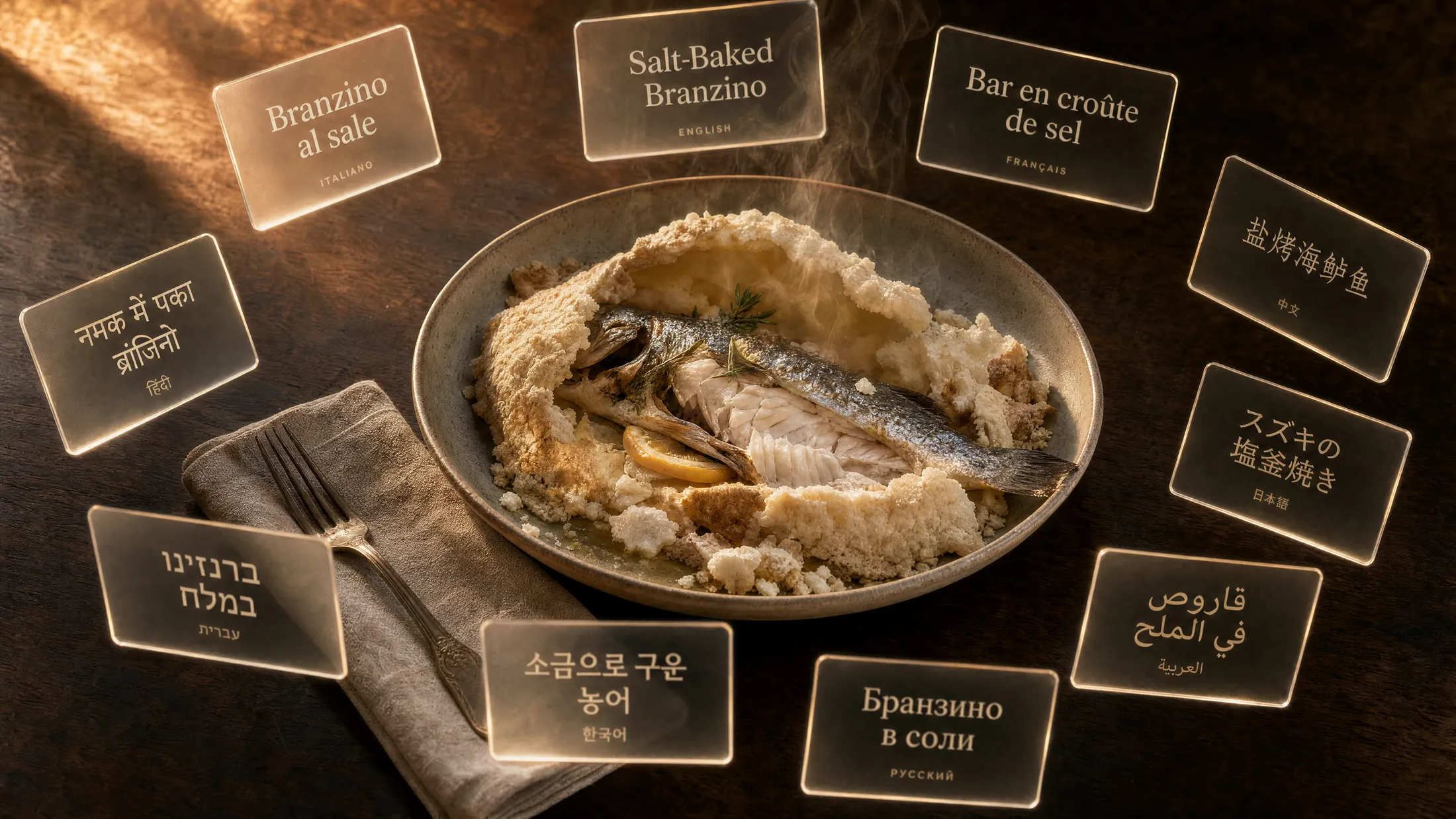
A multilingual menu is no longer a luxury item for fine-dining hotels. It is the difference between a tourist sitting down and a tourist walking out — and in 2026, with AI translation now indistinguishable from native human writing on most dish names, there is no reason any restaurant in a tourist-trafficked street should be running a single-language menu. Modern hospitality platforms like Intermenu compress what used to be a six-week translation project into a single afternoon.
TL;DR — Key Takeaways
A multilingual restaurant menu is a digital or printed menu translated and culturally adapted into multiple languages, served from a single source so updates stay in sync.
75% of diners prefer menus in their native language and order errors drop by roughly 17% when menus speak the guest's language.
For most tourist-area operators, supporting five to seven languages is the right starting point — English, Spanish, French, German, Italian, Mandarin and Arabic cover roughly 80% of inbound traffic in Europe and the Gulf.
Hospitality-trained AI translation now costs about $0.001 per word and renders a 50-item menu in under 60 seconds; professional human translation runs $150–$400 per language and 3–7 days.
The best 2026 setup is a single QR-accessible digital menu with a language switcher, allergen tagging on every item, and translations reviewed by a native speaker for the most-ordered 20% of dishes.
A multilingual menu is no longer a luxury item for fine-dining hotels. It is the difference between a tourist sitting down and a tourist walking out — and in 2026, with AI translation now indistinguishable from native human writing on most dish names, there is no reason any restaurant in a tourist-trafficked street should be running a single-language menu. Modern hospitality platforms like Intermenu compress what used to be a six-week translation project into a single afternoon.
What is a multilingual restaurant menu?
A multilingual restaurant menu is a single menu that displays its dishes, descriptions, ingredients and allergen disclosures in two or more languages. In its modern form, it is digital — accessed by guests through a QR code, web link or in-room tablet — with a language switcher that lets each diner read the same menu in the language they think in.
The key distinction in 2026: a multilingual menu is not five separate menus. It is one canonical menu with one source of truth, and translations that update automatically when the chef changes a dish, raises a price, or adds a daily special. Every change happens once and propagates to every language a guest might select.
This matters because the alternative — printing five language versions of a menu and reprinting all of them every season — is what kills the project. Restaurants try to add Italian, French, Mandarin and Arabic menus; the kitchen changes a dish in week three; only the English menu gets updated; tourists order something that no longer exists; and within a quarter the multilingual program is quietly abandoned. The digital, single-source approach removes that failure mode entirely.
Why multilingual menus matter more in 2026 than ever before
Three forces have converged this year that make multilingual menus a baseline requirement rather than a competitive edge.
Tourism has fully recovered and rebalanced. International arrivals across Europe and Asia are running ahead of pre-pandemic levels, but the geography of who is travelling has shifted. Chinese, Indian, Brazilian and Gulf travellers now make up a much larger share of restaurant footfall in Mediterranean and Western European cities than they did in 2019. These travellers are confident spenders, but they are also less likely to read English fluently than the European tourists they are partly replacing.
AI translation has crossed the quality threshold. Until about 2023, automatic menu translation was a liability — the "chicken not having sex" memes were not myths, they were genuine restaurant menus run through generic translation tools. Hospitality-trained AI translators in 2026 understand that coq au vin should remain coq au vin with an explanatory line in the target language, not be rendered as "rooster in wine sauce." They preserve culinary identity while making the dish legible.
Allergen and dietary disclosure rules now require it. In the EU, the UK and parts of Asia, allergen information must be available to the guest before they order. If your menu is only in your local language and a German tourist with a severe nut allergy cannot read the small print, you are not compliant — and you are exposed in a way that did not exist a decade ago.
The data backs all three trends up. Roughly75% of diners say they prefer menus in their native language. Order errors drop by an estimated 17% in restaurants that switch from single-language to multilingual menus, because servers no longer translate on the fly and guests no longer guess. And59% of diners say translation quality directly affects their satisfaction with the food itself— a poorly translated dish description meaningfully lowers their perception of the meal that arrives, even if the food is identical.
How many languages should your menu support?
The short answer: between three and seven, chosen by your actual customer mix — not by a global aspiration.
The longer answer requires you to look at three things:
The first is your inbound tourism mix. Pull the last twelve months of bookings, walk-ins or delivery orders. If you have reservation data, look at the country code on the phone numbers. If you have card payments, check the bank issuing country on the foreign card transactions. If you have neither, ask your hotel concierge partners which nationalities they send your way most often. A restaurant in central Lisbon will see a very different mix than one in Phuket or Dubai.
The second is your secondary languages of confidence. A French restaurant in Provence supports French and English by default. The third language is almost always either German or Italian (the regional driving traffic) or Mandarin (the highest-spending tourist segment). Don't pick a language you can't support consistently — if your translations are visibly bad, the absence of that language is better than its presence.
The third is your allergen-disclosure obligation. Within the EU specifically, you must be able to communicate the 14 mandatory allergens to any guest, in a language they can understand or by means they can interpret. This effectively forces English support in every EU restaurant catering to tourists, and increasingly forces a second major language as well.
A useful rule for most tourist-area operators in 2026 is the5+2 model: five "always on" languages (English plus your top four inbound nationalities) and two "rotating" languages that you turn on for festivals, conferences, or seasonal traffic spikes. Hotels and resorts typically need 8–12. Independent neighbourhood restaurants in non-tourist districts can often run on two.
Should you translate or localize your menu?
This is the question that decides whether your multilingual menu is a marketing asset or a liability.
Translation converts the words. Pasta becomes pasta in every language because pasta is pasta. Pollo arrosto becomes "roast chicken" in English, poulet rôti in French, Brathähnchen in German.
Localization adapts the meaning. Branzino al sale in an Italian menu does not become "sea bass in salt" in the Japanese version, because that sentence does not communicate to a Japanese reader what the dish actually is. The localized version reads more like塩釜焼きのスズキ— "sea bass baked in a salt crust" — using a familiar Japanese reference point (shio-gama, the salt-baking technique used for tai) so the diner immediately recognizes what is arriving on the plate.
The answer for restaurants is almost always: translate the dish name, localize the description.
The dish name should remain in its original language for two reasons: it preserves the culinary identity (which is part of why the tourist came to your restaurant), and it gives the guest a phrase they can actually pronounce and order. If the menu reads "salt-baked sea bass" and the server only knows the dish as branzino al sale, the order breaks the moment the guest tries to say it out loud.
The description, by contrast, must be fully localized. Do not translate "creamy" into a language where dairy is uncommon and let the reader fill in the gap — describe what the dish actually is, with reference points that match the reader's culinary memory.
This split — original name, localized explanation — is what separates a restaurant menu that respects its culture from one that is trying to disappear into the lowest common denominator.
How much does menu translation cost in 2026?
The cost of translating a 50-item restaurant menu in 2026 ranges from roughly $5 to roughly $4,000, depending on the method you choose.
Method Cost for 50 items × 5 languages Speed Notes Generic AI translator (free tools) $0 (sometimes free) Seconds High error rate on dish names, no allergen handling, frequent cultural mistakes Hospitality-trained AI translator ~$5–$50 (subscription) Under 60 seconds Trained on culinary terminology; typically maintains dish names in original language Hybrid AI + human review ~$200–$600 1–2 days AI base draft, native speaker reviews most-ordered items + allergen disclosures Professional translation agency ~$1,500–$4,000 5–10 days Highest quality, slowest speed, doesn't update when menu changes
Most independent restaurants in 2026 land on the hybrid model. They use a hospitality-trained AI translator — Intermenu, for example, ships translations across every language you switch on in a single click — then pay a native speaker (often a server or a friend of the house) a small fee per language to review the top 20 most-ordered dishes, the allergen text, and the introductory blurb.
This costs less than a single Saturday's wine inventory and it covers 80% of the customer experience, because 80% of orders are concentrated in 20% of menu items. The remaining 80 items can run on AI translation alone at no quality loss the diner will ever notice.
The mistake to avoid is the all-or-nothing thinking — either pay for full agency translation of everything, or skip translation entirely. Both are wrong. Hybrid is the correct answer for almost every restaurant under 100 covers a night.
Can AI translate restaurant menus accurately?
In 2026, yes — with two important caveats.
The first caveat is that the AI must be specifically trained on hospitality and culinary content. Generic translation tools (Google Translate, DeepL out of the box, ChatGPT with no system prompt) are demonstrably better than they were five years ago, but they still produce embarrassing errors on dish names, regional cuisines, allergen disclosures and culturally specific preparations. The error rate on food-specific content from generic tools sits around 8–15% depending on the language pair — and food-specific errors are precisely the errors a guest will notice.
The second caveat is that culturally specific dishes still benefit from a human pass. Cacio e pepe, bibimbap, tagine, moussaka, kibbeh— these are not translation problems, they are cultural-context problems. The AI can translate the words. It cannot tell a German tourist, in a single line, why this dish matters. A native speaker review of the top 20 items closes that gap.
What hospitality-trained AI does extremely well in 2026:
Translates and tags allergens consistently across all languages
Preserves dish names in their original language with optional explanatory text
Maintains menu structure (starters, mains, desserts) and pricing format per region
Handles right-to-left languages (Arabic, Hebrew) without breaking layout
Updates every translation in seconds when the underlying menu changes
Deals with currency, decimal separators and date formats per locale
What it still struggles with in 2026:
Cultural humour or pun-based dish names ("Holy Mole!" — the Mexican AI doesn't laugh)
Regional dialects within a single language (Mexican vs Castilian Spanish, Brazilian vs European Portuguese)
Religious dietary nuance (the difference between halal-certified and "halal-friendly" is a legal distinction the AI tends to flatten)
Obscure ingredients that don't have a direct translation in the target language
A simple test before you ship a multilingual menu: take five culturally specific dishes and ask a native speaker if they would know what was arriving on the plate. If yes, ship it. If no, you have the list of items that need a human pass.
How do I add multiple languages to my QR menu?
The technical setup in 2026 is straightforward and takes most operators under an hour. The actual workflow:
Step 1 — Build your canonical menu in one language. This is your master. Every translation derives from it. Do not skip this step by starting from a translated version — you'll lose track of which language is the source of truth and your updates will drift.
Step 2 — Tag allergens, dietary markers and ingredients on every dish. This step is what makes multilingual translation safe. Allergens like sesame, soy, gluten, dairy and tree nuts must be tagged on the master menu so they translate as data, not as words inside a sentence. A restaurant that writes "contains sesame" in English and lets the AI translate that sentence into 14 other languages is one bad translation away from a hospital visit. Tag them on the dish, not inside a sentence — Intermenu, for instance, lets guests hide every allergen they need to avoid in one tap on every translated menu, and a dish with no allergen information is never shown as safe — so the disclosure is consistent everywhere.
Step 3 — Run AI translation across all target languages. A hospitality-trained engine handles this in under a minute for a typical menu.
Step 4 — Have a native speaker review the top 20 dishes per language. Specifically: dish names, dish descriptions and the allergen text. Skip anything you don't sell often.
Step 5 — Generate the QR code and place it. One QR per table is the modern standard, with a single link that opens a menu page that auto-detects the guest's phone language. The guest can override with a language switcher in the corner if they prefer to read in a different language than their phone setting.
Step 6 — Set the update workflow. When you change a dish, you change it on the master menu only. The system regenerates all translations within seconds, the QR code does not change, and every guest who scans gets the current version.
What languages should a tourist-area restaurant prioritize?
The honest answer is: it depends entirely on where you are. There is no universal top-five. But here are the regional baselines that hold up across 2026 data.
Western Europe (France, Italy, Spain, Portugal): English, French, German, Italian, Spanish are table stakes. The next two should be Mandarin and Arabic. The seventh, increasingly, is Korean.
Central and Eastern Europe (Greece, Croatia, Czechia, Poland): English, German, Italian, Russian (still relevant for tourism in many markets), Mandarin. Add French and Spanish if you're on the cruise route.
Northern Europe / UK / Ireland: English, French, German, Spanish, Italian. Add Mandarin and Arabic for London, Edinburgh, and Dublin.
Middle East (UAE, Saudi Arabia, Qatar, Oman): Arabic and English are non-negotiable. The next four are Russian, Hindi, Mandarin and French. Add German and Italian for the luxury hotel segment.
East Asia (Japan, South Korea, Taiwan, Hong Kong): Japanese/Korean/Mandarin (your local language), English, Mandarin (for Chinese tourists), Korean, and one of {Spanish, French, Russian} depending on local mix.
South-East Asia (Thailand, Vietnam, Indonesia, Malaysia): Local language, English, Mandarin, Russian (still significant in Phuket and Bali), Korean, Japanese. Add Arabic for halal-focused operations.
North America: English, Spanish, French (especially in the US Northeast and all of Canada), Mandarin, Korean. Add Portuguese for Florida and parts of New England.
South America: Portuguese, Spanish, English, French. Add German and Italian in Argentina, Mandarin and Korean in Brazil's tourist cities.
The general rule: pick the languages that map to the money walking in the door, not the languages that sound globally impressive. A Spanish menu in Tokyo is mostly decoration. A Mandarin menu is a revenue lever.
Do I need separate menus per language or one digital menu with a switcher?
One digital menu with a language switcher. Always. In 2026 there is no remaining argument for the alternative.
A single digital menu with a language switcher solves five problems that separate menus cannot:
It keeps prices in sync, so you never have a German guest paying €18 for a dish that costs the Spanish guest at the next table €16 because someone forgot to update the German PDF.
It keeps availability in sync, so when the kitchen 86s the lamb at 8pm, every language version reflects that simultaneously.
It keeps allergen disclosures in sync, which is the one place where inconsistency between language versions creates legal exposure.
It lets the guest switch mid-meal, which they will. Tourists frequently start in their native language to understand the menu, then switch to English to confirm a translation they're unsure about, then switch back to order. Separate menus break that workflow.
It gives you one set of analytics, so you can see which dishes get viewed most across all languages and which dishes are popular only in certain languages — data you cannot get from PDF menus.
Printed menus still have a role for ambience and accessibility (elderly diners, low-phone-battery scenarios, fine-dining ritual), but they should be a derivative of the digital master, not a parallel source of truth.
Common multilingual menu mistakes to avoid
After auditing hundreds of multilingual restaurant menus in the field, the same six mistakes appear again and again. They are easy to fix once you've seen them.
Mistake 1: Translating the dish name."Pollo arrosto" should not become "Roast Chicken" on the menu of an Italian restaurant. Keep the original name and add the explanation. This is the single most common error and it is also the easiest to fix.
Mistake 2: Not tagging allergens as structured data. Allergens written into prose ("contains nuts and dairy") translate inconsistently. Allergens tagged as data symbols (🥜🥛) translate identically every time.
Mistake 3: Translating the menu but not the photos. A multilingual menu where the photo captions are still in the original language signals carelessness. Captions must travel with the language switcher.
Mistake 4: Forgetting currency and decimal formatting. €18,50 in Italian becomes €18.50 in English and ¥2,800 in Japanese — but the AI must be set up to do this. Default settings often leave the original format in place.
Mistake 5: Letting the menu drift. Six months after launch, the chef has changed eight dishes, only the original-language menu reflects the changes, and the multilingual menu is now lying to guests. The fix is one rule: there is one canonical menu, and changes happen there only.
Mistake 6: Skipping the native speaker review. AI translation is good enough that the dish-by-dish review feels unnecessary. It isn't. Twenty minutes of native-speaker eyes on the top 20 items is what separates a multilingual menu that works from one that mildly insults its readers.
How multilingual menus interact with allergen compliance
This is the part that often gets missed: a multilingual menu is not a separate project from allergen compliance. The two systems are joined at the hip.
In the EU, restaurants must be able to provide the 14 mandatory allergens (cereals containing gluten, crustaceans, eggs, fish, peanuts, soybeans, milk, nuts, celery, mustard, sesame, sulphites, lupin, molluscs) on every dish. The information must be available to the guest before they order, and it must be in a form they can understand.
If your menu is only in your local language and a guest cannot read it, you are not compliant just because you have the data on file. You are required to make it accessible.
A well-built multilingual menu does this automatically: each allergen tagged at the dish level, each language translation includes the same allergen icons or words, the QR menu lets the guest hide every dish that contains their allergens, and dishes with no allergen information are set apart with a note to check with staff. This is one of the strongest reasons hotel chains have already migrated — at scale, manual allergen disclosure across a Russian-speaking guest, an Arabic-speaking guest and a Japanese-speaking guest is genuinely impossible without a system. Multilingual menus solve compliance and customer experience at the same time.
How to measure whether your multilingual menu is working
A multilingual menu is not a vanity project, so measure it like any other revenue lever.
Adoption rate. What percentage of QR scans use a language other than your default? In tourist areas this should be at least 25%. If it's under 10%, your QR signage is broken (the language switcher isn't visible enough) or your tourist mix isn't what you think it is.
Order error rate. Track kitchen send-backs and "this isn't what I ordered" complaints before and after launch. Operators who switch from single-language to multilingual menus typically report a 15–20% reduction.
Average check size. Multilingual menus consistently lift average check size, because tourists order more confidently when they understand the descriptions of upsell items (wine, sides, desserts). Track this over 60 days post-launch against your baseline.
Views per language. See which languages guests actually read your menu in (Intermenu shows views per language on Pro and Multi). Set that next to your average check from the POS for the same weeks, compared by hand, and adjust your menu engineering accordingly.
Dish opens. Watch which dishes guests open and which dishes nobody opens. Guests reading in their own language open descriptions to compare and build confidence in their order — a dish nobody opens is a dish nobody understood or noticed.
If your platform can't show you views per language and dish opens, you're guessing — and a translated PDF can't show you either.
Frequently Asked Questions
Do I need to translate every menu item or just the bestsellers? Translate everything, but only have a human review the top 20 most-ordered items per language. AI translation handles the long tail competently in 2026; the bestsellers are where guest experience is concentrated and where errors are most damaging.
Should I translate the wine list too? Yes — but with a different approach. Wine names stay in the original language always (Barolo is Barolo in every language). Translate the tasting notes, the region descriptions, and the food-pairing suggestions. Sommelier-level wine vocabulary needs hospitality-trained AI; generic translation produces embarrassing wine descriptions.
What if my menu changes weekly? This is exactly the case digital multilingual menus were designed for. Print-based multilingual menus are unworkable for weekly-changing menus. A digital menu with structured data and AI translation regenerates every language version in seconds when you update the master.
Can I run a multilingual menu without a QR code? Yes — through a tablet at each table, an in-room hotel device, or your website. The QR code is the most common access pattern in 2026, but the underlying system (one master menu, translations that auto-sync) works through any access channel.
How long does it take to get a multilingual menu live? With modern hospitality-trained tools: under an hour for the digital version, plus one to two days for native-speaker review. The bottleneck is almost always organisational — getting the kitchen to commit to the canonical menu — rather than technical.
Do AI-translated menus look professional or do they look like Google Translate? Hospitality-trained engines in 2026 produce output that is essentially indistinguishable from native human writing for most dish names and descriptions. The visible "Google Translate" feel comes from generic tools, not modern hospitality-specific translation.
Are multilingual menus required by law anywhere? Not directly. But indirectly, allergen disclosure laws in the EU, UK and parts of Asia require that allergen information be accessible to the guest in a form they can understand. In tourist-heavy contexts, this effectively forces multilingual support.
What's the ROI break-even point? Most independent tourist-area restaurants break even on a multilingual digital menu in 30–60 days, driven by check-size lift and reduced order errors. Hotels typically break even within the first quarter through the same mechanisms plus reduced compliance risk.
A Lighter Way to Get There
A multilingual menu in 2026 doesn't need to be a six-month project. Tools like Intermenu let you enter your menu once in your own language, then publish it in every language your guests read — with allergen filters, calorie data, cuisine labels and a QR code your guests scan from their seat.
If you've been putting this off because the old way felt overwhelming, give the new way an hour. Your menu in every language your guests read — see what it looks like →