
Restaurant Loyalty Program: Boost Repeat Visits Easily
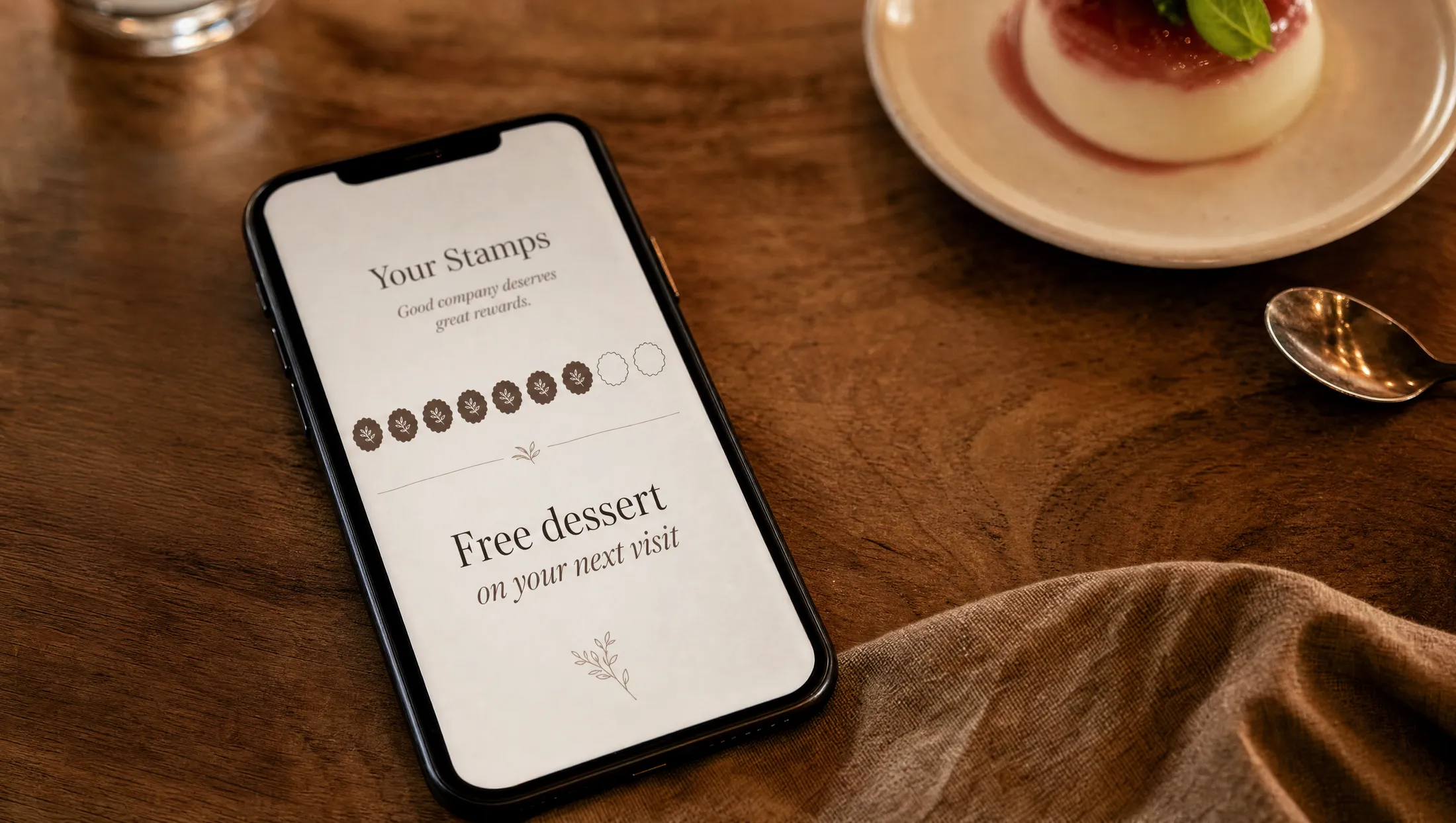
Are paper punch cards still effective in 2026? Yes — the format works. The 2026 upgrade is making the punch card digital so it doesn't get lost.
TL;DR — Key Takeaways
A restaurant loyalty program in 2026 doesn't need a custom app. QR-tracked digital punch cards, integrated into the menu platform, deliver ~80% of the value at a fraction of the cost.
Punch cards still work — the format is durable. The 2026 upgrade is digital tracking (no lost cards) and the ability to send personalized re-engagement emails when a guest is close to a reward.
The reward that motivates customers most is a small genuine surprise— a free dessert or complimentary drink — not a 5% discount or a "free coffee after 10 purchases."
Loyalty programs lift repeat-visit frequency by 15–25% and average check size by 5–10% among enrolled customers. The ROI is positive in almost every restaurant context.
Adding a QR-tracked loyalty layer to an existing menu platform takes under an hour to set up and runs without app-development overhead.
Are paper punch cards still effective in 2026?
Yes — the format works. The 2026 upgrade is making the punch card digital so it doesn't get lost.
Why punch cards persist:
The "I'm building toward a reward" mental model is durable across cultures
Visible progress (4 of 10 stamps) creates psychological investment
Simple to understand without explanation
Works across age demographics
Why paper punch cards have limitations:
Cards get lost (typical loss rate ~40-60% over 6 months)
Lost cards = lost loyalty
No data on which customers are loyal
No way to re-engage customers who haven't visited recently
Manual stamping is error-prone
The 2026 upgrade — digital punch cards via QR menu integration:
Customer scans the menu QR, taps "join loyalty"
Each visit auto-tracked when they scan
Progress visible in the menu interface
Reward auto-claimed at the right milestone
Operator gets data on loyal customers and visit cadence
Re-engagement emails triggered when customers approach reward thresholds
This digital model preserves what works about punch cards (visible progress, simple mechanics) and fixes what doesn't (lost cards, no data, no re-engagement).
What's the ROI of loyalty programs for small restaurants?
Strong, in most contexts. The 2026 data:
Repeat-visit frequency: lifts 15–25% among enrolled customers vs unenrolled
Average check size: lifts 5–10% among enrolled customers (loyalty members tend to spend slightly more per visit)
Customer retention: enrolled customers stay engaged with the restaurant ~40% longer than unenrolled customers
Setup cost: modest ($0–$300 setup, $0–$50/month ongoing for digital programs)
Marginal cost per reward redeemed: small (a free dessert costs the restaurant ~$2–$4 in food cost)
The ROI math for a typical 80-cover restaurant:
24,000 covers/year, of which ~8,000 are repeat customers
Loyalty program enrollment: ~30% of repeat customers (~2,400)
Repeat-visit lift among enrolled: 15-25% additional visits
Additional revenue per year: typically €15,000-€40,000
Reward cost: typically €2,000-€5,000 in food cost
Net ROI: positive 5–10x annually
The restaurants that don't see strong loyalty ROI are typically those that:
Treat loyalty as a discount mechanism rather than a retention tool
Make the rewards feel transactional (10% off) rather than personal (free dessert with anniversary card)
Don't promote the program visibly enough to drive enrollment
Don't use the data to re-engage lapsed customers
Can a QR menu power a loyalty program?
Yes — and this is the cleanest 2026 implementation.
The integration:
Customer scans the QR menu (existing daily action)
Inside the menu, "Join loyalty" is a one-tap action
Subsequent scans automatically track visits
Reward unlock is automatic at the configured threshold
Why this works:
No additional customer behavior required (they're already scanning the QR menu)
No app download needed
The loyalty status is visible in the same interface as the menu
The platform has the data infrastructure (scan tracking, customer identification, allergen preferences) already
What the operator configures:
The reward (free dessert at 10 visits, free glass of wine at 5 visits, complimentary appetizer at 3 visits, etc.)
The visit threshold
Optional tier system (standard / silver / gold based on visit count)
Optional re-engagement triggers (email when customer hasn't visited in 60 days)
Intermenu doesn't run loyalty programs itself — it runs the multilingual QR menu, allergen filter and AI dish photography. Keep the loyalty scheme in your POS or on a stamp card and mention it in your restaurant description, which is translated with the rest of the menu, so every guest who scans learns about it.
What rewards actually motivate customers?
Five categories, ranked by effectiveness in 2026:
1. Surprise upgrades."Your tenth visit — let me send you a complimentary glass of our chef's recommended wine." This works because it feels personal and unexpected. Highest emotional resonance.
2. Free items, not discounts. A free dessert beats 10% off the bill in every test. Free items feel like a gift; discounts feel transactional.
3. Anniversary recognition."It's been a year since your first visit — please join us for a complimentary aperitif on your next dinner." Creates emotional loyalty.
4. Exclusive access. Early access to a new menu, invitation to a chef's table tasting, first booking on a special event. Particularly effective for higher-end restaurants.
5. Status recognition. A simple "regular" tier that the staff knows about and acknowledges. The bartender recognizing the regular and offering "the usual?" is genuinely loyalty-building.
Categories that consistently underperform:
Generic percentage discounts (10% off)
Cash-back programs
Points systems with complicated math
Rewards that take many visits to unlock (slow gratification → low engagement)
The principle: emotional rewards beat transactional rewards. Restaurants are hospitality businesses; loyalty programs that feel hospitable work better than loyalty programs that feel like grocery store coupon programs.
How often should loyalty perks be redeemed?
The 2026 sweet spot for redemption frequency:
Standard tier (most customers):
Reward unlocked every 5–8 visits
Below 5 visits: too easy, devalues the program
Above 8 visits: too far away, customers disengage
Higher tier (regulars):
Faster reward cadence (every 3–4 visits)
Or larger rewards at standard cadence (full dessert vs single scoop)
Anniversary / milestone rewards:
One per year minimum
Multiple per year if multiple meaningful milestones (first visit, hundredth dollar spent, etc.)
The behavior pattern: customers who unlock their first reward within 8 visits typically continue to engage with the program. Customers who don't unlock anything in their first 10 visits typically disengage and stop returning.
This means the first reward should be achievable. Subsequent rewards can be higher value at longer intervals.
A practical 90-day loyalty program rollout
For a restaurant going from "no loyalty program" to "live, working program":
Days 1-15: Design
Decide on the reward structure (surprise upgrade vs free item vs hybrid)
Set the threshold (recommend 5–8 visits for first reward)
Choose the technical implementation (QR-integrated via menu platform, or physical punch card)
Brief the staff
Days 16-30: Soft launch
Begin offering loyalty enrollment to interested customers
Aim for ~30% enrollment rate among repeat customers
Track early data: how many enroll, how many return, how soon
Iterate the messaging based on early friction
Days 31-60: Promotion
Add visible signage about the program
Train all staff to mention loyalty enrollment at appropriate moments
Begin trigger emails (welcome to loyalty, "you're 2 visits away from your reward")
Monitor enrollment rate and adjust
Days 61-90: Optimization
Analyze early data: which customers are engaging? Which rewards are driving the most additional visits?
Adjust the threshold or reward type based on observed behavior
Begin lapsed-loyalty winback emails (member who hasn't visited in 60 days)
Document the protocol for ongoing operation
By day 90, the loyalty program runs on standard daily operations with minimal incremental staff time. The compounding revenue impact builds across years.
Integration with email and other marketing
Loyalty programs work best when integrated with the broader marketing stack.
Email integration:
Loyalty enrollment triggers a welcome email
Approaching-reward emails ("you're one visit away") drive return visits
Lapsed-loyalty emails re-engage members who haven't visited recently
Anniversary emails recognize milestones
Menu integration:
Loyalty status visible in the QR menu interface
Allergen and dietary preferences captured at enrollment carry through to menu filtering
Reward redemption visible in the menu flow (no need for special staff notification)
Analytics integration:
Loyalty enrollment rate as a metric
Average visit cadence per loyalty member
Reward redemption rate
Member vs non-member check size comparison
The compounding effect: loyalty programs build a layer of customer data that improves every other marketing decision. Knowing which customers are most loyal makes email targeting smarter, ad spend more efficient, and menu engineering decisions better-informed.
Frequently Asked Questions
Are paper punch cards still effective in 2026? The format works; the medium has upgraded. Digital punch cards via QR menu integration deliver the same psychological mechanics without lost cards.
What's the ROI of loyalty programs for small restaurants? Repeat-visit lift 15–25% among enrolled customers; average check lift 5–10%; net ROI typically 5–10x annually for restaurants under 100 covers.
Can a QR menu power a loyalty program? Yes — and this is the cleanest 2026 implementation. The customer's existing QR menu scan tracks visits automatically; rewards unlock at configured thresholds.
What rewards actually motivate customers? Surprise upgrades, free items (not percentage discounts), anniversary recognition, exclusive access, status recognition. Emotional rewards beat transactional rewards consistently.
How often should loyalty perks be redeemed? Standard tier: every 5–8 visits. Higher tier: every 3–4 visits. First reward should be achievable to drive engagement; subsequent rewards can be higher-value at longer intervals.
Add Loyalty to Your QR Menu
Most restaurant loyalty programs fail at the implementation step — the operator wants the value but not the app development cost. The 2026 fix is integration: promote the program where the customer already looks — the QR menu they scan anyway — with no additional app required.
Intermenu doesn't track loyalty itself — it gives you the multilingual menu, allergen filter and AI dish photography guests already scan, so whichever loyalty tool you choose, mention it in your restaurant description and it reaches every guest in their own language.
If you've been wanting to launch loyalty but stuck on "we don't want to build an app," the bundled approach is the easy path →