
Unlocking Restaurant Marketing 2026 with AI Innovations
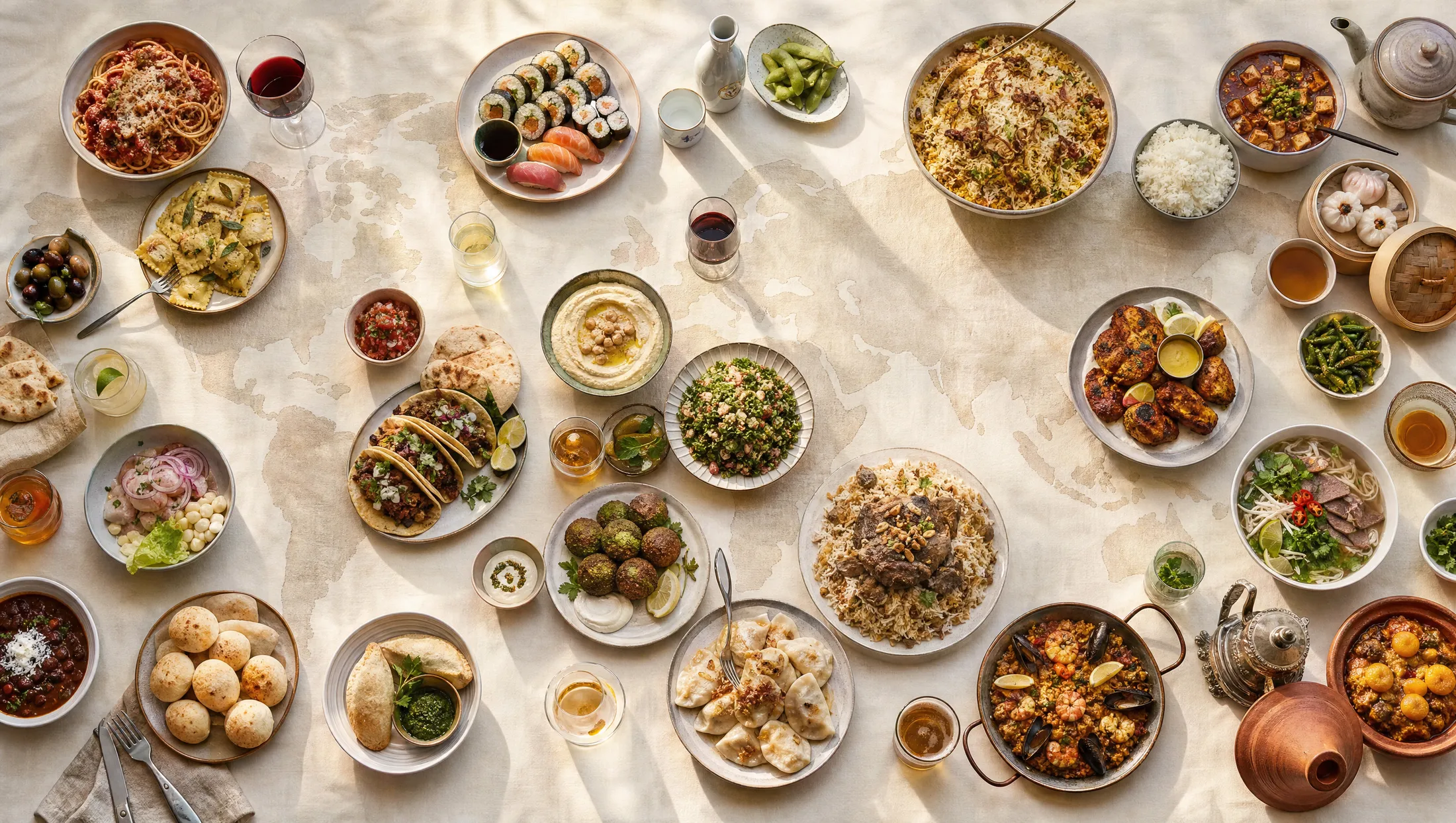
What does restaurant marketing look like in 2026? The 2026 restaurant marketing landscape has been reshaped by three converging trends.
TL;DR — Key Takeaways
Restaurant marketing in 2026 is AI-first by default. The cost of producing content (dish photos, ad creatives, copy in every language your guests read) has collapsed by ~99%, freeing budget for distribution and experimentation.
If you only fix one channel before reading further, make it local search — our Google Business Profile guide for restaurants walks through the 12 fields that decide who wins the Map Pack.
The five channels that matter for most restaurants in 2026: Google Business Profile + Google Search, AI assistants (ChatGPT/Gemini/Perplexity), Instagram, TikTok, and email/loyalty.
A realistic monthly marketing budget for an independent restaurant in 2026 is $200–$1,500— far less than 2020 levels because AI has eaten the content-production cost.
The single highest-ROI marketing investment for tourist-area restaurants is the multilingual digital menu + AI dish photography stack — it pays back in weeks and compounds across years.
Generative Engine Optimization (GEO) — getting cited by AI assistants when tourists ask for recommendations — is the fastest-growing discipline in restaurant marketing and should be a top-3 priority for any tourist-area operator.
What does restaurant marketing look like in 2026?
The 2026 restaurant marketing landscape has been reshaped by three converging trends.
1. AI has eaten content-production cost. Dish photography, ad creatives, multilingual copy, social posts — all of these previously cost real money in 2020 and now cost essentially nothing. The operator's marketing budget shifts from "paying for content" to "paying for distribution and experimentation."
2. Discovery is splintering across channels. Google Maps is still dominant, but AI assistants are growing fast, Instagram remains powerful for under-35, TikTok is a meaningful organic channel, and email/loyalty has quietly returned as a high-ROI retention layer. No single channel dominates the way Google did in 2018. That fragmentation is why how to make your restaurant visible to AI search is now its own discipline rather than a footnote to Maps ranking.
3. Tourist behavior has changed. International tourists make food-driven travel decisions more than they did 5 years ago, and they evaluate restaurants on signals that didn't exist before (multilingual menu capability, allergen filtering, AI-readable structured menu data).
These three shifts mean a 2026 marketing playbook looks very different from a 2020 marketing playbook. This pillar covers the actual playbook — channel by channel, budget tier by tier, with practical priorities for independent restaurants.
How is AI changing restaurant marketing?
Five concrete shifts that have reshaped the discipline in 2026:
1. Content production at near-zero cost. AI dish photography ($0.40–$0.60/image vs $150–$500 for professional). AI copy generation in every language your guests read (essentially free vs $0.15–$0.30/word for translation). AI ad creatives generated in minutes instead of designed in days.
2. Generative Engine Optimization (GEO). When tourists ask ChatGPT/Gemini/Perplexity for restaurant recommendations, getting cited matters more than ranking #1 in Google for many search categories. The optimization tactics are different (structured data, cross-source presence, recent mentions in trusted publications).
3. AI-personalized social ads. Meta and Google ad platforms now generate creative variations automatically based on the audience signal. Operators provide assets; the platform tests dozens of variations.
4. AI-driven menu engineering. Analytics tools surface "view but don't order" dishes, suggest copy rewrites, and flag underperforming images. The marketing-vs-operations boundary blurs.
5. AI customer service. Chatbots and voice agents handle reservation requests, dietary questions, and basic FAQ at restaurant scale. Major chains have deployed these at scale; independents are starting to.
The skill that matters in 2026 is not "knowing how to produce content" — that's been commoditized. It's knowing what content to produce, how to distribute it, and how to measure what works. The strategic layer has higher leverage than the production layer.
What's a realistic monthly marketing budget for a small restaurant?
A 2026 budget framework for an independent tourist-area restaurant:
Tier 1 — Foundation ($200–$500/month)
Hospitality menu platform (multilingual menu + QR + allergen filter + AI photos): $40–$100/month
Email marketing tool: $20–$50/month
Light Google Business Profile maintenance (your time, not external)
Light social media content (your time, AI-generated assets)
No paid ads
This tier is sustainable indefinitely and produces meaningful traffic for restaurants with strong word-of-mouth and walk-in visibility.
Tier 2 — Active growth ($500–$1,000/month)
Adds:
Light paid ads on Meta or Google ($200–$500/month)
Influencer partnerships (occasional tasting events, $50–$150/month avg)
Some external creative production (cornerstone photo shoot annually, amortized to ~$50–$200/month)
This tier drives meaningful inbound traffic growth for tourist-area restaurants.
Tier 3 — Aggressive growth ($1,000–$2,500/month)
Adds:
Larger paid ad budget ($500–$1,500/month across Meta, Google, TikTok)
More influencer activity
PR or local media outreach
A/B testing infrastructure
Sometimes a part-time external marketer or agency
This tier is for restaurants with strong unit economics that can productively invest in growth.
The 2026 reality: a tier-1 budget produces results that would have required tier-2 in 2020, because content production has gotten so much cheaper. A tier-2 budget produces what tier-3 used to. The cost-effectiveness of the entire discipline has improved.
Which channels matter most: Google, Instagram, TikTok, Meta ads?
The 2026 channel-importance ranking for tourist-area independent restaurants:
Tier 1 — Universal must-haves:
Google Business Profile + Google Search— the discovery default for ~40% of tourist decisions
AI assistant visibility (GEO)— the fastest-growing channel; tourists asking ChatGPT for recommendations
Hospitality menu platform— the substrate that makes everything else work better
Tier 2 — Strong fits for most restaurants:
Instagram— strong for under-35 tourist demographics; visual content lifts trust
Email + loyalty— retention layer; high-ROI for repeat-visit driving
Meta ads (Facebook + Instagram)— useful for targeting by demographic and interest
Tier 3 — Strong fits for specific contexts:
TikTok— strong for younger tourist demographics, trending dishes, viral moments
Google ads— useful for high-intent search queries ("[cuisine] near me")
TripAdvisor— still significant for older tourists, increasingly less for younger
Local PR and media— high leverage in specific moments (opening, anniversary, awards)
Tier 4 — Specialized contexts:
YouTube— high effort, mostly for chef-personality-led restaurants
Pinterest— useful for desserts and visual-rich cuisines
LinkedIn— for B2B (corporate catering, business-lunch positioning)
Twitter/X— limited restaurant value in 2026 outside specific cities
Allocate effort proportionally to your demographic mix. A tourist-area Italian restaurant near a major historic site weights Tier 1 heavily, with Instagram and Meta ads layered on. A trendy fusion concept in a major city might lead with TikTok and Instagram.
Should small restaurants do email marketing?
Yes. Email is having a quiet renaissance in 2026 because it's one of the only channels not reshaped by algorithm changes.
Why email works for restaurants in 2026:
100% delivery if opt-in and well-managed (no algorithmic suppression like social media)
Direct relationship with the customer
Low cost ($20–$50/month for a typical restaurant list)
Strong for reactivation (lapsed-customer winback)
Strong for occasion-driving (Valentine's Day, anniversaries, holidays)
The 2026 email approach for a small restaurant:
Collect emails at the table via QR code or receipt
Send a brief welcome email with a multilingual menu link
Send a monthly newsletter with seasonal updates
Send occasion-specific emails (birthday, anniversary, return-after-90-days)
Don't over-send — restaurants that email more than weekly see open-rate decay
What converts in restaurant emails:
Specific seasonal dish announcements
Time-limited offers (this weekend, this week)
Behind-the-scenes content (chef stories, sourcing notes)
Multilingual versions for tourist subscribers (a translated email feels personal)
The retention math: email-subscribed customers visit ~30% more often than non-subscribers. The cost of acquiring an email is near-zero. The lifetime value lift is meaningful.
A dedicated spoke (Restaurant Email Marketing That Doesn't Feel Spammy) covers the implementation in detail.
How do you measure restaurant marketing ROI?
The four most useful metrics in 2026:
1. Cost per cover. Total marketing spend ÷ new covers attributable to marketing. Most useful for paid channels.
2. Customer lifetime value (LTV). Total revenue from a customer over their lifetime ÷ acquisition cost. Most useful for retention investments (email, loyalty).
3. Tourist mix percentage. What share of covers are international? Track this monthly. If multilingual menu + GBP + AI search work is paying off, this number rises.
4. Channel-attributable revenue. Revenue traceable to specific channels (Google search, Instagram, email, walk-in). Most useful for budget allocation decisions.
The honest 2026 attribution challenge:
Tourists rarely take a single direct path to your restaurant
A typical tourist sees you on Google Maps, checks Instagram, asks ChatGPT, walks past, scans the QR menu, then books
Single-touch attribution badly under-counts upper-funnel activity
Most useful is "which channels did the customer interact with at all?" — track exposure, not just last-click
The pragmatic approach:
Use GBP analytics for Google
Use platform analytics for Instagram, TikTok, Meta ads
Use unique discount codes per channel for trackable conversion
Run quarterly "what worked?" reviews comparing cost vs revenue vs cover growth
Don't over-engineer attribution. The marketing decisions worth making at restaurant scale are usually visible without elaborate models.
What free marketing tools do every restaurant need?
Eight free or near-free tools that every independent restaurant should set up in 2026:
1. Google Business Profile. Free. Critical. Set up properly, maintained weekly.
2. Google Search Console for the restaurant's own website (if you have one). Free. Tells you what searches are bringing visitors.
3. Google Analytics 4on the website. Free. Shows visitor behavior.
4. Google Maps insights. Free, included with GBP. Shows search and discovery analytics.
5. Meta Business Suite. Free. Manages Facebook and Instagram from one place.
6. TikTok for Business account. Free. Better analytics than personal accounts.
7. A modern hospitality menu platform. Paid ($15–$60/month) but in the foundation tier — too important to consider optional. Includes the multilingual menu, allergen filter, AI photos, QR delivery, and analytics in one place. (Intermenu is one example.)
8. An email marketing tool. Mailchimp, Sender, MailerLite all have free tiers below 1,000 subscribers.
These eight cover ~90% of the functional needs for restaurant marketing in 2026. Specialized tools (CRM, advanced analytics, etc.) are upgrades, not foundations.
The 5 most-overlooked marketing moves in 2026
Five specific tactics that consistently underperform their potential because operators don't think to do them.
1. Responding to reviews in the reviewer's language. Free. High signal. Most restaurants don't.
2. Embedding multilingual menu capability in your GBP description. Free. Lifts tourist click-through. Most restaurants don't mention it.
3. Optimizing for AI Overview citation. Modest effort. Big upside. Most restaurants don't even know this is a discipline.
4. Refreshing GBP photos weekly. Trivial with AI photography. Lifts ranking. Most restaurants do this monthly or quarterly.
5. Personalized "we missed you" emails after 90 days of customer absence. Modest setup, high conversion. Most restaurants don't have this trigger configured.
Each of these is a 1–2 hour setup with compounding returns. The cumulative impact, when all five are running, can lift inbound traffic 10–20% over six months without any incremental ad spend.
A 90-day marketing rollout for a tourist-area restaurant
A practical reference plan for an operator going from "we have a Google Business Profile and an Instagram account" to "we run a coherent marketing operation."
Days 1-15: Foundation reset
Audit and fix the Google Business Profile (8 attributes, 50+ photos, complete description)
Set up multilingual digital menu with QR delivery
Set up email collection at the table (QR receipt link)
Set up basic GA4 + GBP analytics review cadence
Days 16-45: Content engine
Generate AI dish photos for the entire menu
Build a 90-day content calendar for Instagram (3 posts/week)
Write welcome and re-engagement email templates
Set up Meta Business Suite scheduling
Days 46-75: Distribution
Launch Meta and Google paid ad campaigns ($300–$500/month)
Begin influencer outreach (3 local creators, complimentary tastings)
Submit to 2–3 relevant local publications
Begin AI-search optimization (structured data, mentions audit)
Days 76-90: Optimization
Review which channels are converting; reallocate budget
A/B test top-performing ad creatives
Refresh GBP photos with AI-generated seasonal updates
Set up automated email triggers (welcome, birthday, 90-day winback)
After 90 days, the operation runs on a sustainable weekly rhythm: 5–10 hours/week of focused marketing time, $200–$1,500/month in paid investments, with a measurable cover-growth trend visible in analytics.
Frequently Asked Questions
What does restaurant marketing look like in 2026? AI-first content production, multi-channel discovery (Google, AI assistants, Instagram, TikTok, email), and Generative Engine Optimization (GEO) as a top-3 discipline. Budget shifts from production to distribution.
How is AI changing restaurant marketing? Five shifts: content at near-zero cost, GEO as a discipline, AI-personalized social ads, AI-driven menu engineering, AI customer service.
What's a realistic monthly marketing budget for a small restaurant? Tier 1: $200–$500. Tier 2: $500–$1,000. Tier 3: $1,000–$2,500. AI cost reductions mean lower budgets buy more than they did in 2020.
Which channels matter most? Tier 1 must-haves: Google Business Profile, AI assistants (GEO), hospitality menu platform. Tier 2 strong fits: Instagram, email/loyalty, Meta ads. Tier 3 for specific contexts: TikTok, Google ads, TripAdvisor.
Should small restaurants do email marketing? Yes. Email is having a renaissance in 2026 because it's algorithm-resistant. Email-subscribed customers visit ~30% more often.
How do you measure restaurant marketing ROI? Cost per cover, customer LTV, tourist mix percentage, channel-attributable revenue. Don't over-engineer attribution — most decisions are visible without elaborate models.
What free marketing tools do every restaurant need? GBP, Search Console, GA4, Meta Business Suite, TikTok for Business, email tool, and a hospitality menu platform.
Run AI-Powered Marketing in Every Language You Need
Restaurant marketing in 2026 runs on infrastructure first, content second, distribution third. The single most leveraged piece of infrastructure is the multilingual menu + AI photography stack — it makes every downstream channel work better.
Intermenu bundles the multilingual menu, allergen filter, AI dish photography, and ad template library into one platform. The marketing playbook above runs cleanly on this foundation.
If you've been building marketing channels on top of a single-language PDF menu, fix the foundation first — the rest compounds from there →