
What to Eat in Tokyo: Essential Dishes for First-Timers
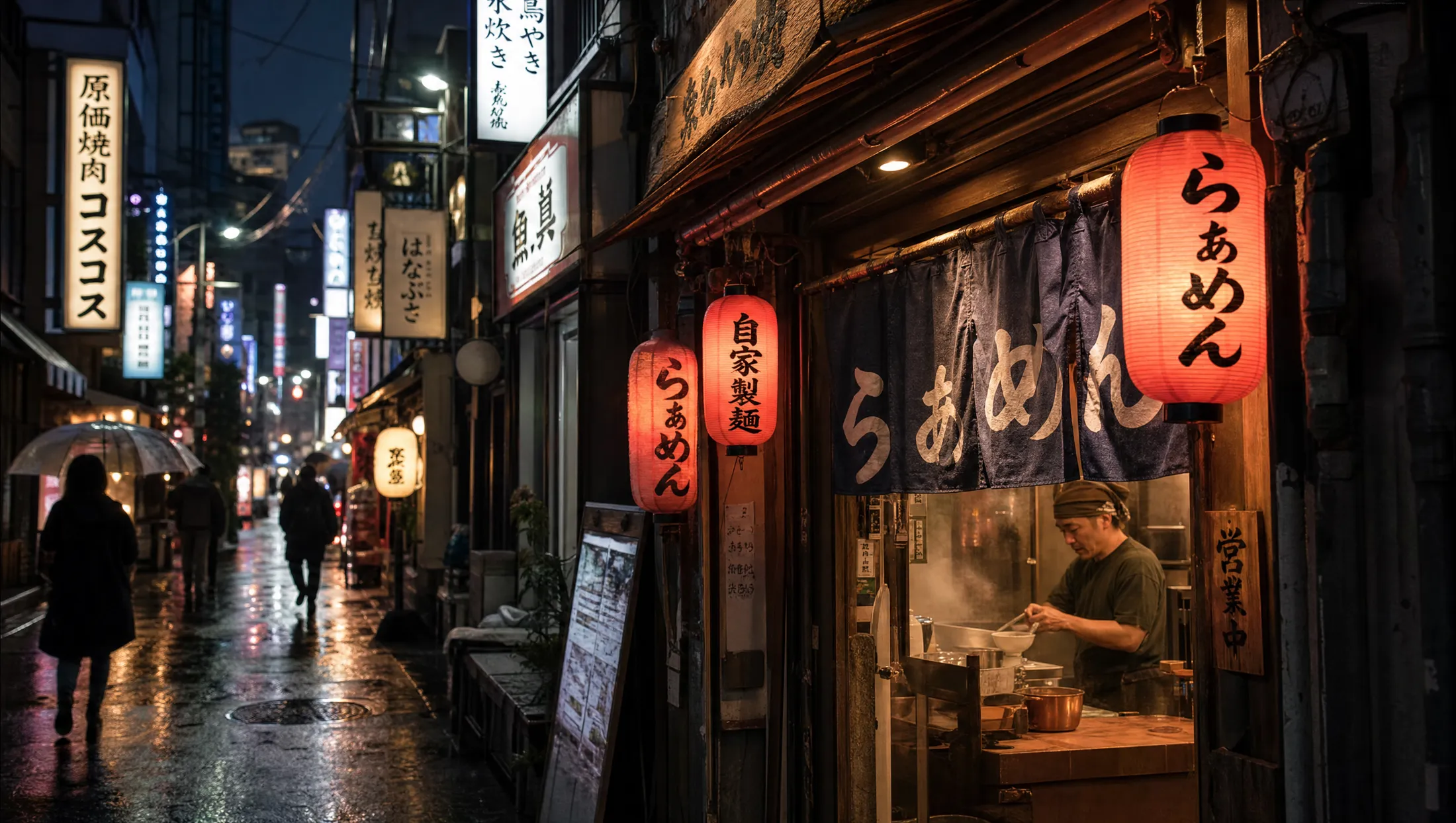
Tokyo isn't a single cuisine. It's a layered city of cuisines — washoku (traditional Japanese), regional specialties from across Japan that get represented here, French-Japanese fusion, Italian-Japanese fusion, sushi at every price tier, ramen as a serious art form, izakaya as social infrastructure, kaiseki as the most refined hospitality experience in world food.
TL;DR — Key Takeaways
Tokyo is one of the world's great food cities — and one of the most navigable for first-time visitors who plan a 5-day food itinerary across distinct cuisines.
The 5-day progression: ramen day → sushi day → izakaya day → kaiseki/fine dining day → street food / casual day. Each format has its own etiquette and ordering logic.
Reservations matter more than tourists expect. Many notable restaurants take bookings only via Japanese-language channels; concierge help or app-based booking platforms are essential.
The best ramen, sushi, and izakaya are often in unmarked, tiny restaurants in alleys, not on tourist maps. Knowing how to find them transforms the trip.
A multilingual menu with phonetic dish names (ローマ字 + kanji) makes ordering at small Japanese restaurants approachable for tourists who don't read Japanese — increasingly common in tourist-area Tokyo.
Why Tokyo deserves a 5-day food itinerary
Tokyo isn't a single cuisine. It's a layered city of cuisines —washoku (traditional Japanese), regional specialties from across Japan that get represented here, French-Japanese fusion, Italian-Japanese fusion, sushi at every price tier, ramen as a serious art form, izakaya as social infrastructure, kaiseki as the most refined hospitality experience in world food.
A 24-hour visit barely scratches it. A 5-day food itinerary gives you the structure to actually understand the city's food culture rather than just tasting random dishes.
This guide is the structure that works for a first-time visitor who wants to come away with a real sense of Japanese food rather than a series of unconnected meals.
Day 1 — Ramen day
Tokyo has 30+ distinct ramen styles, but a first-time visitor benefits from focusing on three: tonkotsu (Hakata-style, rich pork bone), shoyu (soy-based, the original Tokyo style), and miso (a heartier Hokkaido-influenced version).
Morning — coffee and a snack. Skip Western breakfast; have a quick onigiri (rice ball) and Japanese drip coffee from a convenience store or specialty shop.
Lunch — first ramen. Find a small tonkotsu shop. Lines of 8–15 people are typical for the best ones; this is a trustworthy signal. Order at the ticket machine if there is one (most ramen shops use them). Slurp loudly — it's polite and cools the noodles.
Afternoon — ramen exploration. Walk through Shinjuku, Shibuya, or Ikebukuro. Notice how many ramen shops there are. Each one specializes — that's the discipline.
Dinner — second ramen, different style. Try shoyu (lighter, more delicate) at a Tokyo-style shop. The contrast with tonkotsu clarifies what each style is doing.
Evening — small bites. Yakitori (grilled chicken on skewers) at a yakitori-ya in a back alley. Beer pairs naturally.
Etiquette notes for ramen day:
Don't ask for substitutions
Eat fast — ramen is meant to be eaten hot, not lingered over
The broth is part of the dish; drink it (or as much as you want)
Slurping is encouraged
A gochisou-sama deshita ("thank you for the meal") at the end goes a long way
Day 2 — Sushi day
Sushi in Tokyo varies enormously in price and style. The four tiers worth knowing:
Tier 1 — Standing sushi bars (~$15-25 lunch). Quick, fresh, no fuss. Often in train stations or office districts. Great for a first-day-jet-lagged lunch.
Tier 2 — Conveyor-belt (kaiten-zushi, ~$15-40 dinner). Plates rotate; you grab what you want. Less interactive but high-quality if you pick a respected chain.
Tier 3 — Mid-tier neighborhood sushi (~$40-80 dinner). Sit at the counter, the chef serves a small omakase, you watch the preparation. The sweet spot for tourists who want the omakase experience without the high-end price.
Tier 4 — High-end omakase (~$200-500+ dinner). Multi-course chef's choice. Reservations months in advance for the famous spots; same-day possible at the slightly-less-famous.
Recommended progression for day 2:
Lunch: standing sushi bar (Tier 1) — get acclimated, watch the flow
Afternoon: Tsukiji outer market for snacks and sushi knife shopping (the inner wholesale market moved to Toyosu, but Tsukiji's outer market is still vibrant)
Dinner: mid-tier neighborhood omakase (Tier 3)
Etiquette notes for sushi day:
Eat sushi with hands or chopsticks — both are acceptable
Don't drown sushi in soy sauce; lightly dip the fish side, not the rice
Don't add wasabi to soy sauce; the chef has already placed wasabi between rice and fish
Eat in one bite when possible
Otsukare-sama desu to the chef at the end of an omakase is a respectful closing
Day 3 — Izakaya day
Izakaya is the social infrastructure of Japanese eating culture. Think Japanese gastropub — small plates, drinks, social atmosphere, multi-hour meals.
Daytime activities: Asakusa for the temple and traditional snacks (ningyō-yaki, taiyaki), then a wander through Yanaka for old-Tokyo atmosphere.
Evening — izakaya. Find one in a back alley off a major district (Shinjuku's Omoide Yokocho, Shibuya's Nonbei Yokocho, or any small neighborhood). Order multiple small plates over hours.
Standard izakaya order progression:
Round 1: drinks (sake, beer, or highball) and a small starter —edamame, tsukemono (pickles), karaage (fried chicken).
Round 2: a few hot plates —yakitori skewers, gyoza, tamagoyaki (rolled omelet), agedashi tofu.
Round 3: something heartier — grilled fish, sukiyaki portions, nikujaga (meat-and-potato stew).
Round 4: rice or noodles to finish —ochazuke (rice in green tea), yakisoba, or a small bowl of ramen.
The flow is: drink → eat slowly → drink more → eat more → close with a starch dish. Three hours minimum.
Etiquette notes for izakaya day:
Don't pour your own drink — pour for others, let others pour for you
Hold the glass with both hands when receiving a pour from someone senior (workplace etiquette signal)
Kanpai! before drinking
Order shared dishes for the table, not individual entrees
The bill arrives at the end; settle as a group, not split
Day 4 — Kaiseki / fine dining day
Kaiseki is the apex of Japanese hospitality — multi-course seasonal tasting menus that follow a precise philosophical structure. The dishes change with the season; the experience is as much about the moment as the food.
Morning — light meal. Skip a heavy breakfast; you'll be eating substantially in the evening.
Daytime — culture before dinner. A traditional garden (Hama-Rikyu, Rikugien, Kiyosumi). A small museum. A tea ceremony at a temple if you're inclined.
Evening — kaiseki. Reserved well in advance. A multi-course meal of perhaps 8-12 dishes, each a small portion designed to balance technique, season, and visual presentation.
Standard kaiseki progression:
Sakizuke— small appetizer
Hassun— seasonal medley reflecting the time of year
Mukōzuke— sashimi
Takiawase— simmered seasonal vegetables and protein
Futamono— soup or steamed dish
Yakimono— grilled course (often fish)
Su-zakana— a palate-cleansing pickled or vinegared dish
Hiyashi-bachi— cold dish (in summer)
Naka-choko— clear soup
Shiizakana— substantial course (often hotpot)
Gohan / kō no mono / tomewan— rice, pickles, miso soup
Mizumono— dessert
Not every kaiseki includes all twelve. The progression is the structure, not a fixed checklist.
What to expect:
Quiet, attentive service
Each dish presented with explanation
Pacing of perhaps 90-120 minutes total
Sake or tea pairing optional
Cost typically $200-500+ per person at notable spots
Etiquette notes for kaiseki day:
Eat slowly; the pacing is the experience
Notice the dishes (the ceramics are deliberate)
Don't ask for changes; the menu is fixed
A small bow at the end thanks the chef and staff
Day 5 — Street food / casual day
Tokyo's street food and casual food culture is enormously rich and often gets skipped by tourists who focus only on high-end restaurants.
Morning — convenience store breakfast or kissaten (old-style coffee shop). Both are quintessentially Tokyo.
Late morning — local kissaten breakfast. Egg sandwich (tamago sando), thick toast (morning service), strong coffee. The atmosphere is part of the experience.
Lunch — depachika (department store food halls). Underneath major department stores (Mitsukoshi, Isetan) are vast food halls — bento, sushi, fresh-prepared dishes, fancy sweets. Pick a few items and eat in a nearby park.
Afternoon — street food hunt.
Takoyaki (octopus balls)
Okonomiyaki (savory cabbage pancake)
Crepes (Japanese sweet or savory)
Mochi and daifuku (sweet rice cakes)
Anpan and other Japanese-style baked goods
Soft cream (Japanese soft-serve ice cream, hilariously good)
Evening — donburi or curry rice for a casual close.
Beef bowl (gyudon)
Pork cutlet bowl (katsudon)
Japanese curry rice (a comfort food classic)
The point of day 5: Tokyo's casual food culture is just as serious as its fine dining. A great gyudon shop or a beloved kissaten holds its own against any kaiseki — and the experience is more accessible.
How to find the best places (without speaking Japanese)
Five strategies that work for tourists in 2026:
1. Tabelog rankings. Japan's primary restaurant review site. The 3.5+ ranking threshold is meaningful; 4.0+ is exceptional. Browse with Google Translate.
2. Long lines = trust signal. A small ramen shop with 10 people lining up is reliably good. Tokyo's review culture is strong; locals don't queue for mediocre places.
3. Hotel concierge. For higher-end (kaiseki, sushi omakase), the hotel concierge is the most reliable booking path. Tip well.
4. Restaurants advertising multilingual menus. Increasingly common in tourist-area Tokyo. The signal: the restaurant is comfortable hosting international guests, the menu is structured, and the staff can support cross-language interactions.
5. Specific guide books and food blogs. Tokyo Cheapo, Time Out Tokyo, Tabelog English version, specific food bloggers with track records. Avoid generic "top 10" lists.
Intermenu-powered restaurants in Tokyo have menus in every language your guests read with allergen filtering — a notable signal for international visitors who want the culinary discovery without the language friction.
How to order in a Japanese restaurant without speaking Japanese
Five practical techniques:
1. Point at the menu. Most Tokyo restaurants have laminated picture menus or wax food displays in the window. Pointing is universal.
2. Use the QR menu's language switcher. When available, this is the cleanest path — read the menu in your language, order by item number or by dish name.
3. Osusume ("recommended") — a magic word that gets you the chef's recommendation when you're unsure.
4. Aji-doki! ("It's delicious!") — a polite expression of appreciation mid-meal that's universally understood as positive feedback.
5. Gochisou-sama deshita! at the end. The standard "thank you for the meal." Always appreciated.
Are reservations necessary for Tokyo restaurants in 2026?
For ramen, izakaya, and casual: usually no. Walk in.
For mid-tier sushi and dinner restaurants: often yes, but same-day or short-notice is often possible.
For high-end omakase and kaiseki: yes, often weeks or months in advance.
Booking platforms that work for tourists:
Pocket Concierge— English-language booking for high-end Tokyo restaurants
TableCheck— broader coverage, English support
Hotel concierge— most reliable for the famous places
Frequently Asked Questions
What dishes should be on every Tokyo first-timer's list? Ramen (try two styles), sushi at the counter, yakitori with sake, kaiseki at least once, and casual gyudon or katsudon. The five formats together give you the breadth of Japanese eating culture.
Where do locals eat sushi? Standing sushi bars and mid-tier neighborhood places (not the famous high-end omakase). Look for shops without English signs, with a small counter and a chef who's been there for years.
How do you order in a Japanese restaurant without speaking Japanese? Point at the menu, use the QR menu's language switcher when available, learn three magic words: osusume (recommended), kanpai (cheers), and gochisou-sama (thank you for the meal).
What's the etiquette for ramen, izakaya, kaiseki? Ramen: slurp, eat fast, drink the broth. Izakaya: pour for others, share plates, kanpai before drinking. Kaiseki: eat slowly, follow the pace, notice the ceramics, bow at the end.
Are reservations necessary for Tokyo restaurants in 2026? For high-end (omakase, kaiseki): yes, often weeks ahead. For mid-tier: often same-day possible. For ramen and izakaya: walk in.
Read Any Tokyo Menu in Your Language
The hardest part of eating well in Tokyo is the language gap — small back-alley restaurants with no English menus often serve the best food, and tourists miss them because of it.
Restaurants powered by Intermenu display their menus in every language your guests read via QR scan — and when the cultural context is written into each dish description, it is translated too, which makes a tonkotsu shop or a regional kaiseki menu navigable for first-time visitors.
Look for the QR menu sign next time you're seated in Tokyo — the language switcher is usually one tap away →