
How Photos on a Menu Increase Sales by 30% (And When They Hurt You)
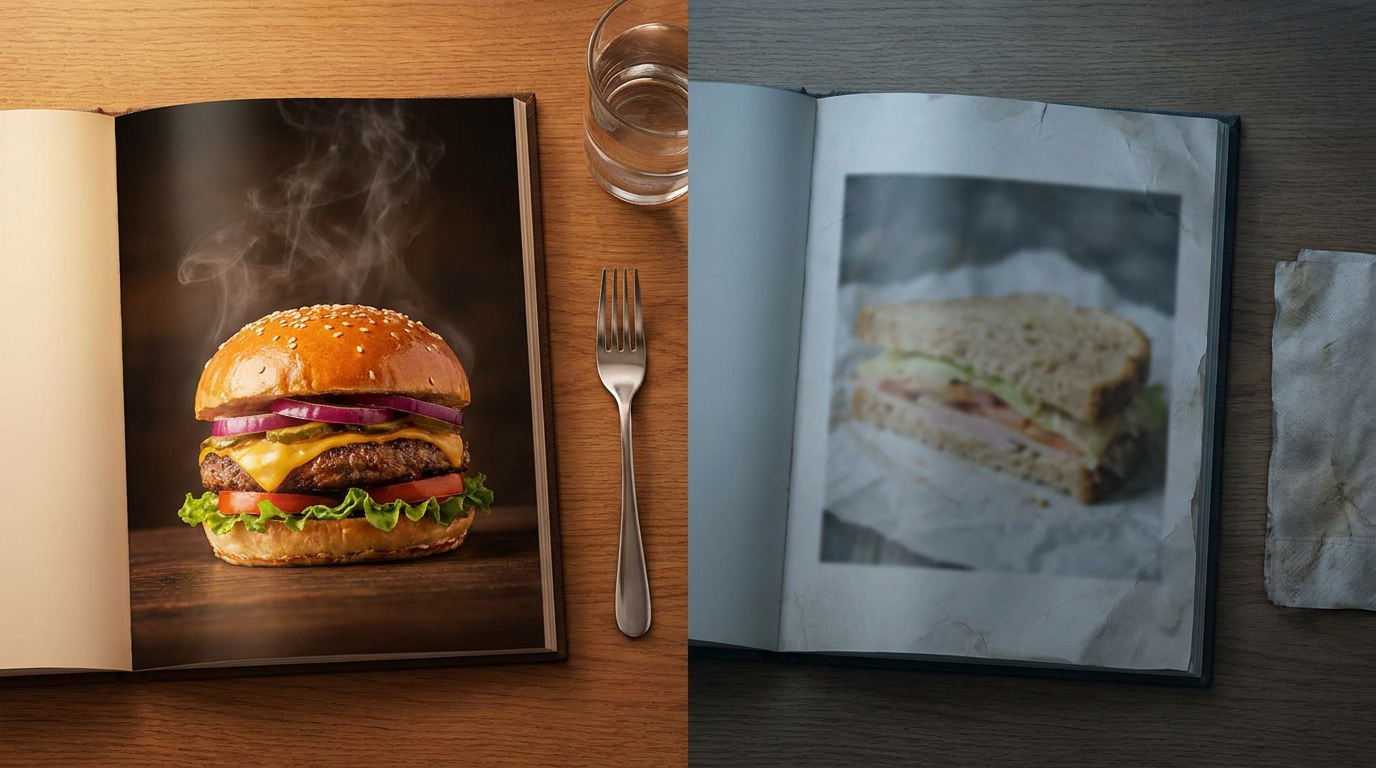
Photos lift menu orders 25-30%. AI photography ($0.50/image) removes the cost barrier. Where photos help and where they hurt.
TL;DR — Key Takeaways
Photos on menu items lift orders by 25-30% on average across casual and mid-tier restaurants in 2026 — one of the most consistent findings in restaurant research.
The lift is largest on unfamiliar dishes (cultural cuisines, specialties) and high-margin dishes; smallest on commodity dishes guests already know.
Photos hurt at fine dining venues where the printed-menu aesthetic is part of the experience — and at restaurants where the photos are visibly bad or do not match the actual dish.
AI-generated dish photography ($0.40-$0.60/image) makes full menu photo coverage trivially affordable for the first time, eliminating the historical "we can only photograph 5-10 dishes" budget constraint.
The 2026 best-practice photo coverage is 50-80% of menu items — every dish where the photo helps order conviction, not 100% (signal dilution) and not under 30% (missed opportunities).
Should every menu item have a photo?
No — but most should.
The 2026 best-practice photo coverage is 50-80% of menu items. The reasoning:
Photograph these:
All signature dishes
Unfamiliar dishes (regional specialties, less common preparations)
High-margin dishes you want to drive
Dishes where the visual is genuinely impressive
Dishes that benefit from showing portion size or plating
Skip photos for these:
Commodity dishes guests universally know (a Caesar salad, a cheeseburger — except in fine dining where photographing makes it stand out)
Dishes that do not photograph well (some braised dishes, some soups, some desserts that need to be cut to look interesting)
Dishes where the visual would hurt rather than help (some traditional dishes look unappealing in photos despite being delicious)
Why not 100% coverage: Universal photo coverage dilutes the attention-driving signal. When some dishes have photos and others do not, photos become a visual emphasis cue. When all dishes have photos, none of them stand out. The signaling value of photos depends on their selective use.
Which dishes benefit most from photos?
The 2026 ranked categories where photos drive the largest lift:
Highest lift (often 30-40%):
Regional and cultural cuisines tourists may not know (cacio e pepe, bibimbap, mole poblano)
Visually impressive dishes (whole roasted fish, towering plates, charcoal-grilled meat)
Dishes with a "wow factor" preparation (flambé, salt-baking, table-side service)
High lift (25-30%):
Most main courses
Most pasta dishes
Most signature dishes
Specialty desserts
Medium lift (15-20%):
Standard sides
Most soups
Most salads (unless visually distinctive)
Low lift or sometimes negative:
Commodity dishes guests know perfectly (cheeseburger, plain Caesar salad)
Some traditional braised dishes (look brown and uniform in photos)
Beverages (most cocktail photos look generic)
The pattern: photos help when they reduce uncertainty for the guest. Familiar dishes have low uncertainty; specialty dishes have high uncertainty; the lift correlates with the uncertainty being reduced. Delivery apps shift that calculus again — see where photos matter most on a delivery menu.
When do photos backfire?
Three contexts where photos hurt rather than help:
1. Fine dining
At restaurants where the menu is part of the curated experience, photos can feel down-market. The printed-card-with-elegant-typography aesthetic communicates value through restraint. Photos break that frame.
The fine-dining alternative: Sparse, deliberately chosen photography (1-2 hero shots, not full coverage). Or: no photography at all, with rich descriptions instead. Photography reserved for marketing materials and Instagram, not the dining-room menu.
2. When photos do not match the actual dish
A photo showing a generously portioned dish that arrives smaller in real life sets up disappointment. A photo showing premium ingredients that are not on the actual dish creates guest complaints.
The fix: Photos must accurately represent what arrives. Reference image input (using a phone photo of the actual dish) keeps AI-generated photos accurate. Test photos against real plating before shipping.
3. When photos are visibly low-quality
A blurry phone photo or a poorly-lit dish image hurts more than no photo. The photo is interpreted as the restaurant's care signal — bad photos signal carelessness.
The 2026 fix: AI dish photography ($0.40-$0.60/image) eliminates the cost barrier to high-quality photos. There is no remaining excuse for blurry phone-shot menu images.
Intermenu's AI dish photos come straight from the dish editor, on your plan's monthly image allowance (2 a month even on Free) — making "we cannot afford photos" no longer a defensible reason for poor menu photography.
How does AI food photography compare in conversion rate?
In tested 2026 data: statistically indistinguishable from studio photography.
The findings:
A/B tests of AI vs studio photos on the same menu show no significant difference in dish order rate
Diners cannot reliably tell AI photos from studio photos in blind tests
Conversion impact is essentially the same
The cost gap: Studio photo: $150-$500 per dish. AI photo: $0.40-$0.60 per dish. Cost ratio: 300-1000x in favor of AI.
The compounding advantage:
AI photos can be refreshed seasonally at no marginal cost
AI photos enable testing variations
AI photos can be generated for new dishes the day they are added to the menu
AI photos with reference image input lock to the actual dish appearance
For 95% of menu photography work, AI is now production-grade. The decision is no longer "AI or studio?" — it is "AI for which dishes, and what is the small budget for cornerstone studio work?"
What is the right photo size on a digital menu?
The 2026 best practices for digital menu photos:
Phone display:
Square or 4:3 aspect ratio
Photo height: roughly 60-80% of dish description block height
Resolution: 1500-2000px on the long edge (allows zoom without pixelation)
Tablet display:
Same aspect ratios
Larger absolute dimensions
Same resolution baseline
Loading optimization:
WebP or AVIF format (2-3x smaller than JPEG at same quality)
Lazy loading below the fold
Progressive loading for above-the-fold images
A modern digital menu platform handles all of this automatically — the operator uploads or generates the photo; the platform handles formatting, optimization, and responsive display.
A photo coverage rollout plan
For a restaurant going from "we have photos on 5 dishes" to "we have photos on 30 dishes":
Week 1 — Generate photos for top 20 most-ordered dishes
Using AI dish photography (generated from the dish editor, or from your own reference photo in a promo image studio) or commissioned phone photos.
Week 2 — Update digital menu with photos
Verify each photo is accurate, well-cropped, and properly sized. Replace any low-quality existing photos.
Week 3 — Monitor performance
Compare order rates per dish for the new-photo dishes vs the previous 30 days. Document any clear lifts.
Week 4 — Add photos for next 10 dishes
Focus on high-margin items, regional specialties, and dishes that have been "high view, low order" in the analytics.
Days 30+ — Sustained operation
Generate photos for new dishes the day they are added to the menu
Refresh photos seasonally
Test variations on highest-leverage dishes
Maintain quality bar (no blurry phone photos slipping in)
The total time investment to take a restaurant's menu from sparse to comprehensive photo coverage is typically 5-10 hours of operator time across a month, plus AI generation costs of $20-$50.
Frequently Asked Questions
Should every menu item have a photo?
No — 50-80% coverage is optimal. Universal coverage dilutes the photo's attention-driving signal.
Which dishes benefit most from photos?
Regional and cultural specialties (highest lift), visually impressive dishes, signature dishes, most main courses. Lower lift on commodity dishes guests know perfectly.
When do photos backfire?
Fine dining (down-market signal), when photos do not match the actual dish, when photos are visibly low-quality.
How does AI food photography compare in conversion rate?
Statistically indistinguishable from studio photography in tested 2026 data. Cost gap is 300-1000x in favor of AI.
What is the right photo size on a digital menu?
Square or 4:3 aspect ratio, 1500-2000px on the long edge, WebP/AVIF format, lazy-loaded below the fold.
Generate Menu Photos With AI
The 2020 menu photography decision was "which 5-10 dishes can we afford to photograph?" The 2026 decision is "which dishes deserve photo emphasis?" — because the cost barrier has been removed.
Intermenu's AI dish photos are generated from each dish's name and description and labeled for guests as a representative image, and its promo image studio lets you add your own reference photos to stay close to the real plate.
If your menu has photos on a handful of dishes and the rest is text-only, see what comprehensive photo coverage at AI prices looks like →