
Spaghetti Bolognese Myth: What Italians Really Eat
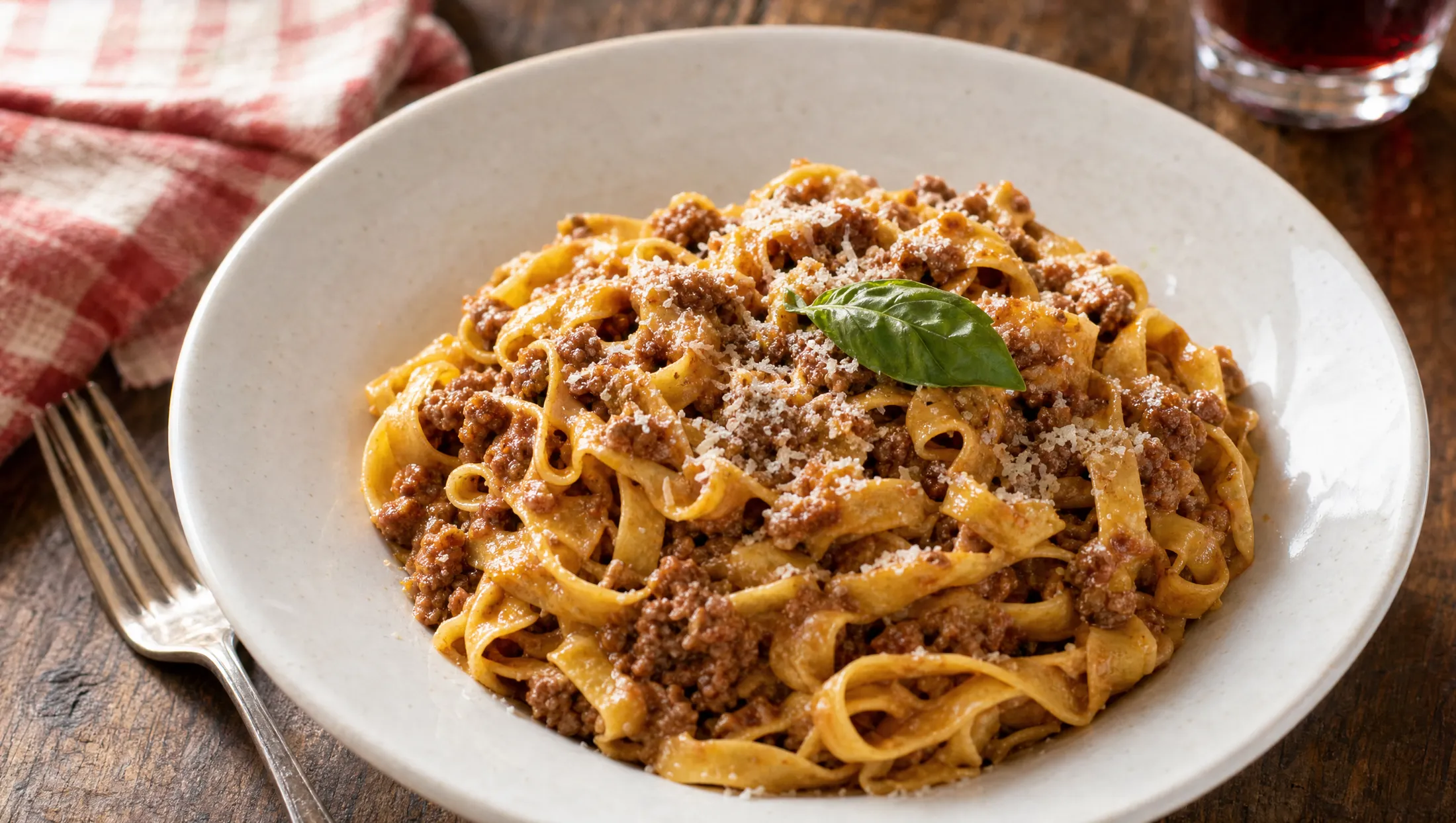
Why "spaghetti bolognese" doesn't exist in Italy
TL;DR — Key Takeaways
"Spaghetti bolognese" is not an Italian dish. The Bolognese (Bologna's authentic ragù) is traditionally served with tagliatelle, not spaghetti — the flat, broad pasta holds the meaty sauce, which spaghetti can't.
Italy has roughly 350 distinct pasta shapes, and each shape was developed to pair with a specific sauce or technique. Mismatching pasta and sauce is considered a culinary error in Italy.
Italian cuisine is regional, not national. Cacio e pepe is Roman, pesto is Ligurian, carbonara is Roman, amatriciana is Roman, bolognese is Emilian. Lumping them all as "Italian" misses the point.
The pasta-sauce pairing logic is: long pasta with smooth sauces, short tubular pasta with chunky sauces, broad pasta with rich meat sauces, fresh egg pasta with butter or cream-based sauces.
For restaurants serving Italian cuisine internationally, tagging dish names with the regional anchor (Roman, Emilian, Ligurian, Sicilian) helps tourists understand what they're ordering and signals authentic identity.
Why "spaghetti bolognese" doesn't exist in Italy
Walk into any restaurant in Bologna and order spaghetti bolognese. You will be politely corrected.
The reason is structural. Bologna's authentic ragù is a slow-cooked meat sauce — beef, pork, sometimes veal, with soffritto, tomato, milk, sometimes wine — that's substantial and clings to broad, flat pasta with surface area to hold the meat. Italians pair it with tagliatelle, pappardelle, or stuffed pasta like lasagne. Spaghetti — long, thin, round strands — doesn't carry the chunky sauce. The meat slides off. The dish doesn't work.
When Italian immigrants brought ragù to Britain, the United States, and Australia in the 19th and 20th centuries, the host countries had access to dried spaghetti more readily than fresh tagliatelle. The simplification was practical: pasta + meat sauce = a dish. The naming followed: spaghetti + bolognese = "spaghetti bolognese."
But in Italy, this combination didn't (and doesn't) exist as a traditional dish. Spaghetti al ragù exists in some regions, but it's not the same as Bologna's authentic ragù. Tagliatelle al ragù alla bolognese is the actual Bolognese dish.
This is a small but telling example of how culinary tradition gets simplified during immigration and how the simplified version sometimes loses the cultural specificity that made the original dish meaningful.
What do Italians really eat with bolognese sauce?
The authentic Bolognese pairings, in order of traditionality:
1. Tagliatelle al ragù alla bolognese. The canonical pairing. Fresh egg tagliatelle, hand-cut, served with the slow-cooked ragù. Hot, freshly grated parmigiano on the table.
2. Lasagne alla bolognese. The same ragù layered with bechamel, fresh egg pasta sheets, and parmigiano, baked. The other authentic preparation.
3. Tortellini in brodo. Bologna's signature dish — tiny stuffed pasta in capon broth, traditionally served at Christmas. Not directly related to ragù but central to Bolognese cuisine.
4. Cappelletti or tortelloni with ragù. Less common, but seen in some regional preparations.
What Italians don't typically do:
Serve Bolognese ragù with spaghetti
Add cream to Bolognese ragù
Serve "spag bol" as a casual weeknight dish (the slow-cooking time makes it a Sunday or special-occasion preparation)
How are pasta shapes paired with sauces in Italy?
Italy has roughly 350 distinct pasta shapes. The shape-to-sauce pairing is highly considered.
The general rules:
Long, smooth pasta (spaghetti, linguine, capellini):
Light olive-oil based sauces
Smooth tomato sauces
Seafood (linguine alle vongole)
Aglio e olio (garlic and oil)
Long, broad pasta (tagliatelle, pappardelle, fettuccine):
Rich meat sauces (bolognese, hare ragù, wild boar ragù)
Cream-based sauces with proteins
Mushroom sauces
Short, tubular pasta (penne, rigatoni, paccheri):
Chunky vegetable sauces
Hearty meat sauces with visible meat pieces
Amatriciana (with rigatoni or bucatini)
Norma (with penne)
Short, twisted pasta (fusilli, gemelli, trofie):
Pesto and pesto-style sauces
Chunky tomato sauces with vegetables
Sauces that need to catch in spirals
Tiny pasta (orzo, ditalini, pastina):
Soups, broths
Stuffed in salads or grain dishes
Stuffed pasta (ravioli, tortellini, agnolotti):
Often served in butter and sage
Or in clear broths
Less commonly with thick sauces
Fresh egg pasta (almost any shape):
Tends toward butter-based, cream-based, or rich meat sauces
The egg makes the pasta richer; the sauce should match
The Italian principle: the pasta and the sauce are designed for each other. The shape determines whether the sauce coats, fills, or pools. Italians who see a tourist eat cacio e pepe with rigatoni instead of tonnarelli notice — even if they don't say anything.
What's the difference between regional pasta dishes?
Italian cuisine is regional first, national second. Some examples:
Roman:
Cacio e pepe (pecorino romano + black pepper)
Carbonara (egg, guanciale, pecorino, pepper — no cream, ever)
Amatriciana (tomato, guanciale, pecorino — from nearby Amatrice)
Gricia (carbonara without egg)
Emilian (Bologna and Emilia-Romagna):
Tagliatelle al ragù alla bolognese
Lasagne alla bolognese
Tortellini in brodo
Fresh egg pasta tradition is strongest here
Ligurian:
Trofie al pesto (the original pesto pairing)
Trenette al pesto
Pansoti (stuffed pasta with walnut sauce)
Sicilian:
Pasta alla Norma (eggplant, tomato, ricotta salata)
Pasta con le sarde (sardines, fennel, pine nuts)
Spaghetti con i ricci di mare (sea urchin)
Neapolitan:
Spaghetti alle vongole (clams)
Spaghetti alla puttanesca
Linguine al limone
Tuscan:
Pici all'aglione (thick hand-rolled pasta with garlic-tomato sauce)
Pappardelle al cinghiale (wild boar ragù)
Ribollita (bread soup, not a pasta but iconic)
A tourist who orders "Italian pasta" misses this regional richness entirely. A menu that names regions makes the cuisine accessible.
Why does asking for parmesan on seafood pasta upset Italians?
Because the flavor pairing doesn't work — and Italians take pasta-sauce pairing seriously.
The mechanism: parmesan (parmigiano-reggiano) is rich, salty, umami-forward. Seafood pasta —spaghetti alle vongole, linguine ai gamberi, spaghetti al nero di seppia— is built around delicate seafood flavors that get overwhelmed by aged hard cheese.
The result: a tourist asking for parmesan signals to the Italian server that they don't understand the dish. The server might bring it (hospitality wins out), but the moment is noticed.
A few exceptions:
Some regional Sicilian pasta dishes use grated bottarga (cured tuna roe) — distinct from cheese
A few northern Italian pasta dishes pair seafood with cheese (rare but possible)
Italian-American "Italian" food often includes parmesan with seafood — but this is Italian-American, not Italian
The respectful approach for tourists: don't ask. Trust the kitchen. If you genuinely want cheese on a seafood pasta, you can prepare it at home — but in an Italian restaurant in Italy, accept the dish as the chef intends it.
How can a curious tourist explore Italian cuisine respectfully?
Six guidelines that signal respect:
1. Order regional, not generic. Pick a regional dish, not "spaghetti and meatballs." The waiter will respond to the regional knowledge.
2. Match pasta to sauce as the menu suggests. If the menu says tagliatelle al ragù and you order spaghetti bolognese— they'll bring you the tagliatelle. Trust the kitchen.
3. Don't ask for substitutions. Italian kitchens are usually traditional. Substitutions are unusual.
4. Don't add ingredients to your order. Don't ask for extra cheese on a finished dish, extra parmesan on seafood, extra anything.
5. Pace yourself across courses. Italian meals are antipasto → primo → secondo → contorno → dolce. Pasta is a course, not a side dish.
6. Show curiosity, not authority. The opening line "I want to learn what's authentic to this region" gets you a different (and better) experience than "I'll have the spaghetti and meatballs."
These aren't snobbery — they're how Italian cuisine is built. Respect the structure and the cuisine opens up to you.
How restaurants help tourists navigate this
The challenge: a German tourist visiting Bologna doesn't know that "spaghetti bolognese" is a non-Italian construct. They've eaten it at home for 20 years. They naturally order it.
The respectful restaurant response:
1. Explain on the menu. A small note:"In Bologna, our ragù is served with tagliatelle (not spaghetti) — the broad pasta holds the sauce as tradition intends."
2. Offer the authentic version."Tagliatelle al ragù alla bolognese — the Bolognese way."
3. Train staff to gracefully redirect."Our ragù is served with tagliatelle, which is how Bolognese is traditionally made. May I bring you that instead?"
4. In multilingual menus, translate the cultural context."Tagliatelle al ragù alla bolognese — Bologna's authentic slow-cooked meat ragù, served on broad fresh egg pasta (not spaghetti, despite the popular international version)."
Intermenu lets you write that context into the dish description, which is translated with the rest of the menu, so the regional logic carries through to every language version of the menu. A French tourist in Bologna reads in French why the menu has tagliatelle and not spaghetti — and orders confidently.
Frequently Asked Questions
Why is "spaghetti bolognese" not actually Italian? Bologna's ragù is traditionally served with tagliatelle (broad fresh egg pasta), not spaghetti. The "spaghetti bolognese" combination is an Italian-immigrant simplification that doesn't exist in traditional Italian cuisine.
What do Italians really eat with bolognese sauce? Tagliatelle al ragù alla bolognese (the canonical), lasagne alla bolognese (also classic), tortellini in brodo (a related Bolognese specialty).
How are pasta shapes paired with sauces in Italy? Long smooth pasta with light sauces, broad pasta with rich meat sauces, short tubular pasta with chunky sauces, short twisted pasta with pesto-style. The shape and sauce are designed for each other.
What's the difference between regional pasta dishes? Roman (cacio e pepe, carbonara, amatriciana, gricia), Emilian (tagliatelle al ragù, lasagne), Ligurian (trofie al pesto), Sicilian (pasta alla Norma, pasta con le sarde), Neapolitan (spaghetti alle vongole), Tuscan (pici all'aglione, pappardelle al cinghiale).
Why does asking for parmesan on seafood pasta upset Italians? The aged hard cheese overpowers the delicate seafood flavors. The flavor pairing doesn't work, and Italian cuisine takes pasta-sauce pairing seriously.
Want Menus That Explain Dishes Properly to Tourists?
Cultural context per dish is the most under-used menu feature in 2026 — and it's the simplest way to honor a cuisine's regional traditions while making them accessible to international guests.
Intermenu lets you write that context into each dish description, and it is translated into every language your guests read. The Bolognese-tagliatelle pairing logic, the Roman cacio-e-pepe tradition, the Sicilian pasta alla Norma history — all of it can travel through every language version of the menu.
If you serve a regional cuisine with cultural depth that gets flattened in tourist-translated menus, see what cultural context per dish looks like →