
How to Create a Halal Menu That Attracts Muslim Diners (2026)
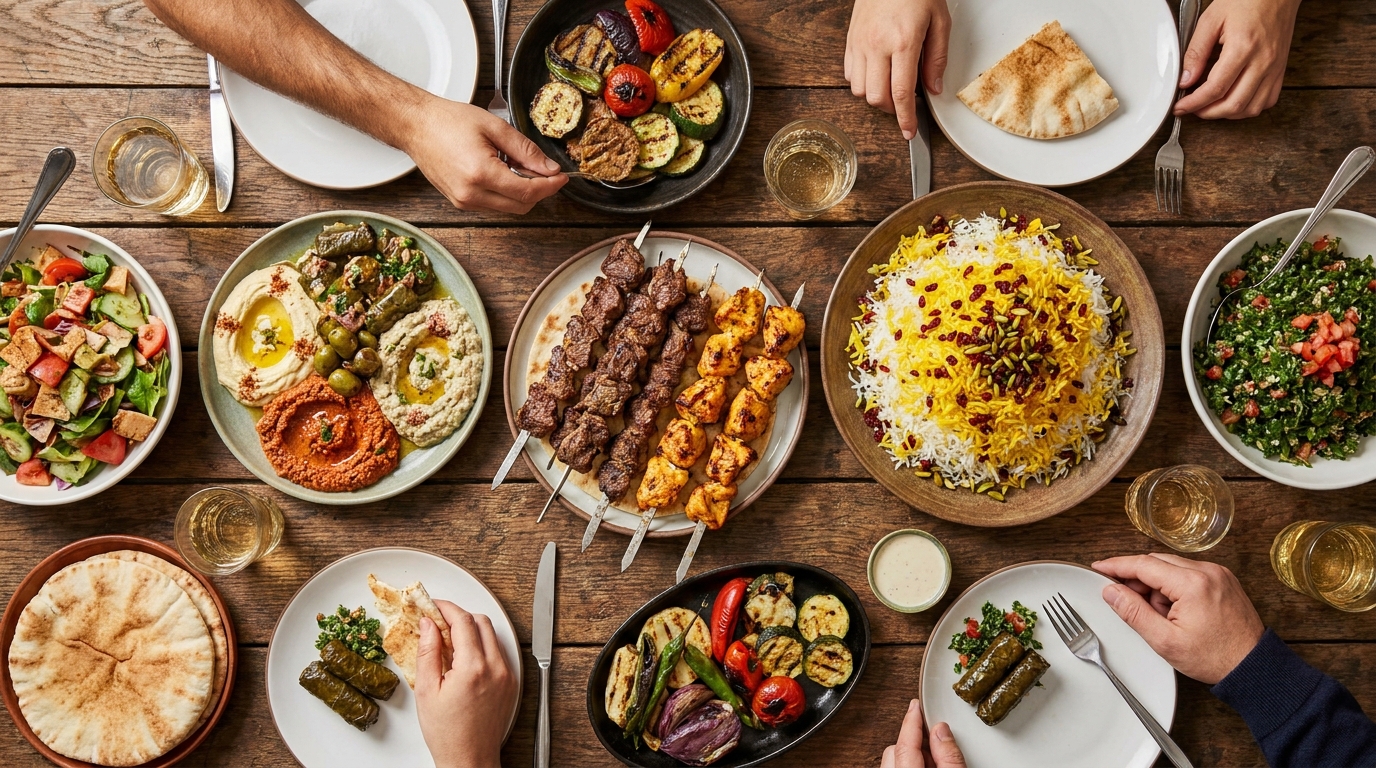
Muslim travelers are a fast-growing, high-loyalty market. Here's how to create a halal menu they can trust — from sourcing and certification to labeling and translation.
TL;DR — Key Takeaways
A halal menu serves food prepared according to Islamic law: no pork, no alcohol, meat from animals slaughtered by the ritual zabiha method, and strict separation from non-halal items to avoid cross-contamination.
The market is large and growing fast. International Muslim travelers reached an estimated 176 million in 2024 — up 25% in a year — and are projected to hit 245 million by 2030, with travel spending heading toward $230 billion.
You don't always need formal certification, but you do need honesty and consistency. Mislabeling a dish as halal when it isn't is a serious breach of trust that ends a relationship permanently.
The biggest unlock is pairing a halal section with translation— a Muslim traveler who can read your menu in Arabic and filter to halal dishes is a guest who chose you over the restaurant next door.
What makes a menu halal?
Before you decide how to create a halal menu, it helps to be precise about what "halal" requires, because the word covers more than just avoiding pork. Halal (Arabic for "permissible") food meets a clear set of conditions rooted in Islamic dietary law:
No pork or pork derivatives— including gelatin, lard, and many common emulsifiers and flavorings.
No alcohol— not as a drink and not as a cooking ingredient (wine reductions, beer batters, liqueur in desserts).
Meat from zabiha slaughter— permitted animals slaughtered by a Muslim with a swift cut while invoking the name of God, and properly drained of blood.
No cross-contamination— halal food must not touch non-halal food, surfaces, oil, or utensils during storage, prep, or cooking.
Seafood and plant foods are generally halal by default, which is why vegetarian and pescatarian dishes are an easy foundation. The work is mostly in your meat sourcing, your alcohol usage, and your kitchen separation — not in reinventing your cuisine.
Do you need halal certification?
This is the first question most operators ask, and the answer depends on your market and your claims.
Formal certification comes from a recognized halal authority (such as the American Halal Foundation or your country's equivalent) that audits your suppliers, ingredients, and processes, then licenses you to display their mark. It is the strongest trust signal and is effectively expected if you market yourself as a fully halal restaurant, especially in areas with a large Muslim community.
Self-described halal (offering halal dishes without a certificate) is common and acceptable for restaurants that serve a mixed menu — but only if you are scrupulously honest and can answer guests' questions. Many Muslim diners will ask where your meat comes from; "we use a certified halal supplier for our chicken and lamb, prepared separately" is a clear, trustworthy answer. "I think so" is not.
The rule of thumb: the broader and bolder your halal claim, the more you need certification to back it. A few clearly-sourced halal options can stand on transparency; a "100% halal" banner needs paperwork.
Where Intermenu fits: structured dietary tags let you mark exactly which dishes are halal and which are halal-on-request, so guests see an accurate picture instead of a blanket claim you can't stand behind.
How do you source and separate to avoid cross-contamination?
Sourcing and separation are where a halal claim is won or lost. Three priorities:
Source certified meat. Build a relationship with a certified halal supplier for every meat you serve and keep the documentation. This is the single most important step — your halal status flows from your supply chain.
Separate everything downstream. Cross-contamination undoes good sourcing. Use dedicated prep areas, cutting boards, utensils, and — critically — separate fryer oil and grill space. Halal meat fried in oil that has cooked breaded pork is no longer halal.
Watch the hidden non-halal ingredients. Alcohol and pork hide in places operators forget: wine in the risotto, lard in the pastry, gelatin in the dessert, bacon bits in the "house" salad, alcohol-based vanilla. Audit every component, not just the obvious proteins.
If you run a mixed kitchen, the practical model is a clearly-defined halal station with its own equipment and a staff routine that prevents the two streams from ever meeting.
How should you build the actual menu?
A common misconception is that a halal menu means Middle Eastern food. It doesn't. A thoughtful halal menu can span global cuisines — the only constraints are the sourcing and separation rules above. Strong building blocks:
Grilled and roasted mains using certified halal chicken, lamb, beef, and goat — naturally suited to kebabs, grills, curries, tagines, and roasts.
Global dishes made halal— Mediterranean grills, Italian pastas with halal or vegetarian sauces, Asian stir-fries without alcohol-based sauces, burgers with halal patties.
Seafood and vegetarian dishes— halal by default, these instantly widen the menu and serve other diets at the same time. (See the pillar guide for how one dish can serve several diets.)
Alcohol-free drinks that feel special. Since alcohol is excluded, your beverage program is a real opportunity. Go beyond soft drinks: fresh juices, mocktails, premium mixers, mint lemonades, and traditional drinks like ayran or tamarind cooler give Muslim guests the "occasion" feeling that wine gives other tables — and lift your beverage check.
The goal is a menu where a Muslim guest has several confident choices across every course — not one token grilled chicken.
How do you label halal dishes so guests trust them?
Labeling is where many restaurants quietly lose Muslim guests: they serve halal food but never say so clearly, so cautious diners assume the worst and order plain or leave. Make it unmistakable:
Use a consistent halal label or icon next to each qualifying dish, and state whether it's certified or sourced-halal.
Distinguish "halal" from "halal on request" (e.g., a dish that's halal only when ordered with the halal protein).
Note alcohol-free preparation where a classic recipe would normally include it ("cooked without wine").
Clarity converts. For the full system of icons, color, and honest wording, see Dietary Labels & Filters. And because halal and kosher guests often have overlapping questions about separation and certification, our kosher menu guide is a useful companion.
How do you win Muslim tourists with a translated menu?
This is the highest-leverage move in the whole playbook. Muslim travel is booming — an estimated 176 million international Muslim travelers in 2024, projected to reach 245 million by 2030 — and these guests are actively looking for places that make halal dining easy (figures per the Mastercard-CrescentRating Global Muslim Travel Index).
A traveler from the Gulf, North Africa, or Southeast Asia is most anxious about food exactly when the menu is in a language they don't read. They cannot risk guessing whether something contains pork or alcohol. A menu they can switch to Arabic (or Turkish, Urdu, Indonesian) and filter to halal removes that fear entirely — and removing that fear is frequently the reason they pick your restaurant.
This is where a digital, multilingual menu becomes a direct revenue tool. With Intermenu, your halal dishes are tagged once and rendered correctly in 15 languages, so a guest scans the QR code, sets the menu to their language, taps "halal," and orders with total confidence. For a deeper playbook, see attracting international guests and our guide to multilingual menus.
A halal-menu launch checklist
Use this to go live without missing a safety-critical step:
Source certified halal meat for every meat dish; keep the certificates.
Separate prep areas, utensils, grills, and fryer oil from non-halal items.
Audit every dish for hidden pork and alcohol (sauces, stocks, desserts, extracts).
Build several halal options per course, plus an alcohol-free drinks lineup.
Decide on certification vs. transparent self-description — and match your claims to it.
Label each dish clearly (halal / halal on request / alcohol-free).
Translate the menu into your guests' languages and verify the halal terms specifically.
Train staff to answer "is this halal?" accurately and consistently.
Frequently Asked Questions
How do you create a halal menu?
Source certified halal meat, eliminate pork and alcohol (including in sauces and desserts), separate halal prep from non-halal to avoid cross-contamination, build several halal options per course with an alcohol-free drinks lineup, and label each dish clearly.
Do you need certification to serve halal food?
Not always. A few transparently-sourced halal dishes can rely on honesty and clear answers, but a "fully halal" claim — especially in a Muslim-majority area — effectively requires certification from a recognized halal authority.
Can a halal menu include non–Middle Eastern food?
Yes. Halal is about sourcing and preparation, not cuisine. Italian, Asian, Mediterranean, and burger menus can all be halal as long as the meat is certified, no pork or alcohol is used, and there's no cross-contamination.
What drinks go on a halal menu?
No alcohol. Lean into fresh juices, mocktails, premium mixers, lemonades, and traditional drinks like ayran — an appealing alcohol-free program gives Muslim guests an "occasion" feel and raises your beverage check.
Why does translation matter for a halal menu?
Muslim travelers are a large, growing market who are most anxious about food when they can't read the menu. A menu they can view in Arabic and filter to halal removes that risk and is often the deciding factor in where they dine.
Turn Halal Diners Into Regulars
A halal menu that guests can read in their language and trust at a glance is one of the easiest ways to win a loyal, fast-growing market.
Intermenu tags your halal dishes once, renders them accurately in 15 languages, and gives every guest a filtered, allergen-aware view — so Muslim diners and travelers order with confidence.
See how a multilingual halal menu works with Intermenu →