
Vegetarian Menu Strategy: Beyond the Token Salad
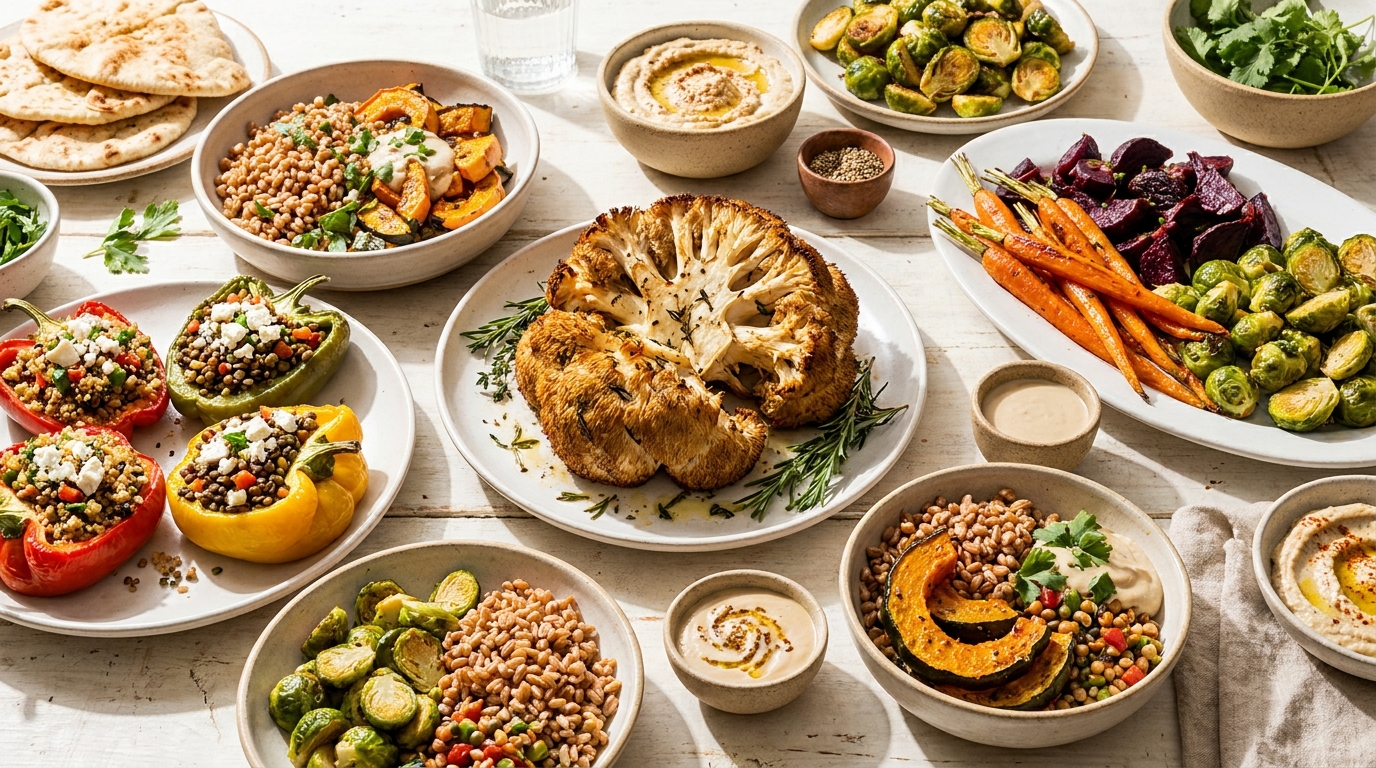
A single token salad quietly costs you whole tables. Here are vegetarian menu ideas and a strategy that turn meatless options into some of your best-selling dishes.
TL;DR — Key Takeaways
Vegetarian demand is mainstream: about54% of US adults order a vegetarian meal at least sometimes when dining out, and diners aged 18–34 order them most. This is not a niche to tolerate — it's a majority behavior to design for.
The token salad costs you whole tables. Because groups choose a restaurant together, a single weak meatless option sends the entire party elsewhere — so vegetarian quality is a booking issue, not a courtesy.
The winning play is a few crave-worthy meatless mains, not a long meat-free menu. Quality and craveability beat quantity every time.
Smart vegetarian menus are profitable by design— built on cross-utilized ingredients, priced with confidence, and placed where guests' eyes land first.
Why does one token salad cost you tables?
Most restaurants technically "have vegetarian options" — a garden salad, a plain pasta, maybe a margherita. The problem is that none of them are chosen with enthusiasm, and that quietly costs real money.
Here's the mechanism. Dining groups decide together, and the vegetarian at the table is often the veto vote: if they can't find something they actually want, the group picks a different restaurant where they can. So your weak vegetarian section doesn't just disappoint one guest — it disqualifies you from the whole booking. With roughly54% of US adults eating vegetarian meals at least sometimes (and that share highest among 18–34s and flexitarians), the odds that someone at a given table wants a great meatless option are high.
Flip it around and it's an opportunity: a restaurant with two or three genuinely exciting vegetarian mains becomes the easy "yes" for mixed groups. That's the strategic frame for everything below. (For how this table-capture effect runs across every diet, see the special-diet menu pillar.)
How many vegetarian options is the right number?
More isn't better — better is better. Menu-engineering research consistently finds that5–7 items per category is the sweet spot, and that too many choices suppress orders through decision fatigue. Applied to vegetarian dishes, that means you don't need a sprawling meat-free menu; you need a strong meatless option in each major section— a vegetarian starter, a couple of vegetarian mains, a vegetarian side that stands on its own.
The target: every course should give a vegetarian guest at least one dish they'd order by choice, not by default. Two or three excellent vegetarian mains beat eight mediocre ones. For the underlying math on category size and ordering behavior, see our menu engineering guide.
What makes a vegetarian main crave-worthy?
The difference between a token dish and a best-seller is craveability. Build vegetarian mains the way you'd build a signature meat dish:
Lead with texture and richness. Crispy, charred, caramelized, creamy — the sensory words that make any dish tempting. Roasted, grilled, and fried elements give vegetables the satisfying quality guests fear they'll miss.
Use umami generously. Mushrooms, aged cheese, miso, tomato, soy, smoked elements — these deliver the savory depth that makes a dish feel like a meal, not a side.
Make it substantial. A vegetarian main should look and eat like a main: a proper portion with protein (halloumi, paneer, beans, eggs, tofu) and a starch, not a plate of garnish.
Borrow from cuisines that do it natively. Indian, Middle Eastern, Italian, and East Asian cuisines have centuries of beloved vegetarian dishes — far more convincing than a "veggie version" of a meat plate. Our world cuisines guide is a strong idea source.
Then photograph them — menu photos lift orders ~25–30%, and an indulgent image is what convinces a flexitarian to choose the mushroom main over the steak.
How do you cross-utilize ingredients for margin?
Vegetarian dishes can carry some of your best margins, if you design them into your existing supply chain rather than bolting on new SKUs.
Reuse across dishes. The roasted vegetables in your main should also appear in a starter, a side, a sandwich, and a special. Cross-utilization means buying in volume, cutting waste, and adding menu variety without expanding inventory — a core menu engineering tactic.
Turn prep offcuts into value. Vegetable trim becomes stock, pestos, and spreads; day-old bread becomes croutons and panzanella. Vegetarian menus are unusually good at absorbing what would otherwise be waste.
Price for the craft, not the cost of goods. A beautifully composed vegetarian main can command a main-course price. Underpricing it trains guests to see it as lesser and leaves margin on the table.
The result is a section that improves food-cost percentage while widening your appeal — the rare win-win in menu design.
Where should you place vegetarian dishes for maximum orders?
Placement is a quiet multiplier. Guests' attention concentrates at the top of each category (and the top-right of printed menus), and dishes with photos or subtle badges draw disproportionate views. So:
Put your best vegetarian main near the top of the mains, not exiled to a separate "vegetarian" box that meat-eaters skip and vegetarians find tokenizing.
Integrate, then tag. List vegetarian dishes in their natural sections with a clear icon, rather than segregating them.
Use a photo on the dish you most want to sell. That visual is what tips a flexitarian toward the meatless choice.
On a digital menu you get an extra advantage: a guest can filter to vegetarian dishes instantly while everyone else sees the full menu — clean for all, easy for the guest who needs it.
Vegetarian vs. vegan: how do you label clearly?
These get conflated, and the confusion costs orders and trust. The clean distinction:
Vegetarian— no meat, poultry, or fish; dairy and eggs are typically fine.
Vegan— no animal products at all, including dairy, eggs, and honey.
A vegetarian guest can eat vegan dishes but not vice versa, so label both clearly and don't imply a cheese-topped dish is vegan. Many of your vegetarian dishes are one swap (plant milk, no cheese) from also serving vegans — worth flagging where true. For the labeling system and the dedicated plant-based playbook, see Dietary Labels & Filters and Vegan & Plant-Based Menu Ideas.
Where Intermenu fits: tag each dish vegetarian or vegan once, and guests filter to exactly what they eat — in their own language — so the right diners find your best meatless dishes without cluttering anyone else's menu.
What vegetarian dishes should you put on the menu?
Concrete starting points, by course — each built on the craveability principles above and easy to cross-utilize:
Starters: crispy halloumi with honey and chili; stuffed mushrooms; whipped feta with charred bread; sweetcorn fritters; burrata with seasonal fruit.
Mains: wild-mushroom risotto; paneer or halloumi curry; eggplant parmigiana; spinach-and-ricotta cannelloni; smoky black-bean enchiladas; a loaded grain bowl; shakshuka; squash-and-sage gnocchi.
Sides that stand alone: charred broccoli with chili and garlic; truffle-parmesan fries; roasted cauliflower steak; proper mac and cheese.
Desserts: most are already vegetarian — just confirm no gelatin or animal rennet sneaks in.
Choose two or three mains you can execute flawlessly and photograph beautifully rather than listing all of them. Rotate seasonally to keep the section fresh, and flag which dishes are one swap away from vegan (see plant-based menu ideas).
Frequently Asked Questions
What are good vegetarian menu ideas for a restaurant?
A few crave-worthy meatless mains built on texture and umami — think mushroom risotto, halloumi or paneer dishes, hearty grain bowls, and globally-inspired vegetarian classics — plus a vegetarian option in every course, integrated into normal menu sections.
How many vegetarian dishes should a menu have?
Quality over quantity: aim for at least one strong vegetarian option per course, within the 5–7-items-per-category sweet spot. Two or three excellent vegetarian mains outperform a long, weak meat-free list.
Why is a single vegetarian option not enough?
Because groups choose a restaurant together. If the one vegetarian at the table has nothing appealing, the whole party often goes elsewhere — so weak vegetarian options cost you entire bookings, not just one cover.
Are vegetarian dishes profitable?
They can be among your best margins when built on cross-utilized ingredients and priced for the craft rather than the cost of goods. They also reduce waste by absorbing trim and surplus produce.
What's the difference between vegetarian and vegan on a menu?
Vegetarian excludes meat, poultry, and fish but usually allows dairy and eggs; vegan excludes all animal products. Label each clearly — vegetarians can eat vegan dishes, but vegans can't eat all vegetarian ones.
Turn Meatless Dishes Into Best-Sellers
Strong vegetarian options win mixed tables, lift average check, and protect margin. The trick is craveable dishes, smart placement, and clear labeling.
Intermenu lets you tag vegetarian and vegan dishes, photograph them beautifully, and present a filtered, multilingual menu — so your best meatless mains get seen and ordered.
See how Intermenu showcases your vegetarian menu →