
Bar Menu Ideas: Cocktails, Food & Examples That Sell (2026)
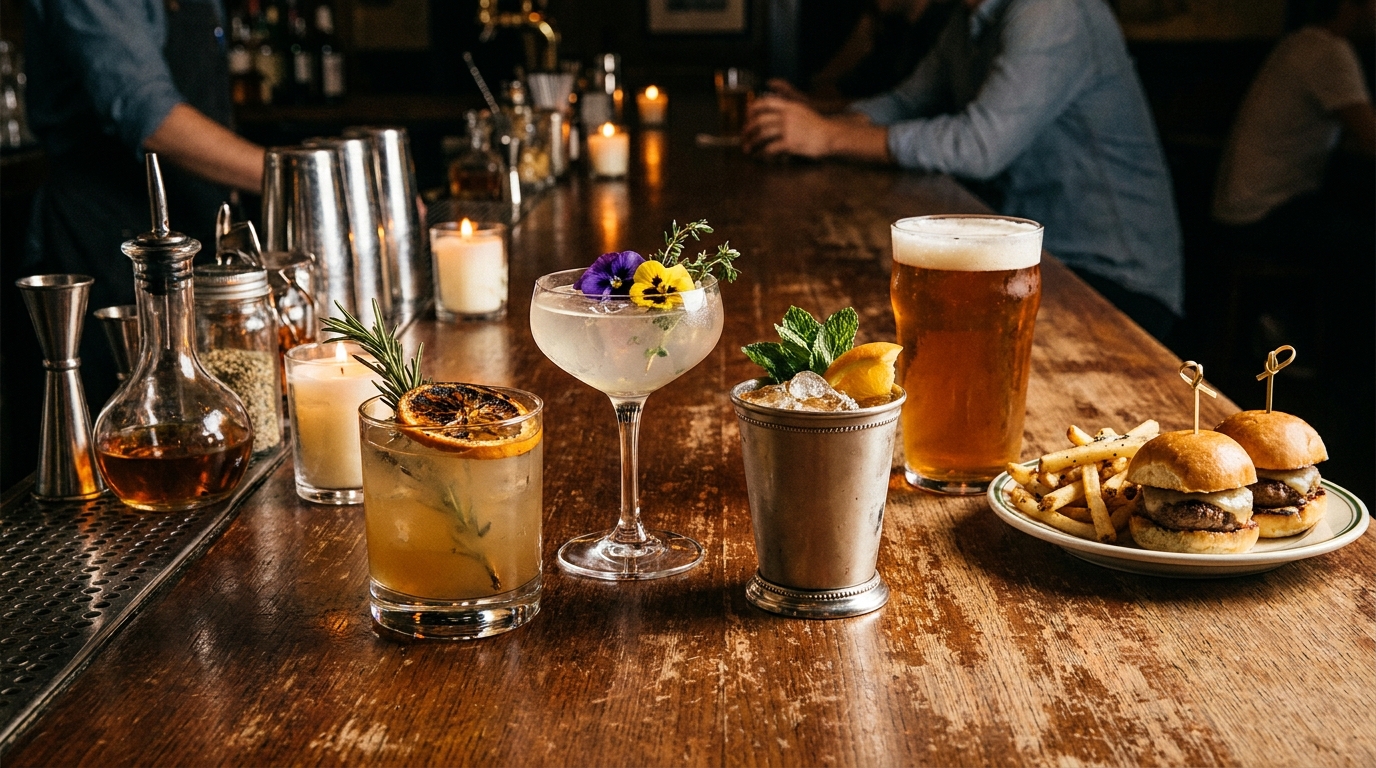
How to build a bar menu that sells — signature and classic cocktails, beer and wine, mocktails and the bar food that keeps tabs open, with a sample menu and pricing tips.
TL;DR — Key Takeaways
A complete bar menu balances signature cocktails (your identity and margin), classics (what guests order by name), and a beer, wine and non-alcoholic range.
Bar food is not an afterthought— it keeps guests drinking longer and raises the average tab. Many guests search specifically for "bar menu food."
No- and low-alcohol drinks are the fastest-growing category on a bar menu. A real mocktail section wins guests other bars ignore.
Price by pour cost, organize so the eye lands on signatures, and publish as a digital menu you can refresh every season and during happy hour.
What makes a good bar menu? (what to include)
A good bar menu reads quickly in low light, tells guests who you are, and gently steers them to the drinks you most want to pour. Build it from these sections.
Signature cocktails
Your calling card. Two to six house creations — built on house-infused spirits, fresh juice, homemade syrups and a memorable name — define your bar's personality and carry your best margins. They can't be price-compared, so they're where you make money and earn social posts. List them first. Examples to riff on: a smoked old fashioned, a chili-mango margarita, a house spritz, a clarified milk punch, a barrel-aged Manhattan.
Classic cocktails
Guests order classics by name, so cover them well: Mojito, Old Fashioned, Margarita, Negroni, Cosmopolitan, Tom Collins, Daiquiri, Whiskey Sour, Aperol Spritz and the Espresso Martini. A bar that nails the classics earns the trust to sell its signatures.
The 10 most popular bar drinks
If you do nothing else, get these right: Margarita, Martini, Old Fashioned, Mojito, Negroni, Cosmopolitan, Daiquiri, Espresso Martini, Whiskey Sour and the Aperol Spritz. They're the safe orders that keep the till moving between signature sales — list them where they're easy to find.
Seasonal cocktails
Rotate a few drinks with the calendar — bright and floral in spring, tropical and refreshing in summer, spiced and dark in fall, rich and warming (hot toddies, mulled options) in winter. A seasonal section keeps regulars curious and your menu current.
Spirits, beer and wine
Offer a clear range by base —gin, vodka, rum, tequila/mezcal, whiskey— for guests who order "a gin and tonic" or want a neat pour. Add a focused beer list (a few drafts, a rotating local, a handful of bottles/cans) and a short, well-chosen wine selection by the glass and bottle (a sparkling, two whites, two reds, a rosé covers most rooms).
Non-alcoholic and mocktails
A growing share of guests want a great drink without the alcohol. A genuine mocktail section — fresh juice, house syrups, real garnish, plus a no/low spirit option — captures designated drivers, sober-curious guests, pregnant guests and the afternoon crowd. It's premium-priced with no spirit cost, so it's quietly one of your best margins. More in our inclusive menu guide.
Bar food and small plates
The tab-extender — and a search term in its own right ("bar menu food"). Shareable plates keep guests at the bar and drinking: wings, loaded fries, sliders, nachos, flatbreads, calamari, a charcuterie or cheese board, pretzel bites, and a few hearty mains for the dinner crowd. Give it real space on the menu.
A sample bar menu
SIGNATURES— House Old Fashioned · Smoked Negroni · Spicy Paloma · Seasonal Spritz · Clarified Milk Punch
CLASSICS— Margarita · Mojito · Cosmopolitan · Espresso Martini · Whiskey Sour · Aperol Spritz
NO & LOW— Garden Spritz (0%) · Virgin Mojito · Seedlip & Tonic · House Soda
BEER— 3 drafts · rotating local · 4 bottles/cans
WINE— Sparkling · 2 white · 2 red · rosé (glass/bottle)
BAR FOOD— Wings · Loaded Fries · Sliders · Flatbread · Calamari · Charcuterie Board
How to organize a cocktail menu
There are three good ways to order a cocktail list: by spirit base (gin, vodka…), by style (refreshing, spirit-forward, sour, sweet), or by flavor/mood (light & bright, dark & boozy). Style and flavor groupings help indecisive guests choose faster and tend to sell more signatures than a base-by-base list. Whatever you pick, put signatures at the top and keep descriptions short — the spirit, one or two key ingredients, and the vibe ("smoky, stirred, spirit-forward"). A one-line description sells a drink; a paragraph kills it.
How to price drinks (pour cost and margins)
Cocktails are priced on pour cost— the cost of the liquor and ingredients as a percentage of menu price, usually targeted around18–24%. Signatures with house-made elements can command more because they can't be price-compared across the street. Build a happy-hour tier if it fits your room, and don't line prices up in a tidy column — let them sit at the end of each description so guests read the drink first. For the psychology behind it, see our menu pricing guide and the broader menu engineering guide.
Most profitable bar items
Cocktails are typically your highest-margin pour, especially signatures. Mocktails are quietly excellent — a premium price with no spirit cost. Beer and wine move volume at thinner margins and keep the room turning. The smart menu leads with signatures and mocktails, uses classics and beer/wine to keep volume, and attaches bar food to extend the session and grow the tab. Track which signatures actually sell and cut the ones that don't.
Signature drinks that define your brand
The single highest-leverage move on a bar menu is one or two signatures guests can't get anywhere else. Build them around a house infusion, a local ingredient, a clever twist on a classic, or a theatrical element (smoke, a clarified texture, a giant clear ice cube), give them a name that fits your brand, and photograph them well. A memorable signature is both your margin engine and your social-media engine — it's the drink people photograph and the reason they bring friends back.
Bar menus for parties, weddings and events
If you offer event bars, give hosts a simple package menu: a signature plus two classics, beer and wine, and a mocktail, priced per head or as an open/consumption bar with clear limits. A clean, shareable digital package menu makes booking easy and upsells premium tiers (a welcome cocktail on arrival, a top-shelf spirits upgrade). It's an easy, high-margin revenue line most bars under-sell.
The rise of low- and no-alcohol menus
No- and low-alcohol is the fastest-growing part of the drinks world, and bars that take it seriously win a whole segment competitors ignore. Treat mocktails with the same craft as cocktails — fresh juice, house syrups, real garnish, proper glassware — and label them clearly so guests can find them at a glance. Stock a no/low spirit or two so a guest can have "a proper drink" without the alcohol. More in our inclusive special-diet menu guide.
Bar menu design and layout
Keep it scannable in low light: bold section headings, short descriptions, signatures first, the no/low section clearly flagged. Note key allergens (egg white, dairy, nuts). A printed list looks the part, but a digital QR drink menu lets you 86 a sold-out keg, swap the seasonal cocktail, flip on happy-hour pricing, and show a photo of every signature — see QR code menus, and shoot the drinks with the AI food photography playbook.
Make it a digital / QR drink menu
Bar menus change faster than any other — sold-out kegs, a new seasonal cocktail, happy-hour pricing, a signature that's run out of an ingredient. A QR menu updates in seconds, shows photos that sell the signatures, lets guests filter to the no/low list, and can switch to a happy-hour version automatically. Build it with our QR menu guide.
Common bar menu mistakes
No signature— nothing guests can only get from you.
Forgetting bar food— shorter sessions, smaller tabs.
Treating mocktails as an afterthought— losing a fast-growing segment.
Prices in a column— invites bargain-scanning.
A static printed list— stale specials, sold-out drinks, no happy-hour flexibility.
Build your bar menu free
Turn your drink list into a live QR menu with Intermenu— photograph every signature, flag the no/low section, switch on happy-hour pricing and update sold-outs instantly, and see what's actually pouring. Build your bar menu free with Intermenu →
Frequently Asked Questions
What should a bar menu include?
Signature cocktails, classic cocktails, a beer and wine range, a non-alcoholic/mocktail section, and bar food. List signatures first and keep descriptions to one short line.
What food is typically on a bar menu?
Shareable small plates that pair with drinking — wings, loaded fries, sliders, nachos, flatbreads, calamari and a charcuterie board — plus a few hearty mains for the dinner crowd.
What are the 10 most popular bar drinks?
Margarita, Martini, Old Fashioned, Mojito, Negroni, Cosmopolitan, Daiquiri, Espresso Martini, Whiskey Sour and the Aperol Spritz.
How do you price cocktails?
By pour cost — the liquor and ingredient cost as a percentage of price, usually around 18–24%. House signatures can command more because they can't be price-compared.
How do I build a bar menu for a party or wedding?
Offer a package: a signature plus two classics, beer and wine, and a mocktail, priced per head or as an open/consumption bar, presented as a shareable digital package with optional upgrades.
How do I make a digital / QR drink menu?
Build it in a tool like Intermenu, tag each drink, and publish behind a QR code so you can update specials, happy-hour pricing and sold-outs instantly.