
How to Add Modifiers & Options to Menu Items
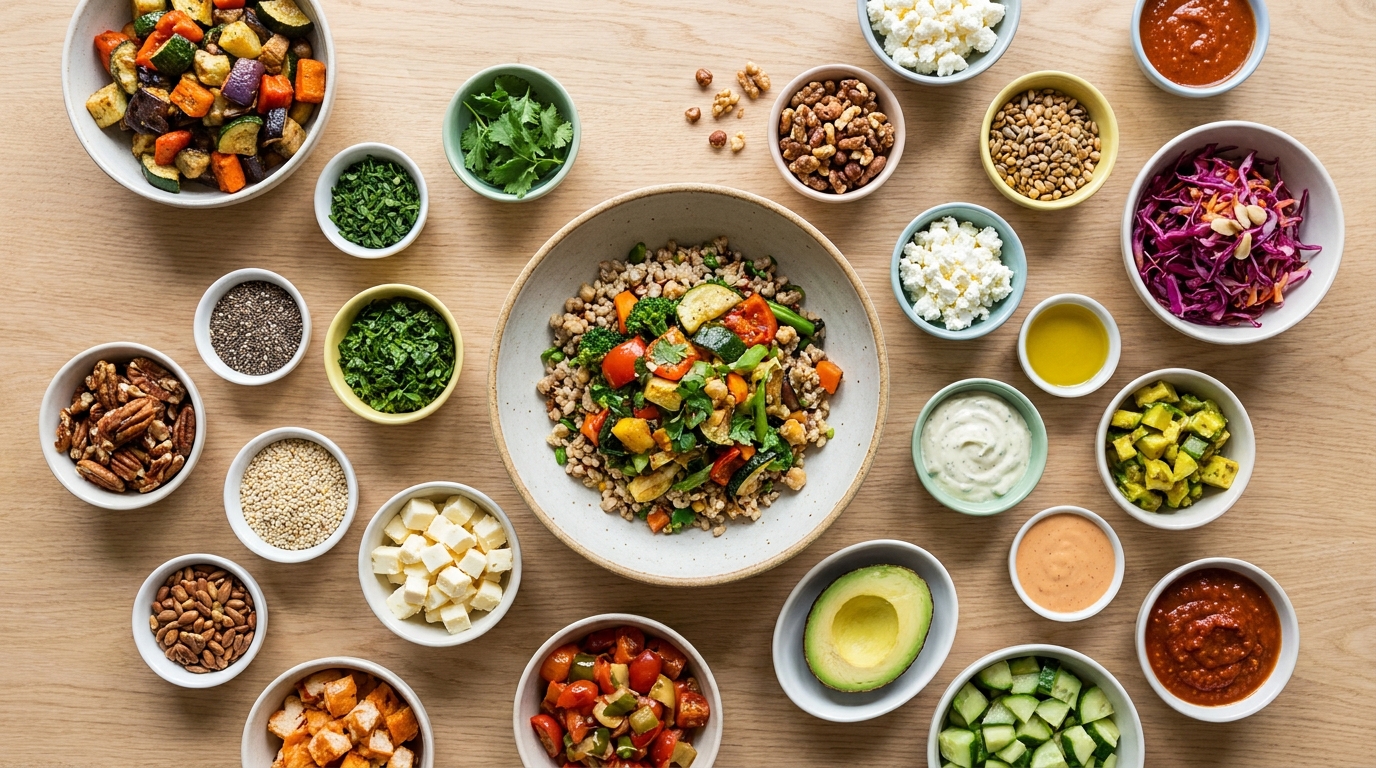
Almost no dish is really one fixed thing. It comes in sizes, with a choice of side, or with extras a guest can add. Modifier groups capture that — and done well, they are one of the most natural upsell tools you have, with no pressure on your staff. Here is how to set up options the right way: the two types, when each fits, and how to price them so the check grows without annoying anyone.
TL;DR — Key Takeaways
Two group types do everything."Choose one" (variants) for a single required pick like size; "choose many" (add-ons) for optional paid extras.
Price changes are the upsell. A €12 dish becomes €16 when the guest adds grilled chicken — chosen by them, no staff prompt needed.
Required vs optional matters. Make a necessary choice required (size, side); keep extras optional so the dish still works as-is.
Keep groups short. A handful of clear choices converts; a wall of options causes hesitation.
Reuse groups across dishes. Build "Add a side" once and attach it to every plate that needs it.
What menu modifiers actually are
A modifier group is a question your menu asks about a dish, with a set of answers. "What size?" with Regular and Large. "Add a protein?" with Grilled Chicken and Prawns. "Which side?" with Fries, Salad, or Rice. Each answer can carry a price change, so the guest's choices build the final price.
This does two jobs. First, it captures how your kitchen actually works — most dishes genuinely have variants and extras — so the order that reaches the pass is correct. Second, and easy to underrate, it is a quiet, consistent upsell: every guest is offered the add-on, every time, with none of the awkwardness of a server pushing it. Set up well, options are where the average check grows.
The two types of option group
Almost everything you need comes down to two patterns. Most platforms label them as a single-choice "variant" and a multi-choice "add-on."
Choose one (variants)
A single-choice group is for a pick where exactly one answer makes sense — and usually one is required. Size is the classic case: a guest must choose Regular or Large, not both, not neither. A choice of cooking temperature or a base (rice vs. salad) works the same way. Mark these required so the order can't be ambiguous, and let the larger or premium option carry a price change.
Choose many (add-ons)
A multi-choice group is for optional extras a guest can pile on: extra cheese, an added protein, premium toppings, a sauce upgrade. Here the guest may pick none, one, or several, so the group is optional, and you can cap how many they may add with a max-selections limit. This is your primary upsell surface — the place a base dish grows into a bigger ticket.
Step 1 — Add the group and its choices
Building a group is quick. You give it a guest-facing question, pick the type, and add the choices, each with a name and an optional price change:
Question shown to guests:"Choose your size"
Type: Choose one (required)
Choices: Regular (+€0) · Large (+€4)
Question shown to guests:"Add extras"
Type: Choose many (optional, max 3)
Choices: Grilled chicken (+€4) · Prawns (+€5.50) · Extra cheese (+€1.50)
Set the price change to the difference, not the new total — Large is "+€4," not "€16." A choice with no upcharge is simply "+€0." That is the whole structure; the menu does the math for the guest as they pick.
Step 2 — Decide required, optional, and limits
The settings are small but they shape the experience:
Required— use it when the dish genuinely can't be made without a choice (size, base, doneness). Don't make extras required; that feels like a forced upsell.
Optional— the default for add-ons. The dish must still be complete and correctly priced if the guest adds nothing.
Max selections— on a "choose many" group, cap it sensibly (say, up to 3 add-ons) so an order stays makeable and the screen stays clean.
Step 3 — Reuse groups instead of rebuilding them
The same option group often applies to many dishes. "Add a side," "Choose your spice level," "Make it a meal" — build each once and attach it to every dish that needs it. Reusing groups keeps pricing consistent across the menu (your "extra cheese" is €1.50 everywhere, not €1 on one dish and €2 on another) and saves you rebuilding the same choices over and over. When you change the price of a shared add-on, it updates everywhere it's used.
Step 4 — Use options to grow the check honestly
Options are an upsell that respects the guest. Because every diner sees the same offer at the moment they're already choosing the dish, take-rate is high and resentment is low — nobody feels sold to. A few patterns that work:
A "make it a meal" add-on (side + drink) on mains.
A premium protein on bowls and salads.
A size-up on drinks and shareable plates.
One or two signature extras that show off the kitchen.
Keep the list tight and the prices fair. The goal is a guest who happily builds a €16 plate from a €12 one — not a base price that feels like bait. For how options interact with perceived price, see menu pricing psychology, and to make sure the base menu around them is well-built, the complete guide to creating a digital menu and how to organize a menu.
Modifier examples by venue type
The two group types cover every concept; only the choices change. A few real patterns to copy:
Burger joint—Choose one: Doneness (medium / well-done). Choose many: Add-ons (extra patty +€3, bacon +€2, cheese +€1). Choose one: Make it a meal (fries + drink +€4).
Pizzeria—Choose one: Size (regular / large +€4). Choose many: Extra toppings (mushrooms +€1.50, extra cheese +€1.50, spicy salami +€2, max 4).
Coffee shop—Choose one: Size (small / large +€0.60). Choose one: Milk (whole / oat +€0.50 / soy +€0.50). Choose many: Extras (extra shot +€0.80, vanilla syrup +€0.50).
Grill / kebab—Choose one: Bread or plate. Choose one: Side (fries / rice / salad). Choose many: Sauces (garlic, chili, tahini — first one free, extras +€0.50).
Bowl / salad bar—Choose one: Base (greens / grains). Choose one: Protein (falafel / chicken +€2 / prawns +€4). Choose many: Toppings (max 5).
Notice the recurring shape: one or two required "choose one" picks that complete the dish, plus an optional "choose many" group that grows the check. Build the required choices for correctness and the optional ones for revenue.
The economics of options
Modifiers feel like a small convenience feature, but they are quietly one of the most profitable things on a menu, and it is worth understanding why. An add-on is incremental revenue with almost no incremental friction: the guest is already committed to the dish and already in a buying mindset, so offering "add grilled chicken for €4" at that exact moment converts far better than any attempt to sell it earlier. The margin on those add-ons is usually excellent, because the fixed costs of the dish — the plate, the prep, the service — are already covered by the base price; the extra protein or premium topping is close to pure contribution.
Options also raise your average check without raising your headline prices, which protects you from looking expensive at a glance: the base burger still reads €9, but the average burger that leaves the kitchen is €13 because guests built it up themselves. And because every guest sees the same offer, the upsell is consistent and tireless in a way no server can be, with none of the awkwardness of being "sold to." Done with restraint — a tight, honest set of extras — options grow the check and the guest's satisfaction at the same time.
Keep options easy on the kitchen
A modifier setup that wins on the menu can still lose at the pass if it is too clever, so design it with the kitchen in mind. Keep each group to a handful of choices the line can execute quickly, cap multi-select add-ons so an order cannot balloon into something unmakeable, and reuse standard groups — a single "add a side," one "spice level" — so the kitchen sees consistent, familiar combinations rather than a different system on every dish. The goal is options that grow the check without slowing the line or multiplying mistakes during a rush.
Common modifier mistakes
Everything optional, nothing required. A burger with no required size or a plate with no chosen side sends an ambiguous order to the kitchen.
Too many choices. Fifteen add-ons cause hesitation; offer your best handful.
Pricing the total instead of the change. Enter "+€4," not "€16," or the math breaks.
Rebuilding the same group on every dish. Build "Add a side" once and reuse it.
Add-ons that ignore allergens. If "add prawns" introduces shellfish, make sure that's reflected in the dish's allergen tags.
Build menu options free with Intermenu
Intermenu lets you add modifier groups to any dish in the same flow you create it: choose variant or add-on, set price changes, mark required and max choices, and reuse a group across the whole menu. Your guests build the order they want, and your average check grows on its own.
Build your digital menu free with Intermenu →
Frequently Asked Questions
How do I add options to a menu item?
Add a modifier group to the dish, choose its type (a single "choose one" pick like size, or a multi "choose many" set of extras), then add each choice with its price change. Mark the group required or optional and save — guests then pick as they order.
What's the difference between a variant and an add-on?
A variant is a single, usually required choice — one answer only, like size or base. An add-on is an optional, multi-select extra — the guest can add several, like toppings or a side. Use variants for required picks and add-ons for upsells.
Should menu options have an extra charge?
Many do — a larger size or a premium add-on carries a price change, which is how options become upsells. Enter the difference (e.g. "+€4"), not the new total. Choices with no upcharge are simply "+€0."
How many options should a dish have?
Keep it tight — a few clear choices per group. Too many options cause hesitation and slow the order. Offer your best handful and cap multi-select add-ons with a sensible maximum.
Can I reuse the same option group on multiple dishes?
Yes, and you should. Build a group like "Add a side" or "Spice level" once and attach it to every dish that needs it, so pricing stays consistent and a change updates everywhere at once.